5 Secret Government Weather Experiments That Changed History Forever
Discover 5 shocking government weather modification experiments that changed history forever. From deadly floods to hurricane control, learn how secret programs manipulated storms with devastating consequences. Read the truth.
If you ever find yourself marveling at the unpredictability of weather, you’re not alone. For as long as humans have looked up at the sky, we’ve wondered if those in power could somehow “tweak” the clouds, summon or scatter storms, or bend the elements to their will. Weather, after all, shapes our daily lives but also the course of history, influencing wars, economies, and even the outcome of sports events. Behind the scenes, there’s a history of secretive programs designed to modify the weather—sometimes with results that have left a permanent mark on the world and raised questions that linger to this day.
Let’s start with a haunting question: How much of what we call “natural disaster” has been nudged, intentionally or otherwise, by human hands? What follows isn’t science fiction. These are five real episodes where the weather turned strange at the very moment hidden government projects took to the skies.
“The best way to predict the future is to invent it.” – Alan Kay
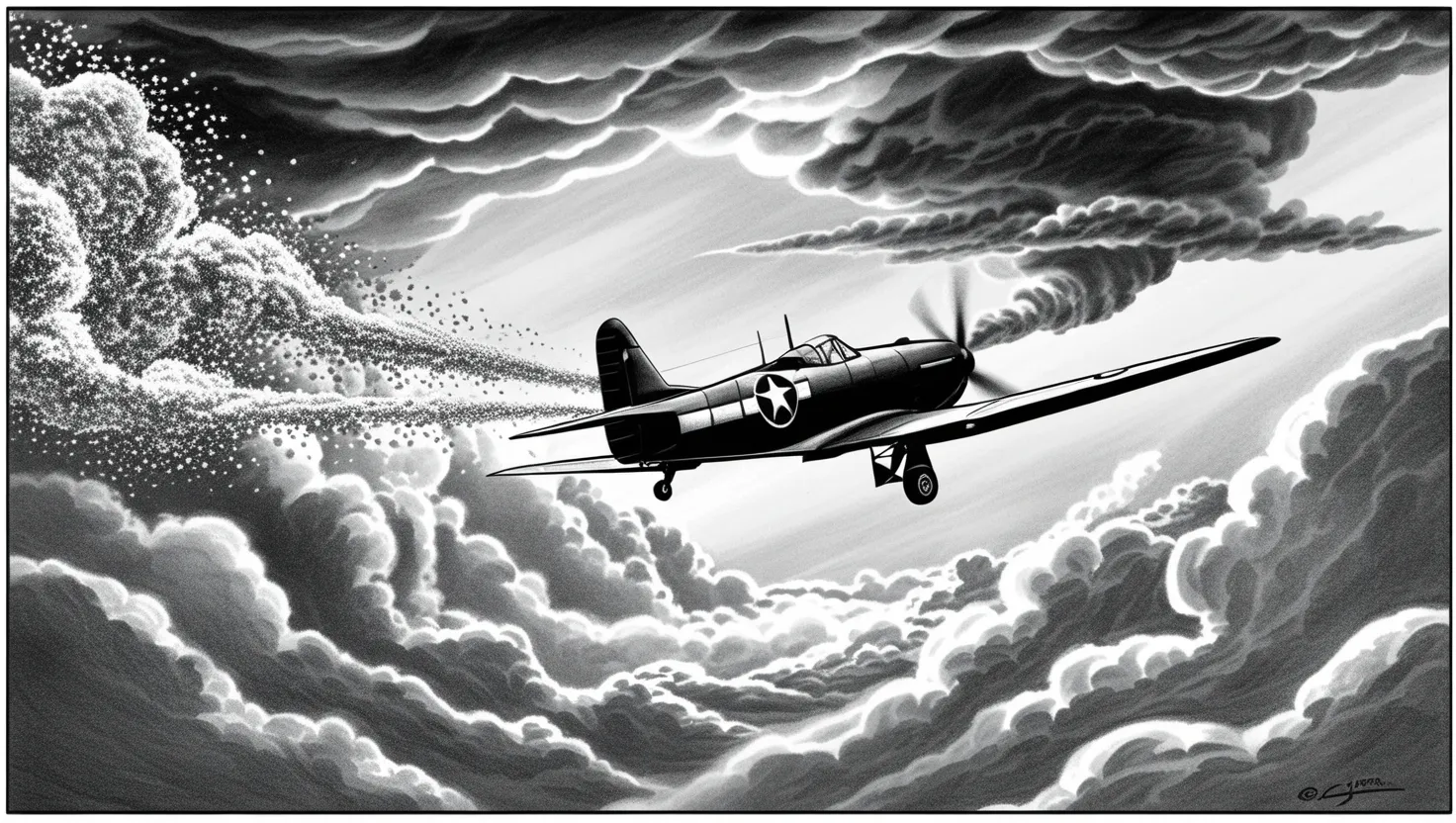
In August 1952, the sleepy English town of Lynmouth was hit by a flood so sudden and violent that it stunned meteorologists. Thirty-five lives were lost, and many more were left without homes. The official story attributed the disaster to unusual rainfall, but there was a twist: Just days before, Royal Air Force planes had been seeding clouds in the same area as part of the covert Operation Cumulus. The stated goal was to increase rainfall for agricultural purposes, but the timing set off quiet alarm bells. What made this event especially mysterious were the pilots’ later admissions of “rainmaking” flights and meteorological records showing rainfall so concentrated it looked anything but random. It’s sobering to ask—did the ambition to harness the clouds turn tragedy into an unfortunate experiment?
“Whoever controls the weather will control the world.” – Lyndon B. Johnson
Moving across the Atlantic, the late 1960s brought a bold new experiment: Project Stormfury. The United States, with aircraft loaded with silver iodide, set out to tame hurricanes. Hurricane Debbie in 1969 became the unwitting test subject. After seeding runs, the hurricane’s intensity dropped by nearly a third—twice. That kind of dual, substantial weakening puzzled even seasoned meteorologists. Satellite imagery from that moment displayed unnatural shifts in the storm’s structure. Was Stormfury a success, or did it merely expose the risks of tampering with forces too vast to predict? Scientists still debate whether the intensity drops were a direct effect of the seeding or a fluke of nature, but the timing was uncanny.
Have you ever wondered just how far a government might go to protect its citizens—or its secrets? In the aftermath of the Chernobyl nuclear disaster, the Soviet Union faced a dilemma: radioactive fallout threatened to drift over densely populated cities, and drastic action was deemed necessary. With little fanfare, Soviet planes released chemical agents into the clouds to induce rain, hoping contaminated droplets would fall before reaching Moscow. The result? In the days after the seeding, air samples near Moscow contained cesium-137 at levels one hundred times higher than those in unaffected areas. Internal government documents, declassified only decades later, described deliberate “precipitation redirection.” Here, weather modification became a matter of public health, national security, and perhaps a lesson in unintended consequences.
“Man masters nature not by force but by understanding.” – Jacob Bronowski
Fast forward to 2008, and the world’s eyes turned to Beijing for the Olympic Games. Clear blue skies over the opening ceremonies sparked curiosity—especially since radar had shown several storms approaching just hours before. The Chinese government had fired over eleven hundred rockets loaded with substances to dissipate clouds and block rain from reaching the stadium. Satellite and radar data documented how incoming storms seemed to fizzle and veer off in unnatural patterns. Atmospheric scientists noticed that chemical residues lingered over Beijing for weeks afterward. Is it possible to guarantee perfect weather on demand? In this case, the evidence suggests the answer was yes, at least for a critical moment in history.
Why, you might ask, has rainmaking attracted such persistent attention from those in power? The answer often comes down to war. During the Vietnam conflict, the United States secretly launched Operation Popeye, aiming to extend the monsoon season and wash out enemy supply routes with relentless downpours. American aircraft conducted extensive cloud seeding runs, and flight logs match patterns of unusually heavy rainfall in strategic regions. Soil samples taken after the operation revealed traces of the chemicals used. The Pentagon’s own declassified records confirmed a 45-day extension of the rainy season in target zones. The strategy wasn’t about controlling the enemy with bombs, but with floods—reshaping the battlefield through the atmosphere itself.
“Weather is a great metaphor for life—sometimes it’s good, sometimes it’s bad, and there’s nothing much you can do about it but carry an umbrella.” – Terri Guillemets
But is that really all we can do? When I dig into these episodes, what strikes me most isn’t just the ambition or secrecy—it’s how little room for error these projects left. The line between helpful intervention and unforeseen disaster seems perilously thin. Could a program designed to bring rain to thirsty crops cause a deadly deluge? Could experiments meant to weaken hurricanes end up steering them toward vulnerable coastlines instead? History offers no easy answers.
There’s another angle here, often overlooked. Each of these events ties back to an urge to control the uncontrollable. In some cases, such as the Beijing Olympics, the results seem almost miraculous—a global event unmarred by rain, watched by billions. In others, like Lynmouth and Chernobyl, the cost is measured in lives and health, with consequences that played out for years.
What do these stories reveal about the relationship between science and secrecy? It’s not just about the technology or the data, though those are crucial. It’s about trust and transparency. When authorities experiment with the weather, who is consulted? Who is told after the fact? Would you want to know if rain on your hometown was engineered by someone hundreds of miles away?
“Science is organized knowledge. Wisdom is organized life.” – Immanuel Kant
To me, these cases highlight how power, once acquired, demands ever more caution. The cloud seeding of the 1950s and 1960s was crude by today’s standards, yet even now, researchers warn that advanced technologies—drones, satellites, AI-driven models—could allow weather modification on scales we’ve only begun to imagine. Without vigilance, the drive to help (or to harm) could result in irreversible disruptions. Every action in the sky has a reaction on the ground.
So, what should we make of these five moments in history? They show us that weather, so often seen as immune to human meddling, can indeed be nudged—sometimes gently, sometimes with consequences we only grasp in hindsight. They remind us that technological dreams come with moral and practical risks. And they raise an uncomfortable possibility: that in seeking to master the elements, we may have created new storms, both literal and metaphorical, whose full impact we’re only beginning to understand.
The next time a storm takes an odd turn, or you watch rainclouds part as if on cue for a major event, you might ask yourself: Was this just the hand of nature, or was someone, somewhere, at the controls? The answer may never be fully clear, but history gives us good reason to keep asking—even if it means looking a little more skeptically at the sky.