America's Atomic Desert Mystery: What Were the Green Fireballs Over Los Alamos?
Explore the mysterious green fireballs that haunted America's atomic sites in the 1940s. Discover witness accounts, scientific theories, and government investigations that remain unexplained. Read the full mystery now.
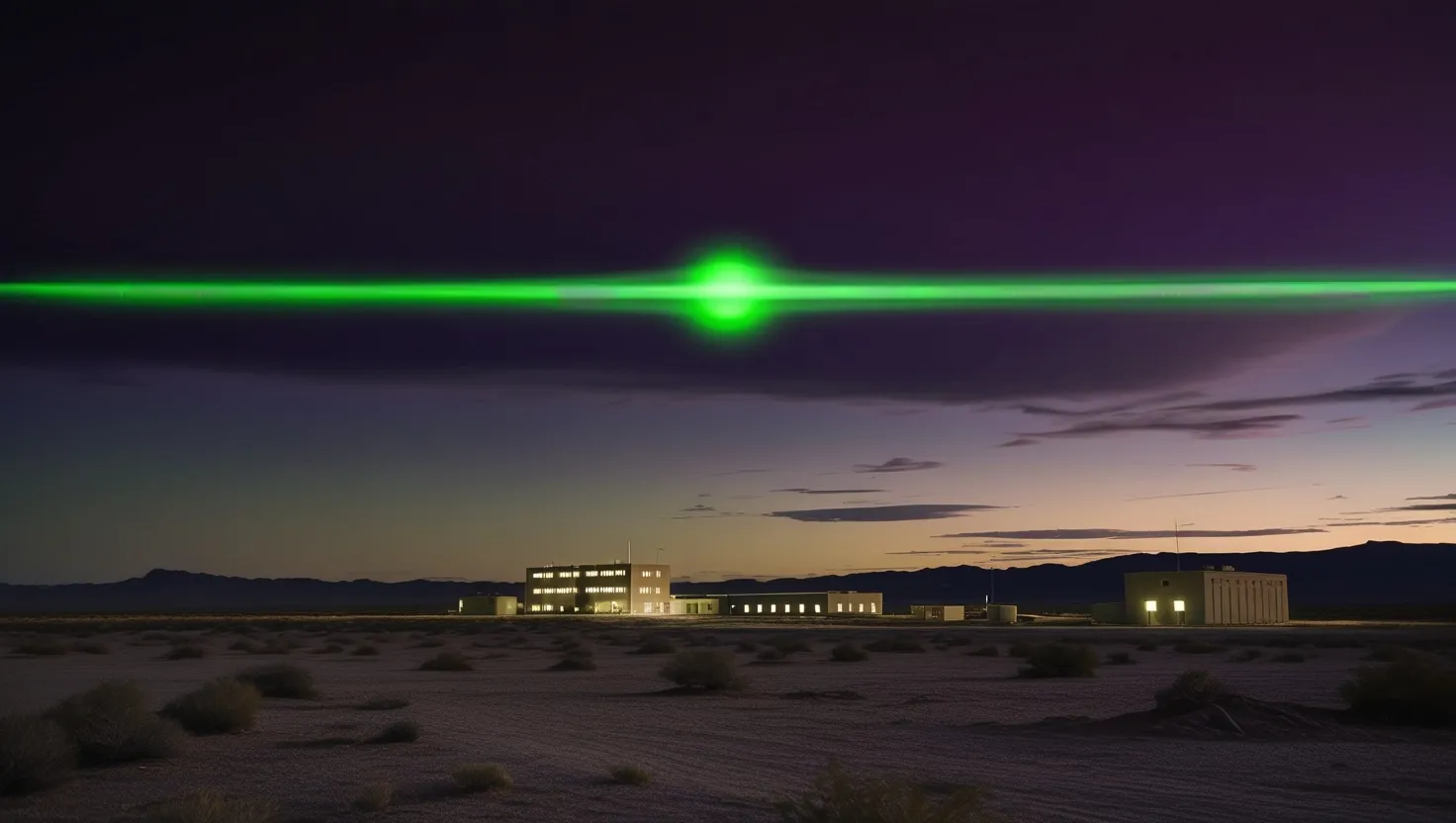
Let me take you back to the American Southwest in the late 1940s, a chapter in history rarely discussed outside expert circles. Imagine standing beneath the vast desert sky, watching as a vivid green fireball tears across the horizon, moving not like a shooting star, but almost as if it’s on a mission. It wasn’t just one, or even a few, but hundreds of people—scientists, pilots, intelligence officers—who all witnessed these eerie green apparitions. For any of us taught to trust the sober eyes of military aircrews and nuclear physicists, this should immediately raise the stakes of the story.
Ask yourself: why were these incidents focused so tightly around the nerve centers of America’s atomic program? Almost every major sighting occurred near places like Los Alamos and Sandia, locations forbidden to outsiders, where America was shaping the nuclear age. It’s a fascinating coincidence—or perhaps not a coincidence at all.
Picture the tension of that era: the Cold War was tightening its grip, secret technologies were emerging, and paranoia was almost a civic requirement. The military wasn’t just curious; they launched Project Twinkle, a dedicated surveillance effort with camera networks and scientific observers. If that seems excessive for a mere atmospheric event, you’re not alone—many of the era’s leading thinkers felt the same unease.
When you look at these green fireballs from a physics standpoint, even now, they stick out like a sore thumb. Typical meteors plunge toward Earth, sometimes leaving smoky trails, their color shifting through a spectrum as they burn up. These fireballs, however, moved horizontally, maintained a consistent, almost unnatural green brightness, and sometimes simply vanished without a trace. Spectroscopy from the time suggested copper in their composition—a rare signature for anything falling from space. Meteors don’t usually play favorites with elements, and copper is hardly their calling card.
What really grabs my attention are the flight dynamics. Witnesses described the fireballs shifting direction suddenly, as if piloted. They held altitude, avoided obstacles, and seemed immune to the randomness of gravity and drag. I invite you to consider: have you ever seen a skipping stone change direction mid-skip? Because that’s what these fireballs appeared to do, at altitudes where control should have been impossible.
We didn’t just depend on testimony from civilians with vivid imaginations. The primary sources were military pilots, security personnel, scientists—people trained to observe, to discriminate between fantasy and reality. In an era before widespread science fiction fandom, collective hallucination seems unlikely.
When the investigations kicked off, theories came fast and furious. Some scientists at Los Alamos quietly wondered whether these were extraterrestrial probes. As Edward J. Ruppelt recounted after speaking with atomic scientists, “They had a theory. The fireballs were probes, projected into our atmosphere from a ‘spaceship’ hovering several hundred miles above the Earth.” But if that seems far-fetched, consider the alternative theories—which are, in many ways, just as extraordinary.
Let’s pull the thread on Soviet espionage. America had just begun atomic experimentation on a grand scale. Was it so implausible that the Soviets would deploy advanced surveillance devices, technologies that could hover, shift, and vanish without a sound? But here’s the rub: nothing was ever found. No debris, no burned copper, no radioactivity—just baffled witnesses and anxious officials. We see the same cycle with modern UAP reports, don’t we? Witnesses offer credible accounts, but the evidence evaporates before it can be captured, let alone explained.
Some point to experimental rocket launches, specifically the V-2 rockets America had captured from Germany. Certainly, those years saw frequent rocket tests in New Mexico, sometimes in circumstances far from public knowledge. Could the green glow have been the signature of an undisclosed copper-based fuel additive? Theoretically yes, but the flight patterns far outstripped anything the V-2s could achieve. Rockets of that era were fast but not nimble, and they left clear, detectable chemical trails. Moreover, official records show no confirmed use of copper propellants in those specific flights.
There’s another interesting wrinkle: certain meteorologists and atmospheric physicists have argued that we simply witnessed a previously unknown kind of natural meteorological event. A glowing ball of plasma, perhaps, or an unusual meteor with a unique elemental composition. But if that’s so, why did sightings plummet after the closure of Project Twinkle? Why would a natural phenomenon care whether the government is watching?
One of my favorite reflections on the scientific process comes from physicist Richard Feynman:
“I would rather have questions that can’t be answered than answers that can’t be questioned.”
This, to me, is the crux of the green fireball mystery. Every explanation—alien probes, Soviet tech, experimental rockets, unknown natural events—has its flaws and leaves many questions unanswered. No sooner do you pick a theory than you find cracks just beneath the surface.
There are intriguing psychological dimensions too. The green fireballs appeared when the public was primed for anxiety, when fear and secrecy were as common as ration stamps. But the reports came first from professionals, not from the worried masses. The official line—“probably natural origins”—feels more like a bureaucratic reflex than a conclusion rooted in evidence.
The contradiction within official reports is also revealing. Declassified documents from Project Twinkle contained redactions and scientific appendices that directly conflicted with summary conclusions. It’s as if the government wanted to close the book for public consumption but couldn’t quite reconcile the data behind closed doors. If you dig through the files, you find odd silences and redacted passages where the clearest statements should be.
Sometimes I ask myself, what would it take for any of us to change our view? If a copper bolt had fallen from the sky, if a single piece of machinery had been recovered, would the story have ended differently? Or would its sudden appearance have merely deepened the puzzle?
Let’s go back to those who lived through it. For local New Mexicans, the green fireballs became a part of the landscape’s mythology—something you might mention at a bar, a shared secret with those who’d paused to look up. For the military, they were both a threat and a riddle: something that might signal an enemy’s hand or perhaps a hidden flaw in their understanding of the world.
“The most beautiful thing we can experience is the mysterious,” wrote Albert Einstein. “It is the source of all true art and all science.”
This quote lingers in my mind whenever I consider the green fireball case. Its mystery is not just about what happened in the sky, but about our own limitations—what we see, what we know, and how we draw lines around the unknown.
While modern researchers are still combing through the archives, looking for that missing document or overlooked anomaly, I believe the green fireballs tell us as much about how we investigate as about what is really out there. They remind us that, in periods of uncertainty and rapid change, even the most rational minds can be left with questions that no memo, photo, or radar chart can fully resolve.
I leave you with one question: if the skies above us produced a spectacle tomorrow that defied everything we believed about nature and technology, would we be any better prepared to see it for what it truly is? Or would we, like those before us, find ourselves searching for answers in the twilight, caught between the possible and the probable, waiting for a sign that may never come?