Hidden Human Impact: 9 Strange Animal Behaviors That Reveal Environmental Cover-Ups
Discover alarming animal behavioral anomalies linked to human activities - from bird collisions during radar tests to whale strandings from sonar experiments. Learn how technology impacts wildlife ecosystems and behavior patterns.
As I delve into the fascinating world of animal behavioral anomalies, I find myself pondering the intricate balance between nature and human intervention. The cases I’m about to explore are both intriguing and unsettling, suggesting that some disruptions in wildlife may be linked to human activities that are either undisclosed or poorly understood.
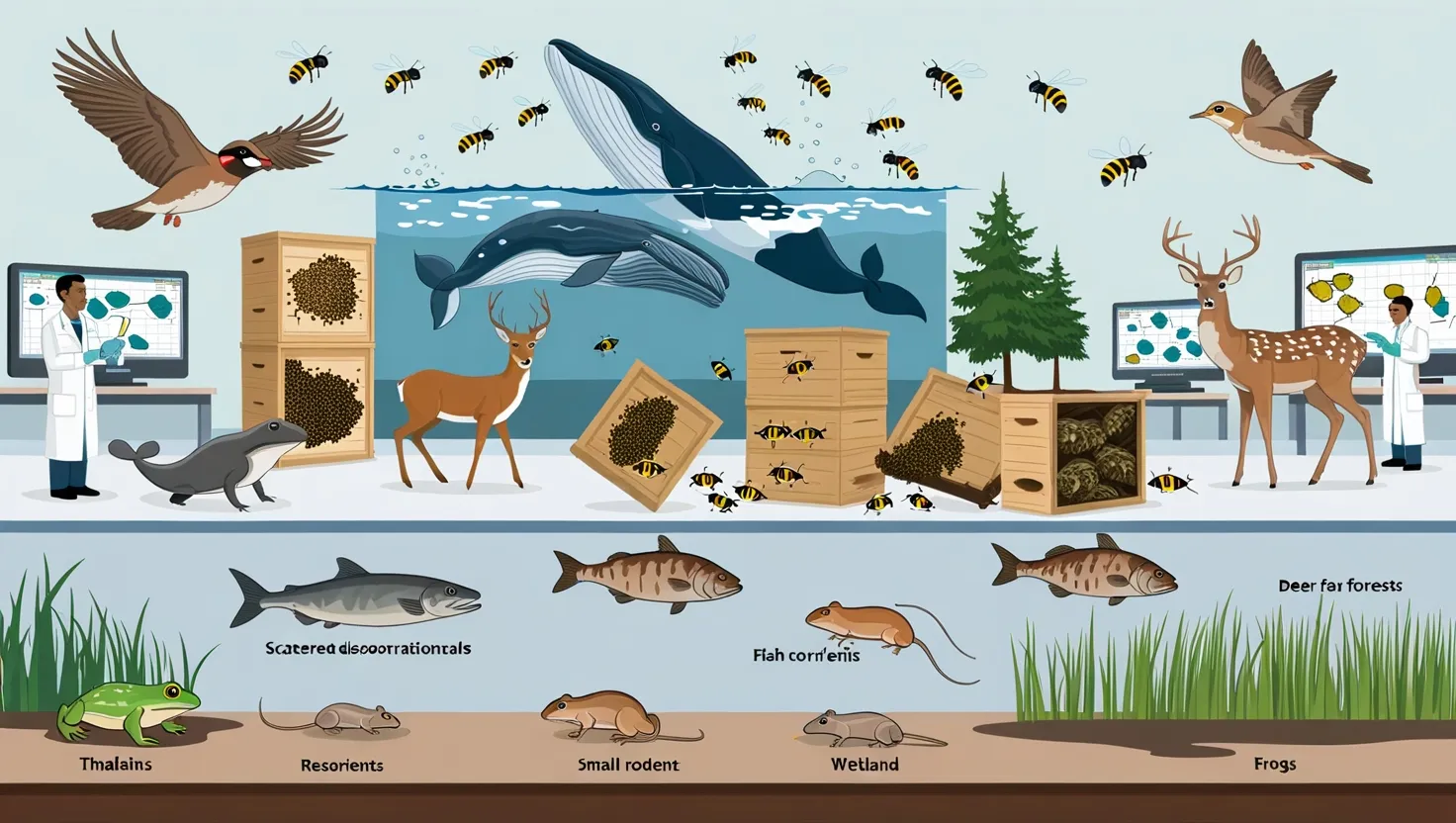
Let’s start with something that might seem like a mere coincidence: migratory birds colliding in synchrony. During military radar tests, these unfortunate events have led to mass fatalities. Autopsies have revealed neurological damage that doesn’t match natural causes, raising questions about the impact of human technology on these creatures. It makes you wonder: What if these weren’t just accidents, but effects of human experimentation gone wrong?
As the great naturalist, Rachel Carson, once said, “The ‘control of nature’ is a phrase conceived in arrogance, born of the Neanderthal age of biology and the convenience of man.” This resonates deeply with the idea that our actions can have unforeseen consequences on the natural world.
Another compelling case is that of sonar-driven whale strandings. Pods of whales have been beached after naval exercises using experimental frequencies, with inner ear trauma matching lab-induced acoustic exposure. This suggests that the sounds we create can have devastating effects on marine life. Have we stopped to consider the long-term impact of our technological advancements on these magnificent creatures?
Moving on, disoriented bees near secure facilities have raised eyebrows. Colony collapses around research bases emitting unregistered electromagnetic fields, verified by hive sensors, point to a possible connection between human activities and environmental disruptions. It’s a stark reminder that our actions can have far-reaching consequences, even affecting the very fabric of ecosystems.
The avoidance behavior in deer, captured by camera traps, shows that these mammals bypass forest zones during alleged aerosol dispersion trials. This behavior is a clear indication that animals sense changes in their environment, often reacting to stimuli that we might not even perceive. It leaves us asking: What are these animals trying to avoid, and why?
As we explore these anomalies, we come across mutated fish downstream. Aquatic life with abnormal physiology near closed water treatment plants linked to industrial cover-ups paints a picture of environmental neglect. It’s a stark reminder that pollution and industrial activities can have profound effects on ecosystems.
Synchronized rodent migrations are another fascinating case. Unexplained mass movements of rodents align with underground seismic experiments, suggesting that even the smallest creatures can be influenced by human activities. “The earth has music for those who listen,” as William Shakespeare once said. But what if this music is disrupted by our actions?
Next, there’s the intriguing case of birds altering flight paths. Radar data shows avian rerouting around airspace during drone stealth technology trials. This behavior highlights how sensitive animals are to changes in their environment, often adjusting their behavior to avoid perceived threats. It makes you wonder what other subtle changes in nature might be going unnoticed.
Lastly, amphibian population crashes in wetlands adjacent to laboratories studying viral vectors raise serious concerns. Sudden frog disappearances have been linked to the presence of these facilities, suggesting that natural crises might sometimes mask human intervention. As the renowned biologist, E.O. Wilson, noted, “The one process now most in need of invention is the process of invention itself.” Perhaps it’s time to invent new ways to coexist with nature, rather than disrupting it.
As we reflect on these animal behavioral anomalies, one thing becomes clear: the natural world is incredibly sensitive to human actions. Whether it’s the use of radar systems, sonar technology, or other forms of experimentation, our activities can have profound impacts on ecosystems. The question remains: Are we truly aware of the full extent of our influence on nature? And if not, should we be more cautious in how we interact with the world around us?