Is Bigfoot the Last Great Mystery of Nature?
Bigfoot: The Timeless Mystery Linking Us to the Wilderness
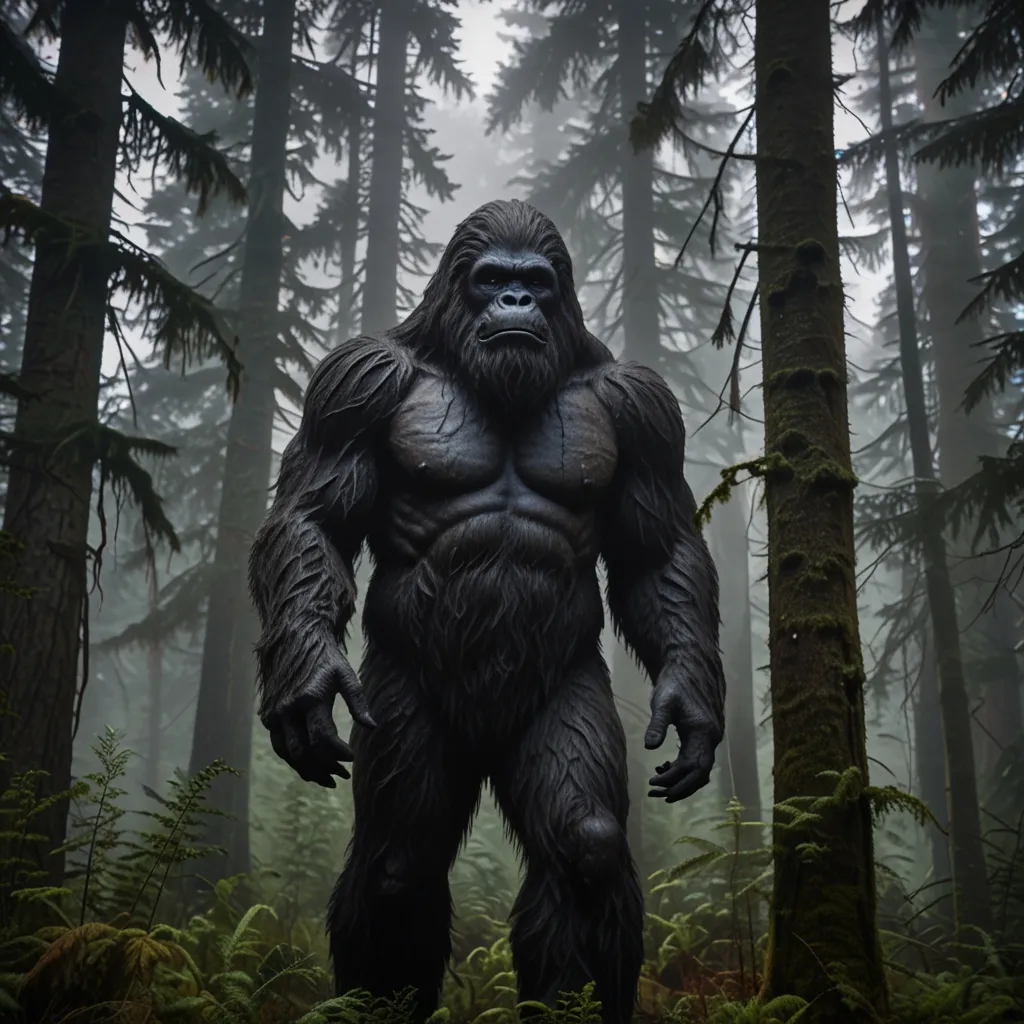
Bigfoot, or Sasquatch, has always been a creature that sparks the imagination. This huge, hairy, human-like being is thought to live in remote areas, especially around the Pacific Northwest in North America. Its legend stretches back to the tales of indigenous people and has grown into a cultural icon over the years.
The name “Sasquatch” actually comes from the Salish word “Sasq’ets,” which translates to “wild man” or “hairy man.” Descriptions generally paint Bigfoot as being around 6 to 10 feet tall, covered in dark hair, with broad shoulders and long arms. Sometimes, people even claim it has glowing eyes, but that’s probably just animal eye reflections from raccoons or owls.
The whole Bigfoot craze really kicked off in the late 1950s. In 1958, a newspaper in Northern California ran a story about big footprints found near Bluff Creek. Turned out to be a prank, but it sure got people talking! Since then, tons of folks have claimed to see Bigfoot or find footprints, but most of these have been debunked as pranks or misidentifications.
One story that always pops up is the Patterson-Gimlin film from 1967. It shows this large, hairy creature walking through a forest, and though some doubt its authenticity, it’s still a big part of Bigfoot lore. Despite all our tech advancements, we still don’t have clear photos or videos, which makes a lot of people think Bigfoot is nothing more than a myth.
People often see Bigfoot as tied to the wilderness and that deep-rooted human fear of the unknown. Indigenous cultures used stories about wild, hairy beings to warn children about forest dangers. These stories have morphed over time, reflecting how we both fear and are fascinated by nature.
Belief in Bigfoot also seems to tap into our need for mystery and a connection to the wild. With nature becoming more “tamed,” a wild, mythical creature like Bigfoot strikes a chord. And it’s not just in North America; other parts of the world have their own versions, like the Yeti in the Himalayas and the Yowie in Australia.
Despite no solid proof, the hunt for Bigfoot is far from over. Enthusiasts are using DNA analysis and other scientific tools, although so far, nothing conclusive has been found. But these efforts do help us understand more about human evolution, DNA, and the field of biology.
Bigfoot has also found a cozy spot in pop culture, popping up in movies, books, and ads. Whether Bigfoot is real or just a product of our imagination, it symbolizes something bigger—our connection to the wild and the mysteries that still surround us.
In a nutshell, Bigfoot is a captivating figure that’s captured hearts and minds. While solid evidence of its existence is still missing, the legend is alive and well. Whether you see Bigfoot as a real creature or just a figment of our wild imagination, it’s a fascinating part of our cultural world.