Project CHAOS Bio-Markers: How CIA's Secret Tests Left Lasting Environmental and Health Traces
Discover how Project CHAOS Bio-Markers persist in soil and plants decades after CIA experiments. Learn about long-term environmental impacts and health effects. Read now.
If you’re reading this, you’re probably the kind of person who finds the margins more interesting than the headlines. That’s exactly where the story of Project CHAOS Bio-Markers lives—not in the usual accounts of CIA mischief, but woven into our environment, our bodies, and perhaps even our collective memory. It’s strange what lingers, sometimes long after the news cycle moves on.
In the late 1960s, the CIA began clandestine operations known as Project CHAOS. The official story sounded almost dull: simulate biological warfare in American cities using supposedly harmless zinc cadmium sulfide. Yet, even basic science tells us that “harmless” is always a moving target. What gets missed in the cracks between intention and oversight can echo for generations.
Consider this: why would the agency need to test airflow over entire cities at all? Was this purely defensive, or was it also about understanding how to make an invisible footprint, both physically and politically? Testing on a living population is itself a kind of message, encoded in the language of plausible deniability.
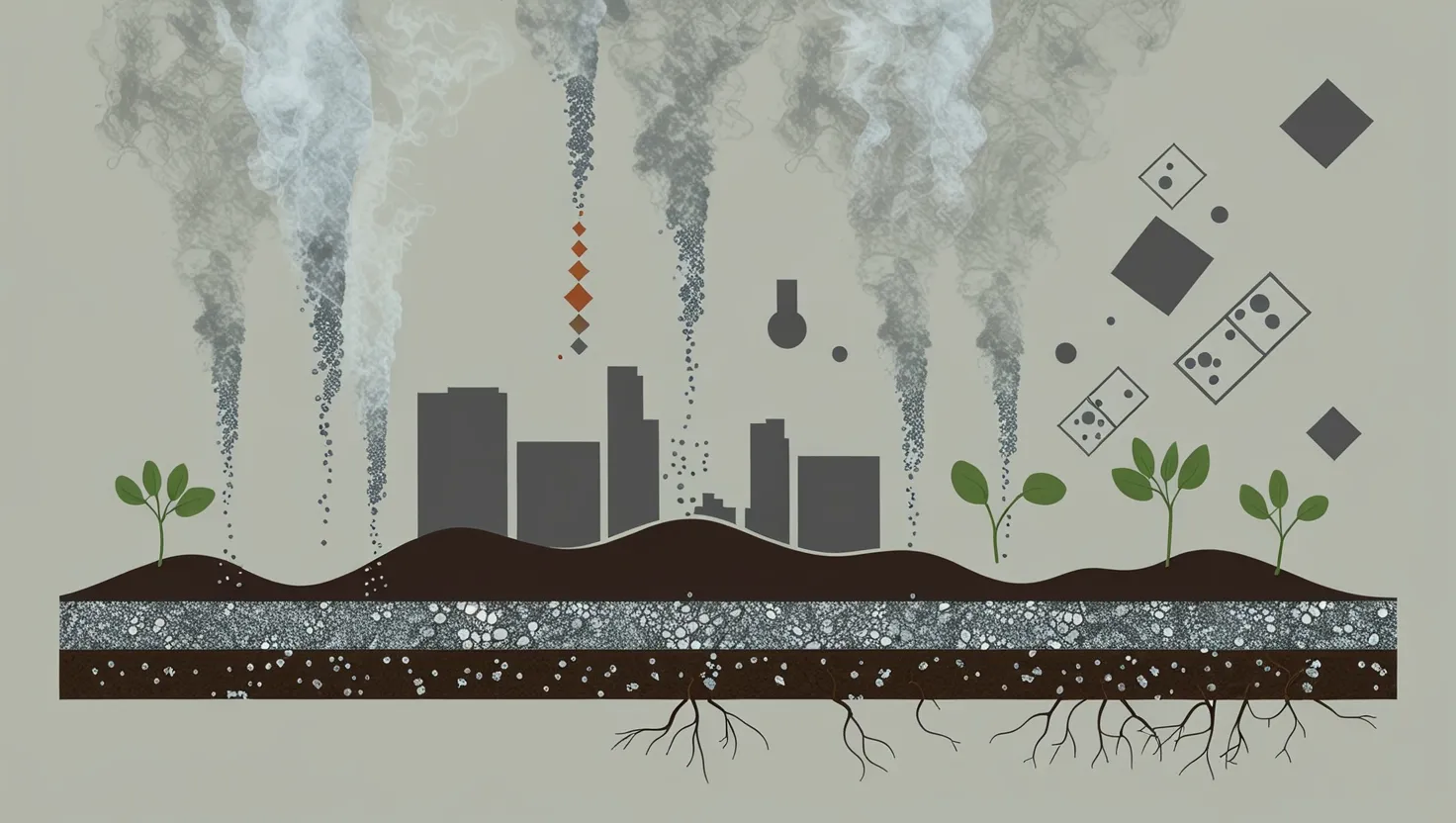
For years, hardly anyone outside a classified file room gave thought to the fate of those particles. It took decades for environmental scientists, sifting through old core samples, to notice something odd. The soil didn’t just hold traces of the expected zinc cadmium sulfide, but also organometallic compounds—cadmium selenide and unusual forms of zinc oxide. These weren’t part of the original recipe. Where had they come from, and why did they persist so stubbornly?
“Science is the great antidote to the poison of enthusiasm and superstition.”
— Adam Smith
Persistence may sound like a small detail, but in toxicology and environmental science, it’s a red flag. Most industrial particles break down or get washed away. These didn’t. They stubbornly clung to clay and organic matter in the soil. I imagine the researchers, brushing away dirt in a lab, stumbling across signatures that didn’t fit the known narrative.
Next came the plants: sunflowers, dandelions, and maples, quietly soaking up metals year after year. Tests revealed that plants in these zones absorbed metals at abnormal rates. When botanists counted tree rings from the period, they found strange growth stutters—patterns associated with heavy metal stress, the kind that can slow a trunk’s expansion and send roots grasping for clean ground.
But soil and trees aren’t gossipers. For a human toll, scientists had to become detectives, tracing medical records and epidemiological surveys. Here’s where things got unsettling. In pockets of cities like Minneapolis and St. Louis, certain neighborhoods had higher rates of neurological issues—rare ones, with links to cadmium exposure. The time lag between exposure and onset matched what you’d see in cadmium-induced illnesses. It wasn’t proof, but it was the kind of statistical oddity that makes you pause and wonder: What did we miss by not looking sooner?
“No passion so effectually robs the mind of all its powers of acting and reasoning as fear.”
— Edmund Burke
What astounds me isn’t just the science, but the silence. No one tracked these communities after the tests ended. There was no long-term health survey, no routine screenings, no attempt to answer questions that hadn’t yet been asked. Maybe that’s because there was nothing to find—officially. Or maybe it’s because the data, even if troubling, would have been embarrassing at best.
Let’s ask ourselves: What happens when an experiment’s outcomes can’t be measured neatly? If there was fallout—literal or otherwise—who carries that burden? Does it matter that it took decades for anyone to realize something was amiss?
Now, layer on a twist from the world of patents. In 2003, a defense contractor filed for intellectual property protection on a cadmium-based tracer compound. The formula? Nearly identical to the stuff found at CHAOS test sites. The patent blithely describes “long-term terrain marking.” It’s as if the original experiment never ended, just shifted paperwork and jurisdiction. Why did this technology resurface 40 years later, as if it had always been waiting in the wings?
Is it possible the original tests were prototypes for technology that only later found its commercial—or military—purpose? If so, were the environmental effects of primary interest, or merely an afterthought? And if someone did keep tabs, would those findings ever surface?
“Every act of creation is first an act of destruction.”
— Pablo Picasso
There’s a darker possibility to consider. Perhaps more reactive compounds were tested than the records admit. Unreported variations may have been part of a larger spectrum of field trials. If you’re designing a system meant to trace or mark a landscape over decades, you want chemical markers that don’t fade, that resist rain and wind and sun. But what does that mean for people who live, raise families, and grow food in those areas decade after decade?
The slow churn of time may be the greatest test tube of all. What if you can’t measure the true cost of such experiments in just years, or even decades? What if the soil, the trees, and the bodies of residents are all part of a story written in increments so small, it takes a lifetime to read?
I find myself circling back to the ethical heart of the matter. Conducting covert experiments in a democracy raises questions about consent, oversight, and accountability. Who gets to decide what level of risk is acceptable for a population—especially if that population doesn’t even know it’s a subject?
Let’s not forget, the Cold War spawned countless programs like Project CHAOS—each with its own secret logic, each leaving behind traces not just in archives but in the world itself. From the Soviet Union’s enormous bioweapons programs to the South African regime’s Project Coast, the 20th century was shaped by invisible battles over biology, chemistry, and information. Each left residues—chemical and psychological—that we are still piecing together.
“Those who cannot remember the past are condemned to repeat it.”
— George Santayana
So what should we do with this knowledge? For one thing, we can stop pretending that old experiments are ever truly finished. The persistence of CHAOS’s bio-markers in soil and plants is a reminder that secrets, once loosed into the world, are never entirely contained. They seep into systems—ecological and political—far beyond the intentions of their creators.
We can also demand that the legacies of such programs be studied with the same rigor and urgency as their inception. It’s not enough to file away the details as curiosities of a bygone era. If traces remain, science and policy both have an obligation to follow the evidence where it leads—even if that means re-examining uncomfortable truths.
Have we learned anything from the long shadow of Project CHAOS? Are we better at weighing the long-term effects of secret research, or have we simply become more adept at hiding the paper trail? If you could ask one question of those who designed and authorized these tests, what would it be?
There’s a story in every soil sample, every yearly ring of a tree, every strange spike in a public health chart. Maybe the greatest lesson of Project CHAOS is that the environment remembers even when institutions do not. It’s an archive that can’t be redacted, only read by those willing to ask the right questions, and to keep asking, even when the answers are elusive.
In the end, even a minor experiment may cast a very long and unexpected shadow. The real challenge lies not in assigning blame, but in looking honestly at the legacies we inherit—and deciding what responsibility we owe to those living with the consequences.