Secret Signals: How Mysterious Electromagnetic Transmissions Shape Global Events During Crisis Moments
Explore mysterious electromagnetic signals that emerged during critical historical moments. Discover hidden communication channels, analyze covert transmissions, and learn how secret signals shape global events. Find the truth behind unexplained anomalies.
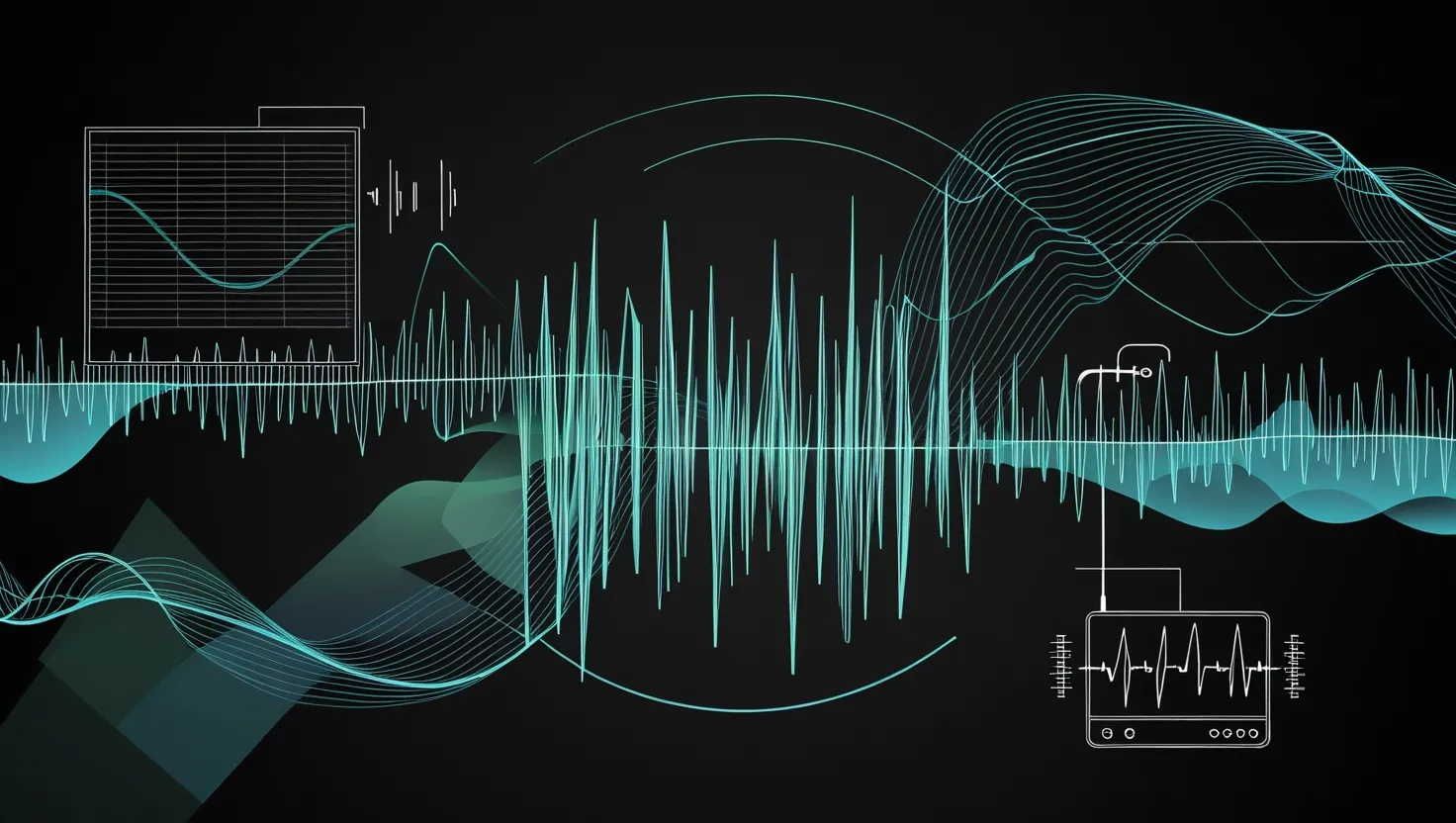
It’s rare for the world of electromagnetic signals to collide so sharply with moments of global tension, but history is sprinkled with incidents where unexplained transmissions refused any obvious explanation. When I look back at four such anomalies, each showing up during moments of high geopolitical drama, I find myself drawn deeper into the technical oddities and the human stories behind those events. What do these signals say about our world’s secret infrastructure for communication? And just how much is still hidden from view?
“Three may keep a secret, if two of them are dead.” — Benjamin Franklin
We live in a world where most messages fly through the air, nestled within radio waves, microwave pulses, and even quantum-induced shifts. Yet, these are not always meant for ears like mine and yours. Growing up, people whispered about “numbers stations”—those eerie broadcasts repeating strings of digits, supposedly instructions for spies. In hindsight, those seem almost quaint compared to what modern technology can craft: signals that can’t be dismissed as mere glitches, surfacing at the flashpoints of history.
Take the Loring AFB Whisper of 1975. On a cold Maine night, a low-frequency pulse persisted for 17 hours. It didn’t match any familiar military protocol. The source wasn’t a terrestrial antenna or a passing satellite—it came from somewhere at sea, and no vessel ever claimed responsibility. During that anxious time, when the world weighed on a nuclear standoff, submarine crews later reported their instruments going haywire. What always puzzles me is the precision: ultra-low frequencies penetrate deep underwater and through earth, making them favorites for submarine communication. But here, the signal didn’t match any documented navy technique. Could someone have been sending a message to an asset beneath the ocean’s surface—one that every official source later denied? Or was it a technological test run by a party never identified? The line between a warning and a message blurs quickly under these circumstances.
Have you ever wondered how many such signals pulse quietly across the planet as we sleep? Most are routine. But a few, like the Geneva Vacuum Gap, force us to question everything we know about diplomacy and secrecy. In 1987, during a summit that brought together leaders from the US and the USSR at the height of Cold War suspicion, something odd happened: all official communications were supposed to be silent for nearly an hour, as a gesture of goodwill. Yet, during this blackout, tapes from both sides later revealed a strange carrier wave—an artificial backbone that wasn’t just background noise. Advanced forensic analysis picked out a digital pattern embedded within, astonishingly similar to those used by Soviet cipher machines. So how did a signal, carrying a signature of Soviet cryptography, appear precisely when transmissions were banned? Was it a demonstration—an exercise of invisible power? Or a backup channel in case things turned unexpectedly hostile? The silence in the room was apparently nowhere near as complete as the public believed.
“The most dangerous thing about secrets is not that they are hidden, but that they can be overheard by those who know how to listen.” — John le Carré
Fast forward to 2004, and the Antarctic Loop Sequence still reads like a chapter from speculative fiction. Research stations scattered across the ice shelf started logging rhythmic bursts of microwaves, repeating every 78 minutes for nearly a week. Microwave signals are tricky; they’re easily blocked by the environment but also immensely useful for bouncing off ice and probing deep beneath the surface. Researchers noticed something even stranger: the signals shifted their phase in a way quantum physicists found impossible to square with the satellite technology of the time. This coincided with secret radar experiments drilling—at least figuratively—into the continent’s ice. Was this a signal to communicate with instruments hidden under layers of ice, or a test of quantum communication too advanced for public knowledge? Either way, the overlap between scientific pursuit and strategic signaling remains murky.
Is it possible these events are just technical oddities? Maybe. But then 2020 arrived, bringing with it a signal event so contemporary, so rooted in the digital mesh of today’s cities, that it forced me to rethink what covert communication really means. During sensitive peace talks in Dubai, the city’s sprawling mobile networks collapsed in targeted patches. This was not a random outage. Spectrum analyzers—devices used for peering into the airwaves—found “holes” where all signals vanished, as if erased by a scalpel. Coordinated signal cancellation at this precision requires hardware that can inject exactly inverse waves at the right spot, something far beyond consumer tech. For a short period, parts of Dubai existed in a kind of digital blackout. Who had the resources to pull this off, and why then? If I were running secret negotiations, wouldn’t I want to shield my location from outside snooping—perhaps even from satellites?
“If you reveal your secrets to the wind, you should not blame the wind for revealing them to the trees.” — Khalil Gibran
Looking at patterns like these, I often think about the technologies sitting just out of public reach. Standard signal monitoring is very good at catching known patterns, but as adversaries become more sophisticated, so do their methods. Modern covert channels might not even look like communications at all; they hide inside corrupted packets, strange timing intervals, or fluctuations in energy that don’t trigger ordinary alarms. Detecting them now often requires artificial intelligence systems—machines that can find the signal hidden in mountains of noise, patterns that even the most attentive human analyst would miss.
I’m especially fascinated by how the concept of “covertness” has changed. In the past, secrecy meant hiding the existence of a message. Now, it’s about hiding in plain sight—twisting protocol fields, embedding data into routine traffic, or exploiting quirks in how machines talk to each other at the deepest levels. For instance, a clever transmission might use deliberately “broken” data frames to carry hidden instructions. Such approaches count on defensive tools being set to ignore apparent errors, while the intended recipient pieces the signal back together.
Could some nation-state, or even a private actor, be running a hidden channel across global networks this very minute? The odds seem higher than ever. Tools combining machine learning with network monitoring are starting to catch up—but they also spawn new races, as those intending to keep their signals hidden find new ways to slip through undetected. It’s a game with no finish line, only temporary victories.
So, what are the stakes in these electromagnetic cat-and-mouse games? Consider that even as official lines go silent, another conversation might be humming just below, untraceable except to those with the right key. The Geneva Vacuum Gap wasn’t just an accident; it was a reminder that rules set above the table are sometimes ignored below it. And in Dubai, the sudden disappearance of wireless signals in target zones felt less like a random event and more like digital doors being shut, mid-negotiation.
“The important thing is not to stop questioning. Curiosity has its own reason for existing.” — Albert Einstein
Reflecting on these events, I always come back to the simple question: What else don’t we hear? The planet’s electromagnetic spectrum is vast and mostly empty, yet a handful of carefully constructed signals have shaped history’s most tense moments. Every unexplained blip, every burst that coincides with a summit or a secret meeting, is a reminder that technology’s silent conversations are likely just as influential as the ones broadcast on TV or written in diplomatic memos.
Are these anomalies mere flukes, or are they proof that there’s a hidden world of communication layered beneath the surface of what we call reality? The evidence pushes me to the latter conclusion, though I know many will remain unconvinced without undeniable proof. Still, the technical oddities, the timing, and the patterns beg us to keep listening—and to question what we take for granted in the information age.
We like to believe that history’s important moments unfold in public, decided by words and signatures. Yet, for the attentive, the most consequential signals may not be words at all, but brief, unexplained pulses humming through the ether, carrying secrets we can only guess at.
So, the next time your phone blinks out or your radio hisses with unexplained static, ask yourself: Is this just interference—or have you stumbled onto a conversation not meant for you?
What would you do if you found a pattern where there shouldn’t be one? Would you chase the signal, or simply let it slip back into the static? The answers to those questions might shape the future in ways we’re only beginning to imagine.