9 Ancient Megalithic Sites That Prove Our Ancestors Were Engineering Geniuses
Discover 9 mysterious ancient sites with impossible construction methods. From 1000-ton stones to precision cuts, explore how our ancestors built without modern tools. Amazing facts revealed.
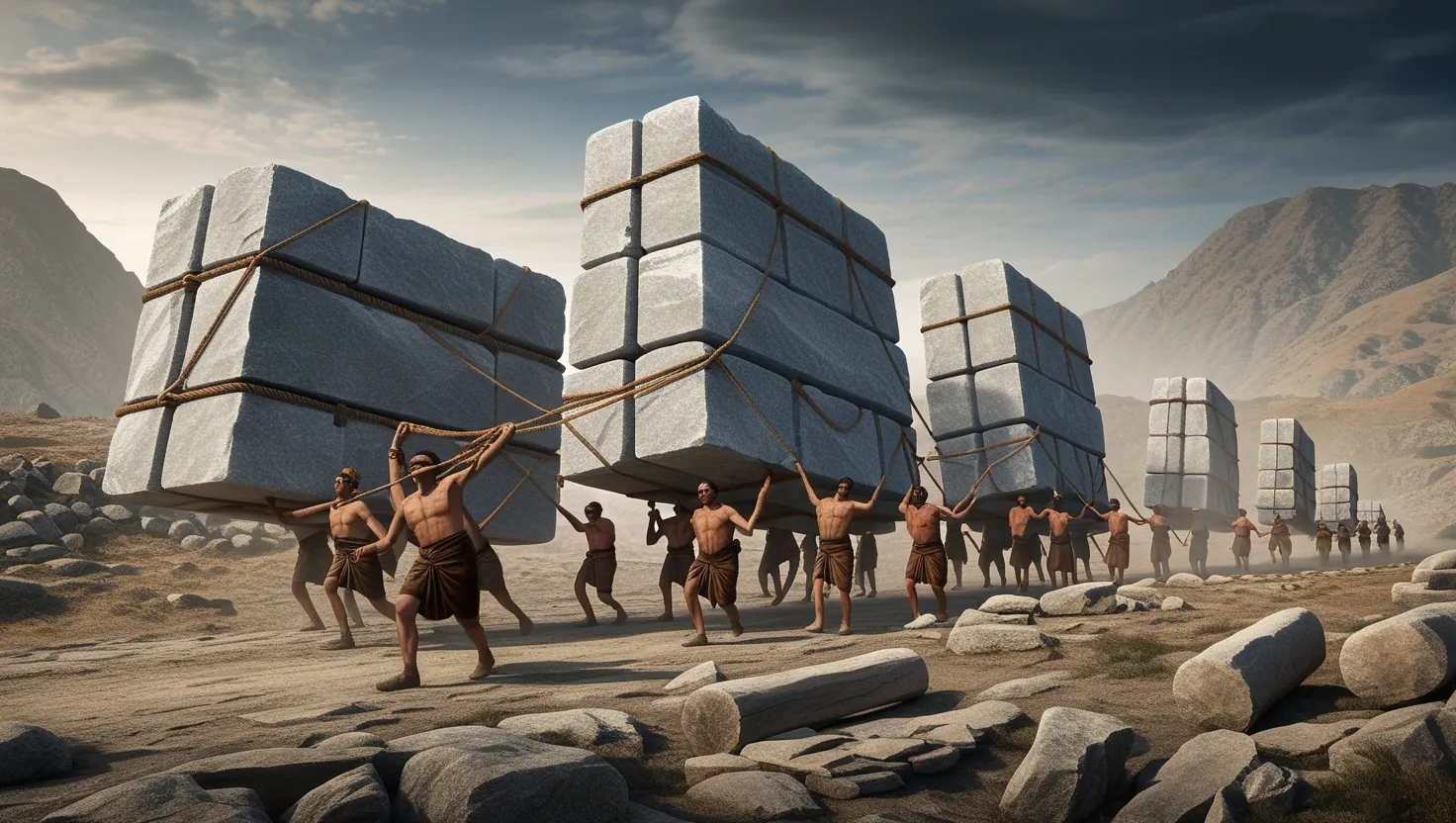
Imagine standing in front of a massive stone that weighs more than 1,000 tons. How did people move it without trucks or cranes? That’s the puzzle with these ancient spots. They show skills that seem way ahead of their time. Let me walk you through nine of them, step by step. I’ll share odd facts you won’t find everywhere else. Think about this as we go: Could your grandparents build something like this with just stone tools?
Start with Göbekli Tepe in Turkey. It’s from about 11,000 years ago. That’s before farming even kicked off big time. Huge T-shaped pillars stand in circles, carved with foxes, snakes, and birds. Each pillar is up to 20 feet tall and weighs 10 to 20 tons. Workers dug them from bedrock nearby. But here’s the weird part: No one lived there full-time. They gathered to build it, then buried it on purpose under dirt. Why hide such hard work? Some say it was a sky-watching spot. The pillars line up with stars. Picture hauling those stones up a hill with ropes made from plants. Do you think a few hundred people could do that in a summer?
“Göbekli Tepe changes everything we think we know about early humans.” – That’s what one archaeologist said after digging there. It flips the idea that big buildings came after cities. Nope. This came first.
Next up, the Tower of Jericho in modern-day Palestine. Built around 8000 BC. It’s a stone tower 27 feet high with stairs inside. Made from rough rocks stacked tight, no mortar. The base is 30 feet wide, narrowing to the top. People back then were hunter-gatherers, not farmers yet. So why build a watchtower that big? Maybe to guard against floods or wild animals. But get this lesser-known bit: Inside, they poured smooth plaster on the walls. That takes fire to make lime plaster – hot kilns at 800 degrees Celsius. Without metal tools. How did they control that heat so well? Climb those 22 steps in your mind. What view would you see from the top?
Now, let’s go to Malta and the Ħal Saflieni Hypogeum. From 4000 to 2500 BC. It’s not above ground – it’s a underground maze of rooms carved from solid limestone. Three levels deep, with tunnels and chambers that fit 7,000 bodies. The walls curve perfectly, like an echo chamber. Sound bounces in ways that feel alive. Voices whisper from one end to the other. Builders used flint chisels to scrape rock softer than ours today. But the precision? Chambers align to solstices. Light hits oracle rooms just right twice a year. Unconventional angle: Maybe it was an early sound tech lab. They shaped spaces to make voices boom like gods speaking. Ever yelled in a cave? This place makes it musical.
“The Hypogeum’s acoustics suggest they understood sound waves better than we thought.” – Echoes of ancient wisdom from a explorer who tested it.
Have you ever wondered if echoes could guide rituals? Yeah, me too.
Jump to Newgrange in Ireland, around 3200 BC. A giant mound with a 62-foot passage tomb inside. The entrance kerb has 97 carved stones – spirals, chevrons, lozenges. But the real mind-bender is the winter solstice trick. At dawn on the shortest day, sunlight beams straight down the passage to light the chamber for 17 minutes. Built with 200,000 tons of earth and stone. The capstone over the door weighs 5 tons. Transported from 10 miles away over hills. No wheels. They used rollers from tree trunks, maybe. Lesser fact: The quartz facade was rebuilt wrong at first – original stones fit like puzzle pieces with micrometer gaps. Rain doesn’t seep in after 5,000 years. How did they cut quartz that hard without steel? Stand there on solstice day. Does the sunbeam feel like magic?
Puma Punku in Bolivia calls next. From 500 to 1000 AD, but with older roots. Not pyramids – flat platforms of andesite and red sandstone blocks. Some weigh 130 tons. Cut with angles so precise, a razor blade won’t fit in the joints. Drilled holes line up perfectly for metal clamps, now gone. The H-blocks interlock like Lego from space. Transported from Lake Titicaca, 10 miles away, up to 13,000 feet high. No roads. Unconventional view: The cuts match modern machine tools. Drills leave spiral grooves we see in factories today. Did they have diamond tips? Or something lost? Run your finger along those edges. Smooth as glass, right?
“These stones defy explanation; they look machined.” – A stonemason who tried copying them said that.
What if they poured the stones like concrete? Some think so. Crazy?
The Great Pyramid of Giza, Egypt, 2580 BC. Yeah, it’s famous, but focus on the how. 2.3 million blocks, average 2.5 tons each. Some granite beams inside weigh 70 tons, from 500 miles away. Aligned to true north within 3/60th of a degree. Base level to within 2 cm across 13 acres. Lesser-known: The king’s chamber uses corbelled roof – each layer juts in by inches to hold 10 tons per square meter. No mortar in spots, yet tight as fused. They ramped it up, sure, but internal ramps twist perfectly. Water flotation channels? Maybe floated stones on the Nile. Ever measured your house’s corners? These beat lasers.
Pythagoras, way later, gets credit for math they used. But here’s a quote: “The pyramid’s precision suggests knowledge beyond their tools.” – From an old engineer.
Question for you: Could you stack blocks that straight without levels?
Baalbek in Lebanon, Roman but on older foundations from 3000 BC or earlier. The Trilithon – three stones, each 800 to 1,000 tons. Bigger than any crane today can lift easy. Quarry nearby, but downhill from the site. So they lifted them up? Levers? No evidence. The foundation platform under them is cut from bedrock with laser-like flatness. Unconventional: Myths say giants built it. But check the joints – interlocked so tight, no wind fits. Transported over 0.5 miles on rollers? Math says it’d take 40,000 men per stone. Impossible without breaking backs.
Easter Island’s Moai statues, 1200 to 1600 AD. 887 of them, average 14 tons, up to 86 tons. Quarried from volcano tuff. Eyes once had coral whites. But how moved? Walked them upright with ropes, rocking side to side. Experiments prove it – three guys move a mini one. Lesser fact: The platforms (ahu) have stones from different islands, traded or raided. Aligned to equinoxes. Bodies buried underground till shoulders, making them taller. Why topple most in wars? Mana fights. Stare into those eyes. Do they watch the sea?
Finally, Yonaguni Monument off Japan. Underwater, maybe 10,000 years old. Man-made? Stepped pyramids, terraces, straight edges under waves. 80 feet deep. Cut from sandstone with 90-degree angles. Pools and ramps. Conventional says natural, but shadows and cuts say no. Dive there mentally. Was it a city sunk by quake? Japanese teams map it with sonar – perfect right angles. Unconventional: Harbor for lost boats? Or star map on land?
“These structures whisper secrets of forgotten skills.” – An ocean explorer noted.
So, what ties them? Knowledge peaks, then drops. Why? Wars? Secrets kept by priests? Or help from travelers? Think simple: People were smart. Smarter than we credit. Experiment yourself – stack rocks tight. Feel the awe. These nine spots prove it. They stand, defying time. What will we build that lasts? Tell me your favorite.