Ancient Scripts That Remain Silent: 8 Undeciphered Writing Systems From Lost Civilizations
Discover 8 ancient scripts from Indus Valley to Easter Island's Rongorongo that remain undeciphered mysteries. Explore lost civilizations through symbols that refuse to speak. Learn what makes these puzzles so challenging to solve and why they continue to fascinate archaeologists worldwide.
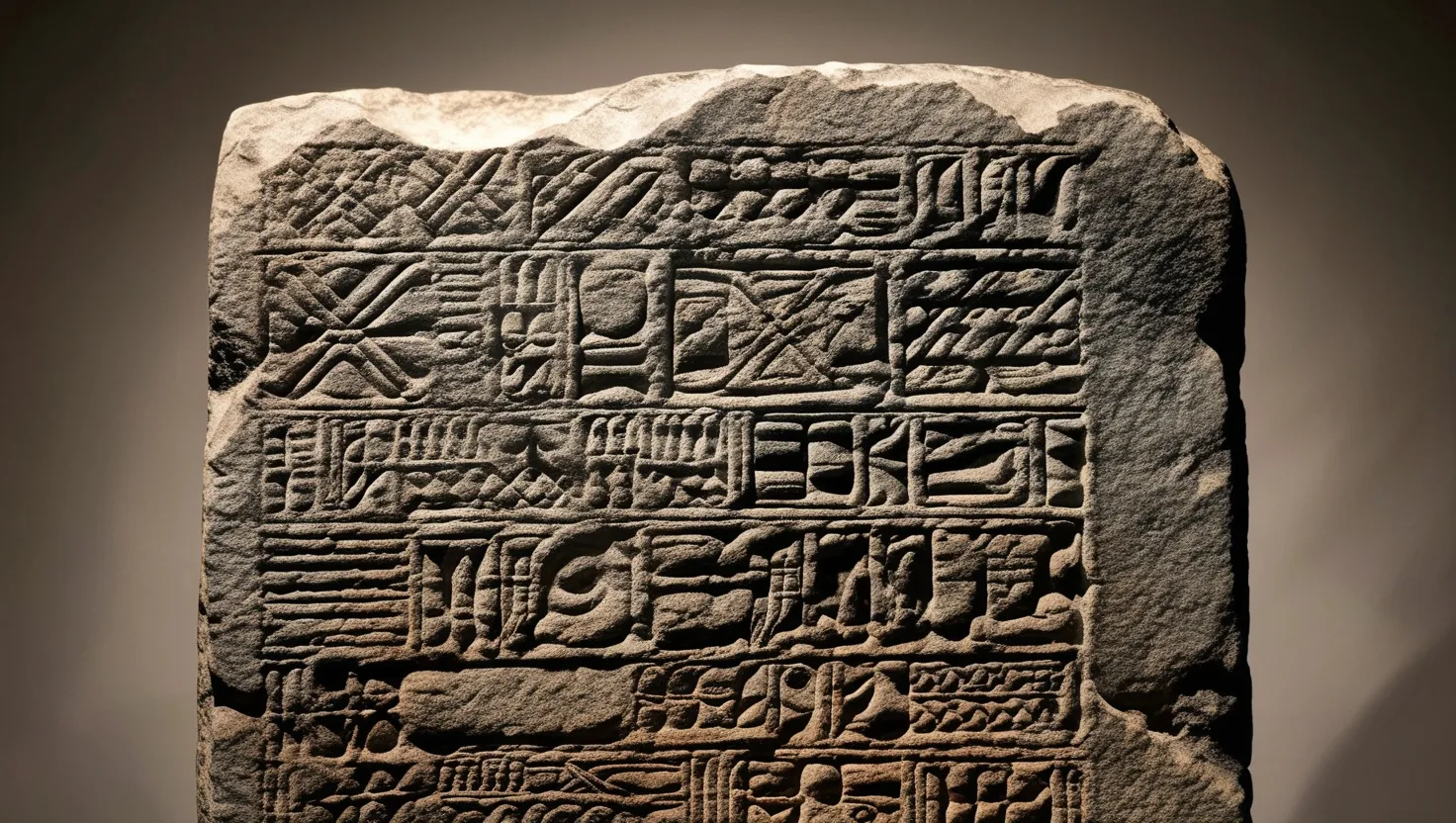
Who were the writers of ancient scripts that have never been read by anyone alive today? Sometimes, I think about the people who carved or painted these messages thousands of years ago. They didn’t know their words would become silent puzzles, waiting for distant generations to even notice them. Yet here we are, staring at symbols that refuse to speak. What do they hide—songs, laws, shopping lists, prayers, stories, jokes?
“To have another language is to possess a second soul.”
—Charlemagne
Let’s travel across continents and millennia to visit eight scripts that no living person can translate. Each one appears organized and deliberate, brimming with the structure typical of language. Why is it so hard to read them? The biggest reason: we lack a Rosetta stone. Without something bilingual—a key between the ancient script and a known language—decipherment becomes guesswork. It’s like trying to solve a crossword with almost all the clues missing.
The Indus Valley script, for one, is etched onto tiny seals and pottery from cities like Mohenjo-Daro, four thousand years ago. The script returns again and again in neat rows, symbols that probably express words, but not a single translation has stuck. Were these records of trade? Names of merchants? Religious phrases? The absence of a known “source” language makes every translation attempt into a leap. There’s still debate over whether these symbols truly represent a full writing system or a code for something else entirely.
On an island in the Pacific, the people of Rapa Nui—better known as Easter Island—carved the Rongorongo script onto wooden tablets. What makes it even more mysterious is its writing direction: lines alternate from left to right, then right to left, with each line upside down relative to the last. Scholars call this “reverse boustrophedon,” adding another layer of complexity to an already undeciphered script. Imagine an ancient librarian carefully writing these lines, never imagining the script would fall silent. The sense of loss is palpable: according to island legends, the knowledge of reading Rongorongo vanished in a single generation.
“If you want to understand today, you have to search yesterday.”
—Pearl S. Buck
On the Mediterranean island of Crete sits a puzzle the size of a hand: the Phaistos Disc. Seventy-one stamped symbols spiral inwards, as if the creator wanted the message literally wound up tight. The symbols themselves don’t match any other known script. Some suggest it’s a prayer, others say it resembles a game or song, but with only one disc and nothing to compare it to, each theory is just a clever guess.
Further east, the Proto-Elamite tablets offer an even older riddle. These tablets are covered in wedge-like marks, predating even Sumerian cuneiform, often considered history’s first true writing. The Proto-Elamite script has its own rules and repetitions, the telltale signs it was meant to be read. Yet without knowing what language the scribes actually spoke, or having a translation, the code holds steady. Some think the tablets record taxes, inventories, or even legal decisions from an ancient Iranian society.
Then there are the Jiahu symbols, found in China on tortoise shells at a Neolithic site. These symbols date back more than 8,000 years and are possibly the ancestors of Chinese writing. Some argue they aren’t true writing but proto-writing: marks that seem structured but may express concepts rather than language itself. What would someone from Jiahu recognize in today’s world? Would the pattern on a keyboard or the titles on a storefront window spark recognition, or would modern script seem equally baffling?
“Language is the road map of a culture. It tells you where its people come from and where they are going.”
—Rita Mae Brown
Across the ocean, in pre-Columbian Mesoamerica, the Isthmian script was used by people who left behind little else. These symbols are cut into stelae and ceramics, hinting at a civilization whose records are mostly gone. Unlike Mayan glyphs, which scholars have slowly deciphered letter by letter, the Isthmian signs remain mute, with no known descendants and little context. Each mark, line, and curl may have named kings, gods, or places now lost to history.
Then there’s the Dispilio Tablet, discovered near a lake in northern Greece. It’s about 7,300 years old, made of wood, and engraved with mysterious marks. What stands out is its age: older than many scripts once thought to be the “first writing.” Alongside it were other ceramics marked with a similar code. Some archaeologists speculate these might be records of possessions or trades. Without a translation, though, it could just as well be poetry or a tally of goods traded at the lakeside.
In Southeast Asia, the Singapore Stone is all that remains of a sprawling boulder covered with inscriptions. The slab was blown apart in the 19th century to clear a passage, scattering its script into history. The surviving fragment bears writing that resembles no known system. Is this the relic of a lost local kingdom, a crossroads for languages no longer spoken?
These scripts fuel a timeless debate: what counts as “writing”? Some systems might merely be mnemonic aids—systems for remembering things, not expressing full-fledged language. Others could be symbolic, pictorial, or representative of number systems. The farther we look back in time, the more we blur the line between art and text. Am I looking at a shopping list, or a hymn? Is it a formal law, or a child’s doodle?
Would the people who made these scripts have imagined their words could ever become so puzzling, so silent? In the absence of translation, imagination must fill the gaps. I like to wonder why so many ancient societies went to such great lengths to encode their thoughts. Was writing a privilege, reserved for priests or officials? Did these codes carry secrets we can barely guess at, or were they practical tools for managing crops and taxes?
“A lost language is a lost world.”
—Benjamin Lee Whorf
Can new technologies finally crack these puzzles? Today’s epigraphers use computer algorithms, machine learning, and statistical analysis, looking for patterns that might reveal underlying grammar or syntax. There’s hope, but without more context—especially bilingual texts—most efforts end where they began: with more questions.
Each undeciphered script is more than an intellectual challenge. It’s a reminder of the limits of our knowledge and the fragility of cultural memory. We live surrounded by stories that can’t be read, made by people who are gone, thinking in ways we may never fully understand. These lost writings stretch across the globe, from the sandy streets of Mohenjo-Daro to the wilds of Rapa Nui and the lakes of Greece.
Have you ever made a note or sent a message, only to forget what it meant later? Now, imagine that on the scale of a civilization.
What drives us to keep trying, even when progress is slow? There’s always the chance that someday, someone will find a single scrap—just a sentence, even a word—that cracks the code. Until then, the symbols of the Indus, the spirals of Phaistos, and the looping lines of Rongorongo stand as silent proof. Civilizations rise and vanish, but their puzzles endure, inviting us to keep reading between the lines, even when the lines themselves are lost.