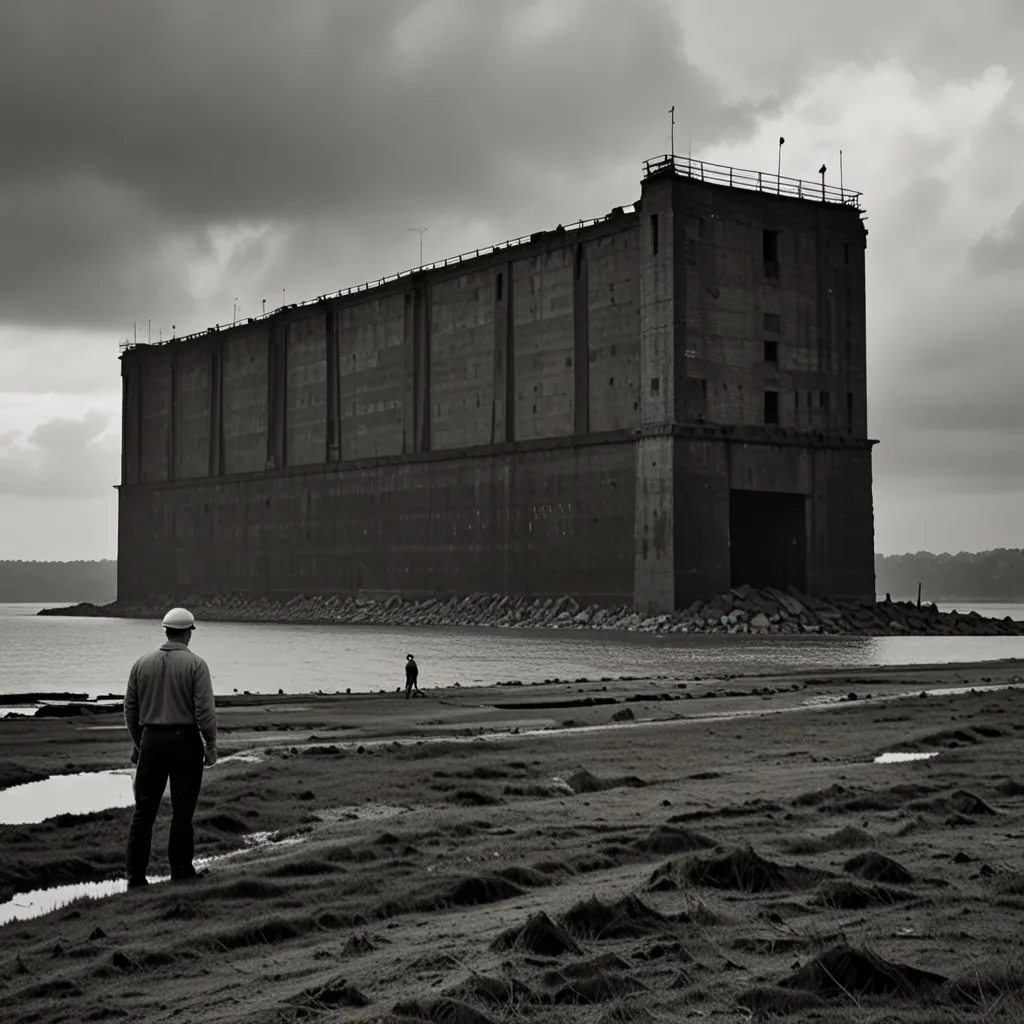
The Hoover Dam stands as one of the mightiest human-made structures in history, and it didn’t come to life without great effort and, sadly, loss. A whopping 21,000 people labored to construct this colossal dam, providing the grit and muscle to tame the Colorado River. But tragedy intertwined with their toil; among them, 96 workers lost their lives. JG Tierney, the first to perish, drowned while working, a poignant start to the list of those who made the ultimate sacrifice. Strangely enough, the last person to be claimed by the dam’s perilous conditions was Patrick, Tierney’s own son, who died 14 years later. Both father and son met their ends on the very same day - December 20th.
Moving from engineering marvels to the maritime world, there’s the curious and resilient life of Violet Jessop. She’s known by the rather dramatic moniker, Miss Unsinkable, and for good reason. Violet’s career aboard ocean liners with the White Star Line was marked by a trifecta of misfortune—and astounding survival. She was on the RMS Titanic when it famously sank in 1912, an event etched into history as one of the deadliest maritime disasters. Remarkably, she emerged unscathed. Just a few years later, in 1916, she found herself aboard the HMHS Britannic, which also met a terrible fate and sank. Yet again, she survived. Violet also endured the misadventure of the RMS Olympic, which didn’t sink but did crash. It’s an understatement to say she led an extraordinary life on the high seas.
Stepping back to the American Civil War, the conflict that reshaped a nation had a profoundly personal backdrop for one man: Wilmer McLean. The war kicked off in earnest in 1861, right on his farm, which instantly became a battlefield. Seeking peace and safety, McLean moved his family, only to find himself entwined with history once more. Fast forward to 1865, and the Civil War drew to a close with Confederate General Robert E. Lee’s surrender to Union General Ulysses S. Grant. The scene of the surrender? The parlor of Wilmer McLean’s house at Appomattox Courthouse. It’s almost poetic that the war began and ended for McLean in such a deeply personal way.
Revolutionary history often brings to mind Thomas Jefferson and John Adams, two stalwart figures who left an indelible mark on America. Their friendship is the stuff of legend: they started as close allies in the cause for independence but grew apart, becoming fierce rivals amid the nation’s early political turmoil. In later years, however, they managed to rekindle their friendship. In a twist of fate that seems almost too cinematic to be true, both men passed away on the same day—July 4th, 1826. This wasn’t just any day; it was the 50th anniversary of the Declaration of Independence, a date forever linked to their life’s work and to the birth of the nation they helped forge.