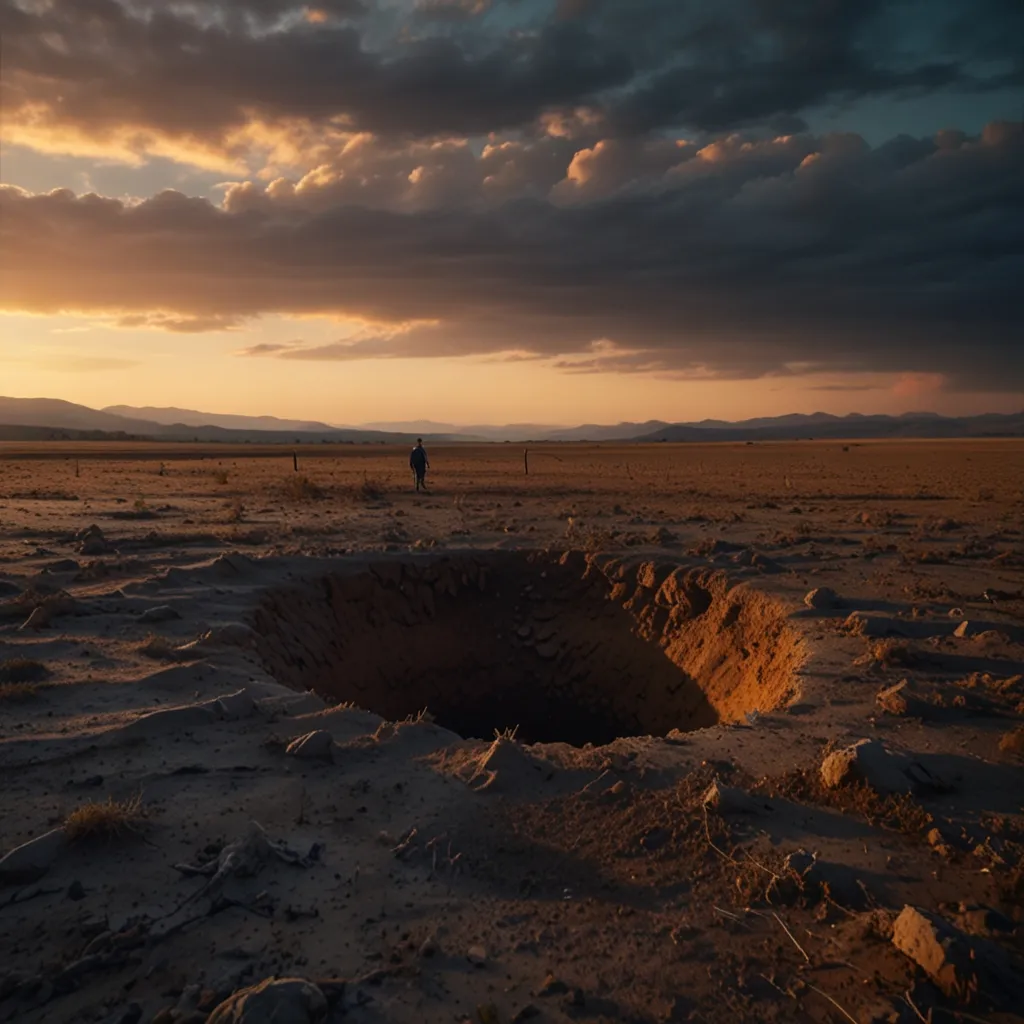
Namibia's Fairy Circles: The Desert Mystery Science Still Cannot Fully Explain
Explore the mystery of Namibia's fairy circles — perfect bare discs no scientist can fully explain. Discover the top theories and what they reveal about nature's hidden order.
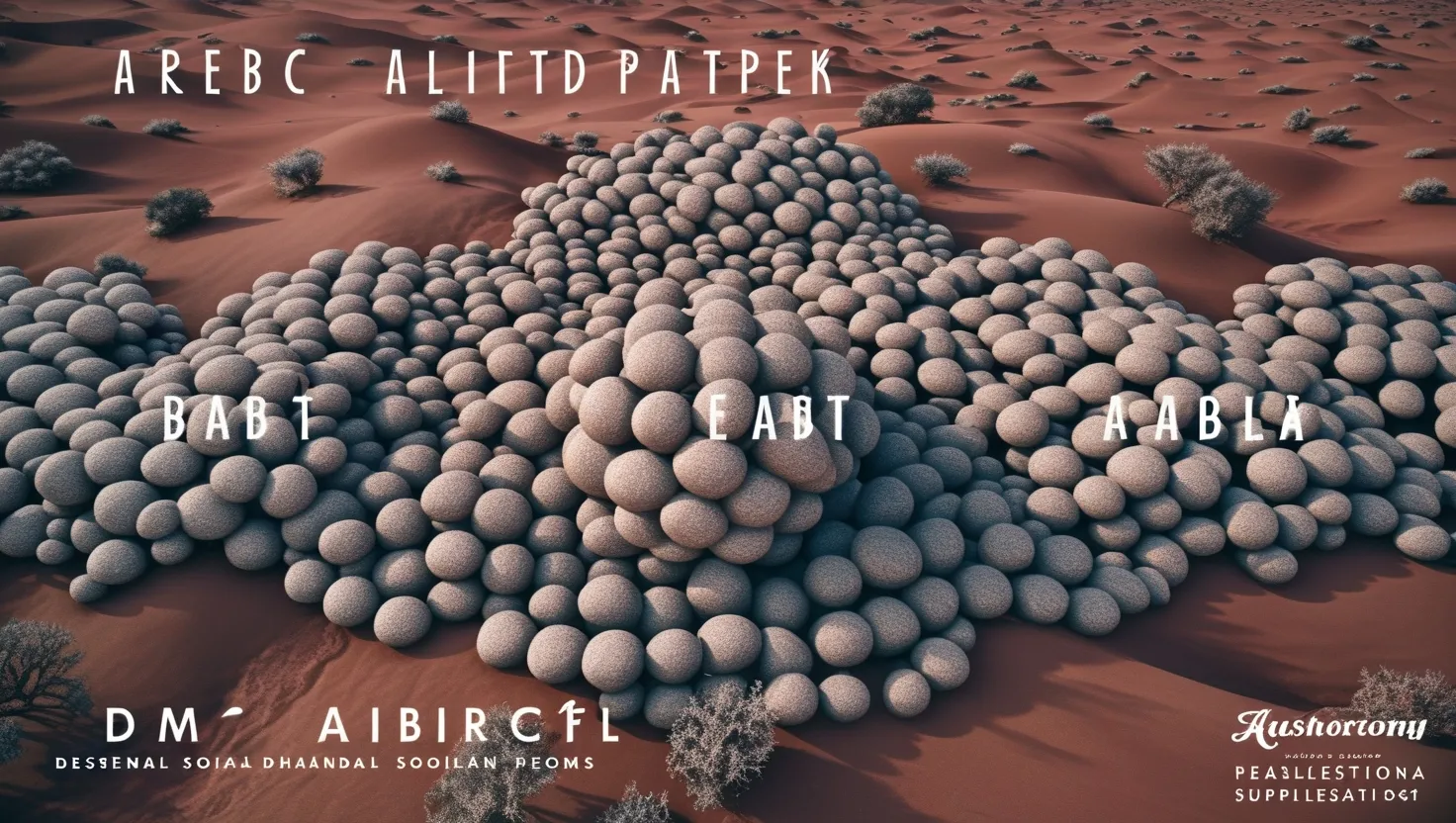
The first time you see a fairy circle from above, you think someone is playing a trick on you. The ground below looks like a giant has pressed a cookie cutter into the earth thousands of times, leaving behind perfect bare discs surrounded by green grass. No plants grow inside. No weeds. No scrub. Just dry, reddish soil, with a sharp edge around each circle as clean as if someone drew it with a ruler. You are looking at one of the strangest things on the planet, and nobody — not a single scientist, not a single ecologist — can tell you with complete certainty what made them.
These are the fairy circles of Namibia, and they have been sitting there in the Namib Desert for longer than any living person can remember.
So what exactly are we looking at?
The circles range from about ten feet across to over a hundred. They appear in a narrow strip of land that runs from southern Angola down through Namibia, hugging a specific band of gravelly soil. Step outside that zone and the circles disappear. Step inside it, and they are everywhere — thousands of them, spread across hundreds of miles of arid grassland, arranged in a loose honeycomb pattern that is far too regular to look accidental.
They are not a myth. They are not a local superstition dressed up as science. Satellites have tracked them for decades. Researchers have measured them, mapped them, and watched them slowly appear, persist for thirty to sixty years, and then quietly vanish as the soil evens out and grass creeps back in. New circles form somewhere else. The pattern continues. The desert breathes in and out, and the circles are its breath.
“The more clearly we can focus our attention on the wonders and realities of the universe about us, the less taste we shall have for destruction.” — Rachel Carson
Now here is the part that should genuinely surprise you. These circles appear almost exclusively where a single grass species grows — Stipagrostis grasses. Not just any desert grass. That specific one. Wherever that grass disappears, so do the circles. That is a clue most people skip over, and it is probably one of the most important facts about the whole mystery.
The termite theory — and why it only goes so far
The first scientist to offer a serious explanation pointed at termites. Specifically, a sand termite called Psammotermes allocerus. These insects are found living under the bare soil of the circles. The idea was straightforward: termites eat the roots of the grass in a central patch, kill the vegetation, and the bare soil then acts like a bathtub — it collects rainwater more efficiently than grass-covered ground, which creates an underground water reservoir that keeps the termite colony alive through dry seasons. The circle is, in this reading, a termite survival tool.
It is a smart theory. It is testable. And it explains why the circles are so persistent — termites maintain them actively. But then you start asking questions it cannot answer.
Why are the circles so perfectly round? Termite colonies do not naturally produce circles. They produce irregular, spreading patches. Computer simulations of termite colony growth do not generate the kind of neat, evenly spaced discs you see from the air. And when researchers physically removed termites from circles in field experiments, the circles did not fill in. The grass did not grow back. The bare patch remained. If the termites were the cause, removing them should end the effect. It did not.
“In every walk with nature, one receives far more than he seeks.” — John Muir
The grass theory — beautiful math, but missing pieces
A completely different group of researchers came at the problem from plant ecology. Their argument goes like this: in extremely dry climates, grasses compete fiercely for water through their root systems. When competition gets intense enough, the plants essentially push each other away from certain spots, leaving bare patches where water can sink deeper into the ground instead of being absorbed immediately. This benefits the surrounding grass, which gets access to deeper water. The mathematical models for this process produce hexagonal patterns — almost exactly what you see with the fairy circles.
This theory does not need termites. It is elegant, and the math works. But here is the problem: termites ARE consistently found in the circles. And the circles do not form in areas where the grass is present but termites are absent. You cannot simply dismiss insects when they keep showing up at the scene.
Ask yourself this — have you ever seen two completely different explanations both have strong evidence and strong gaps at the same time? That is the situation here, and it is rarer in science than you might think.
The deeper question hiding inside the mystery
The fairy circles are not just a puzzle about bugs or plant roots. They are a visible window into how nature organizes itself. Complex, beautiful patterns can emerge from very simple rules. Ant colonies build cities without an architect. Snowflakes form perfect hexagons without instructions. And deserts, apparently, draw circles without a compass.
What the fairy circles are showing us — even before we know their cause — is that living systems can coordinate across enormous distances without any central command. The circles are spaced too evenly for random processes. Something is enforcing order across hundreds of miles of open desert, and whatever it is operates through chemistry, biology, or physics that we have not fully mapped yet.
“Look deep into nature, and then you will understand everything better.” — Albert Einstein
Some researchers now argue for a hybrid model. Termites and plant competition work together, each making the other stronger in a feedback loop. The grass roots die because of termites, the bare soil collects water, that water benefits the surrounding grass, the surrounding grass grows thick and forms a clear boundary, and that boundary reinforces the circular shape. The termite colony thrives, maintains the patch, and the circle persists for decades.
It sounds plausible. But proving a feedback loop that operates over thirty years requires experiments that run for thirty years, and science rarely has that kind of patience or funding.
The part nobody talks about — migration
Here is something that rarely gets mentioned in the popular coverage of this topic. The circles move. Not quickly, not visibly to the naked eye, but remote sensing studies show that the circles shift position slowly over decades. The plant-competition model predicted this — the bare patch should drift slightly as underground water patterns shift. The termite model did not predict this. And yet, it happens.
A circle that sits in one spot today will be in a slightly different spot thirty years from now. The edge on one side slowly fills in with grass while the edge on the other side slowly retreats. The circle is not static. It is alive in its own quiet way, drifting across the desert floor like a slow tide.
Does that change how you think about them?
What we actually know — and what that tells us
The honest answer is that no single explanation has won. The termite theory explains the internal moisture patterns and the persistence of the circles. The plant-competition theory explains the spacing, the hexagonal arrangement, and the migration. Neither explains everything alone. The hybrid model is the most intellectually honest position right now, but it has not been conclusively demonstrated.
What we do know with confidence: the circles are real, they are persistent, they are linked to a specific grass species, they involve both termite activity and plant water dynamics, and they form a spatial pattern too regular to be accidental.
“The universe is not only queerer than we suppose, but queerer than we can suppose.” — J.B.S. Haldane
The fairy circles sit at an intersection of entomology, plant ecology, hydrology, and complexity theory. They are not just a Namibian curiosity. Similar patterns — not identical, but structurally similar — have been found in Australia, in the Pilbara region, in soils with no Psammotermes termites at all. That discovery shook the termite camp hard. If the same type of pattern appears on a different continent with different species, then the specific termite is not the cause. The cause is something more general — some principle of self-organization in dry grasslands that we are only beginning to understand.
The circles will still be there when we figure it out. Patient, perfectly round, unbothered by the academic argument raging above them. They have been there for centuries. They can wait a little longer.