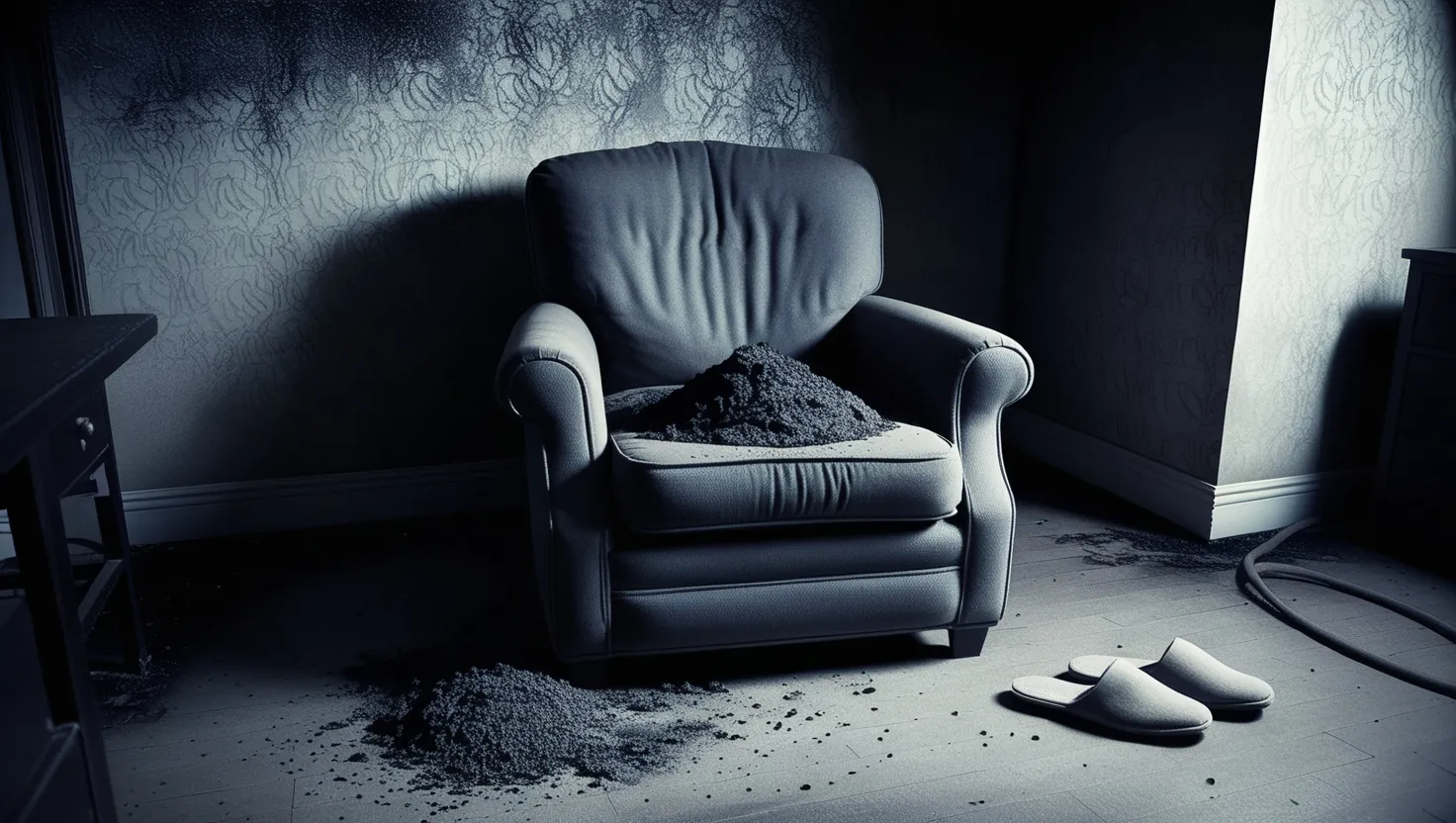
Imagine hearing about people bursting into flames, burning to ash, while a plastic chair nearby hardly has a scorch mark. For years, this idea—spontaneous human combustion—has both terrified and confused us. It’s easy to brush off at first, but dig into the details, and you can’t help but get curious. Why have witnesses described victims whose hands and feet are untouched, while the rest of their bodies are reduced to fragile, gray powder? Why would the furniture go unburned? I find these questions don’t just challenge our ideas about fire: they pull at the fabric of what we think we know about our own makeup.
Let me walk you through five famous cases, highlighting what makes each one so strange and why, after all this time, science is still scratching its head. Before starting, ponder this line from Agatha Christie, known for writing about unsolvable mysteries:
“The impossible could not have happened, therefore the impossible must be possible in spite of appearances.”
One case that still has experts arguing took place in the 1950s. Mary Reeser, a woman from Florida, was found as almost nothing but ash. Only her foot, still in a slipper, and part of her backbone remained. Her chair was only slightly scorched, and surrounding objects—even a pile of newspapers—were basically untouched. Some people said it must have been a dropped cigarette; others questioned how a cigarette could create enough heat to turn bone to ash, especially without burning down the building. Firefighters and scientists have run all sorts of experiments to reenact this, but they can’t get the same results: complete destruction of a body with no real fire damage nearby. Are we missing something?
Let’s turn to an incident from 1982, in Ireland. Michael Faherty, a man in his 70s, was found burned to death in his home. The fire had started in his bedroom, but apart from the immediate area where his body was, there was no sign of fire spreading. The coroner was so stumped after the investigation that he actually listed “spontaneous human combustion” as the official cause of death. If coroners, who see every type of fire fatality imaginable, are left with no better theory, does that mean this is really as unexplainable as it seems?
Here’s another one, from 1964, involving Dr. John Irving Bentley. He was a retired physician living in Pennsylvania. The story is chilling: a meter reader entered Bentley’s house, only to find a pile of ashes and a single slippered leg. The rest of Dr. Bentley? Gone. The floor had a hole where he apparently fell through, but the surrounding bathroom was fine. People have tried to guess—was it a dropped pipe, an electrical short? But again, the scale of destruction doesn’t match what we know happens in house fires.
All these cases tend to have a few repeats. Victims are alone. Many are older and may move less easily or have health conditions. Some had been drinking alcohol or were smokers. But these factors alone fail to explain the thoroughness of the burning or the undamaged surroundings.
What about the Paris case of 1847? This one stands out for its persistence in fire-related folklore. The victim—Nicole Millet—was found burned on a straw mattress; her husband was cleared of murder when the court ruled it was a case of spontaneous combustion. This was the era when alcohol consumption was suspected to be the key. People thought the human body, saturated with spirits, could suddenly ignite. More recent research says even the most intoxicated person couldn’t become that flammable. Still, the theory stuck, and it’s easy to see why—it provides a simple answer to a bizarre sight.
But is a simple answer ever enough? Mark Twain caught this in a different context:
“There is something fascinating about science. One gets such wholesome returns of conjecture out of such a trifling investment of fact.”
Fast forward nearly a hundred years to the case of Helen Conway in Pennsylvania, 1964. She was an elderly woman found burnt to ash in her armchair. The fire, though fierce enough to destroy her completely, left much of the upholstery and carpeting barely charred. Cigarette? Electric spark? The more you learn, the more the puzzle pieces don’t quite fit.
So, what do we really know? Over the past two centuries, the most accepted theory is called the “wick effect.” The scenario is like this: human body fat melts and soaks into clothing or fibers. Once a fire starts—say, from a dropped cigarette—the clothing acts like the wick of a candle, and body fat is the wax. This can keep a fire going, at a lower temperature, right where the person is, for hours. In this way, the body can burn almost completely without an open blaze. But there’s a catch. The wick effect may explain slow, local burning, yet nobody can get it to neatly match what’s found at real SHC scenes: bones destroyed at temperatures higher than most household fires produce, without the rest of the house suffering worse.
Ever wondered why all these cases seem to impact the middle of the body the most, often sparing the limbs or even leaving a foot completely intact? Human fat is found more in the abdomen, buttocks, and thighs, not in the hands or feet. Bone density also plays a role—older adults have more porous bones, which apparently combust more quickly, according to some crematorium studies. But this is still a far cry from watching a body disappear in its own living room while the wallpaper stays clean.
Let’s stop for a moment. Would you ever believe that a body could burn for up to six or seven hours—undetected, without neighbors noticing smoke pouring out of the windows? Does that sound right? If not for the police reports, photos, and coroners’ documents, I’d think this was something out of a horror novel, not real life.
Another point: throughout these mysterious cases, there’s almost always another thread—loneliness. Most of these people were alone, sometimes for days, before they were found. Nobody to raise an alarm, no rushing to the rescue. This fact makes investigation even trickier, as the exact start of the fire is unknown. Was it really “spontaneous,” or just a slow, overlooked accident?
Could there be something inside our bodies—something chemical or even microbial—that triggers this kind of reaction? Over hundreds of years, people have invented strange ideas: maybe it’s a build-up of gases produced inside us after death, sparking off from static electricity or other sources? Or a rare chemical process involving our fat, or even certain diseases we barely understand? None of these claims hold up well in experiments, but they keep popping up.
One question often asked: are these cases becoming less common now? Maybe with fewer people living alone, better fire protection and health, the numbers have quietly dropped. Or maybe the old cases just seemed more mysterious because science and forensics weren’t as advanced.
“Education is the kindling of a flame, not the filling of a vessel.” Socrates’ words might echo the problem here—each time we chase an answer, we find even more questions.
Forensic scientists today look over SHC cases carefully, almost always finding evidence of an external ignition eventually. Most agree: a dropped cigarette, a burning log, or a small electrical fire can kick off a slow smolder that turns tragic for someone who can’t react quickly enough. Still, what’s missing is clear footage or eyewitness accounts. Would seeing it happen live finally settle the debate?
If you had to guess, would you pick a slow, unnoticed accident, or something not yet understood by science? Spontaneous human combustion sits at the edge between the known and the unknown, a topic that makes us rethink what our bodies really are.
Do you think there’s something unusual about the chemical makeup of older adults, or is it all just circumstance—being alone, maybe sleepy or drunk, perhaps wrapped up in flammable materials? Or is there one key detail investigators keep missing, something right under our noses?
As incredible as it sounds, many experts believe every case can eventually be pegged as a perfect storm of small misfortunes: a tiny spark, the wrong clothing, the wrong place, the wrong time, and no one there to witness or save. Others leave a little room for doubt; after all, not everything odd has been explained.
If there’s a bigger lesson here, it’s that curiosity is a good thing—even when the answers don’t come easily. These five cases, each so oddly similar, remind me that reality sometimes outdoes even the most creative fiction. And in the end, maybe the greatest mystery is how such stories cling to our imaginations, challenging us to keep asking, “But what if?”