The Hum: Why 2% of People Hear a Mysterious Sound Scientists Can't Explain
Discover the mysterious global phenomenon of The Hum - a low-frequency sound only 2-4% of people can hear. Explore scientific theories behind this unexplained acoustic puzzle affecting communities worldwide. Learn more about this auditory mystery.
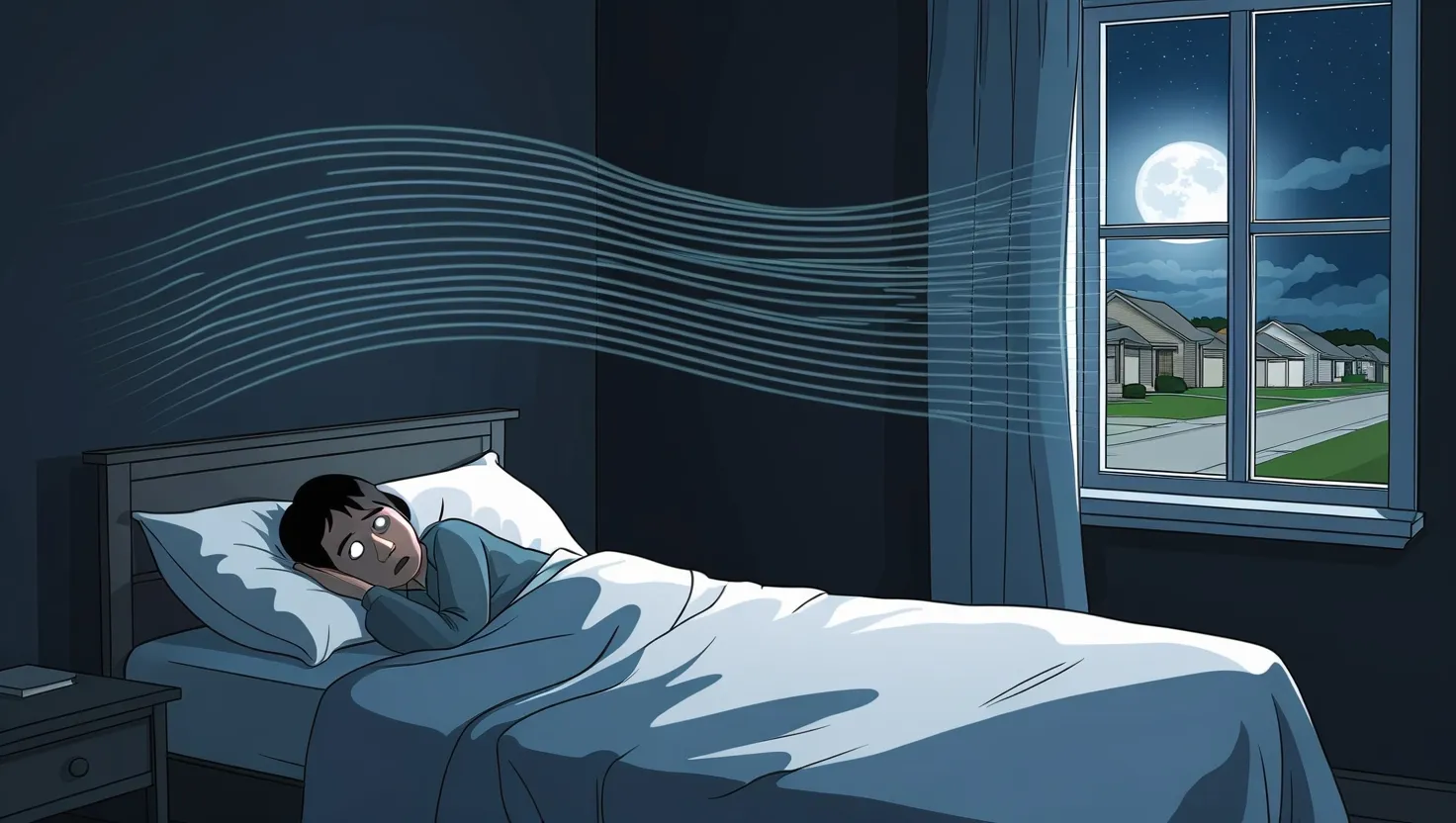
Imagine lying in bed at night, your city quiet, your house even quieter, and yet, there it is—a low, persistent sound, like a truck idling in the distance. It drones on, never growing louder, never quite fading, just on the edge of perception. For most people, silence is simply the absence of noise. But for a small fraction of us, silence hides something stranger: a hum that seems to have no clear source or end.
This is not the stuff of fiction. The Hum, as it’s come to be known, is one of the most stubborn acoustic puzzles of our time. It’s been experienced by communities as far-flung as Taos, New Mexico; Windsor, Ontario; Largs, Scotland; and Bondi, Australia. And its oddities are as perplexing as its reach is broad. Only about 2–4% of the people in these places can hear it. No, their hearing isn’t especially keen, nor is it impaired. Standard hearing tests draw a blank. And when researchers deploy their most sophisticated microphones and vibration sensors, they sometimes record faint traces of low-frequency sound or tremors—but never enough to explain the nightly torment of the hearers.
What’s most intriguing is not just that the Hum exists, but that after decades of research, no consensus has formed on what causes it. The Hum is different from everyday noise. Unlike the thunder of a passing train, it prefers the indoors. It grows more noticeable at night, when the world’s regular racket dies down. It dodges our usual explanations: industrial fans, pipelines, distant highways—all have been suspected, all have been crossed off the list when the Hum persists despite their absence.
Some have floated the idea that the Hum comes from seismic activity—micro-tremors moving through the earth. But no pattern connects these tremors to known earthquakes, and the phenomenon appears with or without seismic unrest. Others have wondered if the Hum might be the sound of military or submarine communications leaching into the audible range. So researchers put on their hard hats, conduct emission audits, and find nothing out of the ordinary. The Hum is stubbornly normal on paper—even when tortuously abnormal in experience.
Let’s pause for a moment and wonder: have you ever heard a noise that nobody else seemed to notice? If so, how quickly did you begin questioning if the sound was real, or just your mind playing tricks? This is the daily conundrum of Hum hearers. Many, at first, are reluctant to admit what they’re experiencing. The isolation can become almost as distressing as the noise itself.
“There are more things in heaven and earth, Horatio, than are dreamt of in your philosophy.” —William Shakespeare
Historical records show that strange, persistent hums have been reported since at least the 1800s. But a surge of cases beginning in the 1970s thrust the phenomenon into popular awareness. By now, the pattern is clear: the Hum crops up in specific locations, targets a small subset of the population, and outlasts changes in industry, urban growth, and even drastic shifts in local climate. It’s been heard in rugged wilderness far from human activity and in bustling suburbs alike.
Some have speculated that the Hum might be a form of tinnitus—a ringing, buzzing, or hissing inside the ear that only the sufferer can hear. But there’s a twist: tinnitus usually shows up as a higher-pitched, more consistent tone, while the Hum sits deep in the bass range, from 30 to 80 Hz. Moreover, many hearers say they can distinguish the Hum from internal noises by noticing how it interacts with actual low-frequency sounds in their environment.
Among the more fascinating scientific twists are findings from brain scans. Researchers have observed that, when exposed to simulated Hum frequencies, the brains of hearers display unusually high activity in the thalamus—a part of the brain that acts as the auditory relay center. This suggests a “brain amplification” effect, where some individuals literally tune into or exaggerate faint environmental sounds, processing them at a level that becomes intrusive. But why only some people, and why only in certain places? Science, so far, doesn’t have an answer for that.
“The most beautiful thing we can experience is the mysterious. It is the source of all true art and all science.” —Albert Einstein
Here’s another wrinkle: environmental studies often find no external origin for the Hum. No matter how many microphones or seismic sensors you plant, the Hum appears and disappears with no connection to local infrastructure. Some studies have tried to link the Hum to electromagnetic fields, theorizing that select individuals might be more sensitive to subtle changes or surges. And yet, tests in controlled settings rarely replicate the phenomenon, and electromagnetic emissions in Hum-prone areas rarely stray from the norm.
Every now and then, new theories surface—some plausible, some less so. Could the Hum be the product of rare atmospheric conditions, channeling sound in unexpected ways? Is it caused by inaudible infrasound from ocean waves or distant storms, conducted through the ground and amplified in certain homes? Or, as some engineers have wondered, could it be an artifact of our own modern lives—a byproduct of the invisible, persistent hum of electronic devices, wireless signals, or renewable energy infrastructure?
No matter the theory, every explanation comes up short. The Hum remains one step ahead, always just out of scientific reach. This is what makes it so captivating; it’s a test of our tools, our patience, and possibly even of our senses.
Why would evolution allow a small fraction of us to tune into a sound that serves no apparent purpose, and may not even be “real” in the usual sense? In some ways, this question pushes us to look more closely at the quirks of human perception. Our brains are exquisitely tuned for pattern recognition and threat detection, sometimes to a fault. When background noise falls to ambient lows, perhaps the brain’s restless circuitry fills the silence, seeking patterns even where none exist. Or perhaps the explanation is hidden in the bones and nerves of the ear, waiting for future science to bring it forward.
The Hum also raises questions about the boundaries between shared experience and individual reality. If only a handful of people in a room can hear a sound, does it count as real? Is reality defined by consensus, or does it owe something to the minority who sense what others do not?
“Reality is that which, when you stop believing in it, doesn’t go away.” —Philip K. Dick
For those who can hear the Hum, the experience is anything but trivial. It can disrupt sleep, affect concentration, and, in severe cases, drive people from their homes. The persistence and inescapability of the noise can wear down even the most resilient mind. And yet, because it is so elusive, so hard to quantify, relief is hard to find. Many resort to white noise machines, earplugs, or even structural modifications to their homes in a bid to block out the ever-present drone.
What might surprise you is just how consistent the demographic footprint of the Hum is worldwide. It seems to prefer middle-aged adults, with cases skewing slightly toward men. Children, for reasons unknown, are almost never affected. And despite the Hum’s reputation for haunting isolated, rural areas, it’s just as likely to appear in the heart of a bustling metropolitan region. The common thread is not the environment, but the people—and perhaps, the quirks of their auditory processing.
Despite its global reach, the Hum has never truly captured the popular imagination in the way that UFOs or the Loch Ness Monster have. Perhaps that’s because it’s mundane in its presentation, but devastating in its effect—a mystery that is not so much seen as endured.
If the Hum has a lesson for us, it may be that our senses and our environment are far more unpredictable and interwoven than we like to admit. We tend to assume that what we perceive is shaped by clear, external causes. Yet, here is a global phenomenon, studied for decades, that refuses to fit neatly into categories. It blurs lines between the psychological and the physical, between what is measured and what is felt.
Have you ever wondered if silence itself might hold secrets just beyond our reach, waiting for the curious, the sensitive, or perhaps just the unlucky, to stumble upon them?
“Mystery creates wonder and wonder is the basis of man’s desire to understand.” —Neil Armstrong
As I reflect on the many puzzling facets of the Hum, I find the phenomenon oddly reassuring. It reminds us that the world’s riddles are not all grand or distant. Some are local, persistent, and close to home—sometimes quite literally humming in our ears, demanding that we listen, even when the rest of the world can’t hear a thing.
Isn’t it fascinating to think that among us walk those who live in a noisier universe, their sense of reality shaped by the presence of a sound we can neither capture nor fully explain? The Hum may be a scientific puzzle, but it is also a profoundly human story—a testament to the limits of knowledge, the variability of experience, and the enduring strangeness of what we call silence.