Tunguska Event: The Cosmic Mystery That Flattened 830 Square Miles of Siberian Forest
Discover the Tunguska Event: A cosmic mystery that flattened 830 sq miles of Siberian forest in 1908. Explore theories, eyewitness accounts, and scientific insights. Uncover the truth behind this baffling explosion.
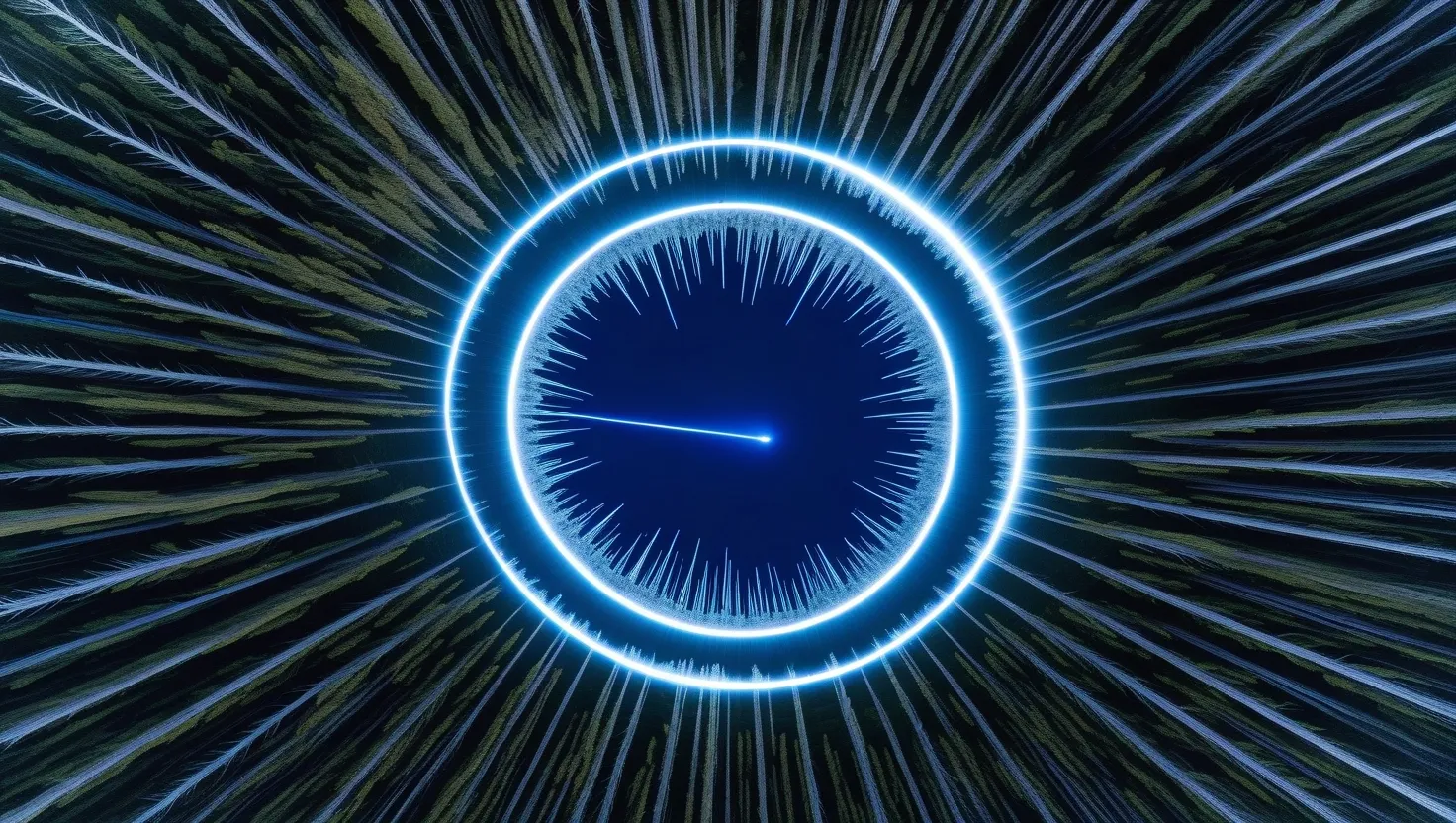
On June 30, 1908, the serene landscape of Siberia’s Tunguska region was shattered by an event that would etch itself into the annals of history as one of the most baffling cosmic mysteries of the 20th century. At approximately 7:17 AM local time, a blindingly bright blue light sliced across the sky, heralding an explosion so powerful that it would flatten an estimated 830 square miles of dense pine forest.
Imagine standing in the heart of this taiga, surrounded by towering trees that have witnessed centuries of silence. Then, in an instant, the tranquility is shattered by a light nearly as bright as the sun, followed by a deafening roar that sends shockwaves through the ground. This was the reality for the Evenki natives and Russian settlers who were in the vicinity that fateful morning.
“The explosion was so powerful that it shattered windows hundreds of kilometers away,” one eyewitness recounted. The sheer force of the blast was akin to an earthquake, knocking people off their feet and sending tremors that were recorded by seismographs as far away as western Europe.
As the news of the explosion spread, it sparked a flurry of speculation. What could have caused such a cataclysmic event? Theories abounded, ranging from the plausible to the fantastical. Some believed it was the impact of a meteor or comet, while others ventured into more exotic realms, suggesting antimatter or even a mini black hole.
One of the most intriguing aspects of the Tunguska Event is the lack of physical evidence. Unlike typical meteorite impacts, there was no crater, no significant radiation, and only a handful of tiny fragments that could be linked to the explosion. This absence of concrete proof has fueled a century-long debate among scientists.
“As we reflect on the Tunguska Event, we are reminded of the vast and mysterious universe we inhabit,” said Dr. Leonid Kulik, the Soviet scientist who led the first major expedition to the site in 1927. Kulik’s team expected to find an impact crater, but instead, they discovered a zone of scorched and felled trees, all pointing away from the epicenter like a giant, spread-eagled butterfly.
Recent research has leaned towards the theory that the explosion was caused by an asteroid that grazed the Earth’s atmosphere. This asteroid, estimated to be about the size of a football stadium, heated rapidly as it passed through the upper atmosphere, generating a shockwave that flattened the trees but left no crater behind.
But questions still linger. What was the composition of this asteroid? Was it made of iron, as some studies suggest, or was it something more unusual? The trajectory of the object is also a subject of debate. Did it indeed pass through the atmosphere and continue into the Solar System, or did it disintegrate completely?
The Tunguska Event serves as a stark reminder of the unpredictable nature of celestial events. It challenges our understanding of how cosmic impacts can affect life on Earth and underscores the importance of ongoing research in planetary defense and impact monitoring.
As we ponder the mysteries of Tunguska, we are forced to confront the fragility of our existence. “The universe is not only much stranger than we think, it is stranger than we can think,” said Albert Einstein. The Tunguska Event is a testament to this strangeness, a cosmic enigma that continues to intrigue and inspire scientists and the public alike.
What if such an event were to occur today? How prepared are we to face the consequences of a similar impact? These questions haunt us as we delve deeper into the mystery of Tunguska. The event may have happened over a century ago, but its implications are as relevant now as they were then.
In the end, the Tunguska Event remains an open chapter in the book of cosmic history, a reminder of the awe-inspiring power of the universe and the importance of continued exploration and understanding. As we look up at the stars, we are reminded that there is still so much we do not know, and it is this unknown that drives us forward in our quest for knowledge.