What Does the Universe Smell Like? A Nostril Tour of Outer Space
Scent-Sational Space: Unveiling the Aromas of the Cosmos
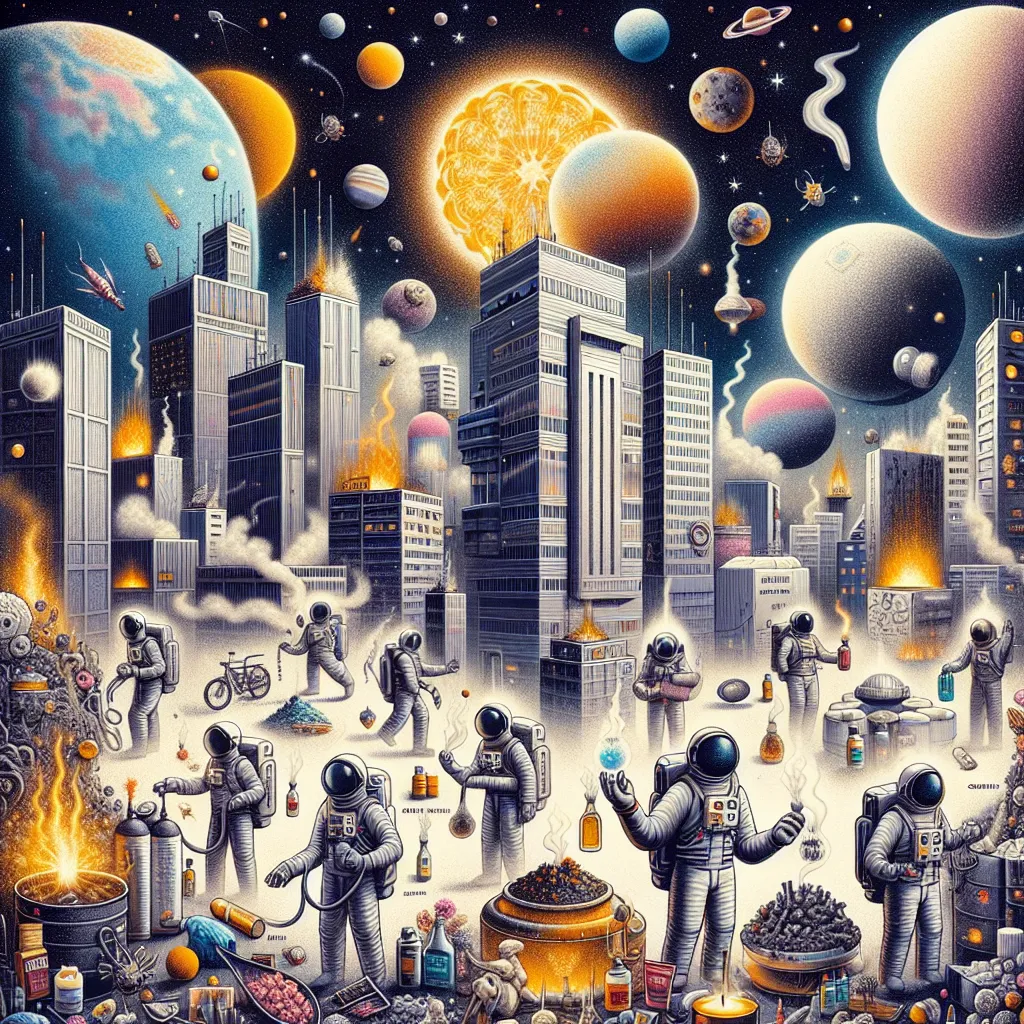
Have you ever wondered if outer space has a smell? If you’re thinking about the airless void, you might be surprised to learn that celestial bodies, like the Moon and planets, have distinct aromas. They might not be universal, but they are fascinating.
Ever watched “The Expanse”? If not, you should start immediately. It’s an awesome sci-fi show, based on equally amazing novels. There’s a part where the Moon is described as smelling like gunpowder, and that’s no exaggeration. During the Apollo missions, astronauts noted that lunar dust has a scent similar to spent gunpowder. The cause? No one knows for sure, but lunar dust might be chemically active.
How does this smell happen? One explanation is the “desert rain effect.” On Earth, rain releases oils and compounds from rocks, creating a distinctive smell. Moon dust, when brought into the moist air of the lunar module, might release similar odors. Another theory involves solar winds, which trap ions in the dust that get released upon contact with warm air.
Back on Earth, moon dust turns odorless, but the phenomenon remains one of space’s intriguing mysteries. Space might even have a smell! Astronauts report scents like burnt metal after spacewalks, possibly from metal molecules oxidizing upon return to breathable air.
Let’s take a tour of the solar system through our noses.
Mercury, closest to the sun, likely smells like salty gunpowder due to sodium and silicon dioxide.
Venus? Think burnt matches and rotten eggs. Its thick atmosphere of carbon dioxide and sulfuric acid ensures a pungent experience.
Mars, with its iron oxide, smells like rusty metal, combined with methane and other chemicals in its thin atmosphere. Not a place you’d want to take a deep breath.
Jupiter, the giant, has layers of smells. From ammonia in the outer layers (horse urine, anyone?) to hydrogen cyanide (toasted almonds) deeper in.
Saturn, mostly hydrogen, and helium, does have trace chemicals that could make it smell like a mix of dead fish and skunk. Lovely.
Then, there’s Uranus. Don’t laugh! It’s likely the smelliest, with hydrogen sulfide (rotten eggs) closer to its surface.
Neptune, though made of many frozen compounds, doesn’t smell much at all due to its primarily hydrogen and helium atmosphere. If only the same could be said for its twin, Uranus.
Other fascinating smells? Pluto, with its gases, remains odorless, while Saturn’s moon Enceladus might give off a whiff of a martini due to methanol plumes. Comets smell of burnt metal and rotten eggs. The center of our galaxy even has a dust cloud containing the substance that gives raspberries their flavor!
So, what’s the worst-smelling place in our solar system? You guessed it, Uranus!
Thanks for joining this sensory tour of the cosmos. Who knew space could be so… fragrant?