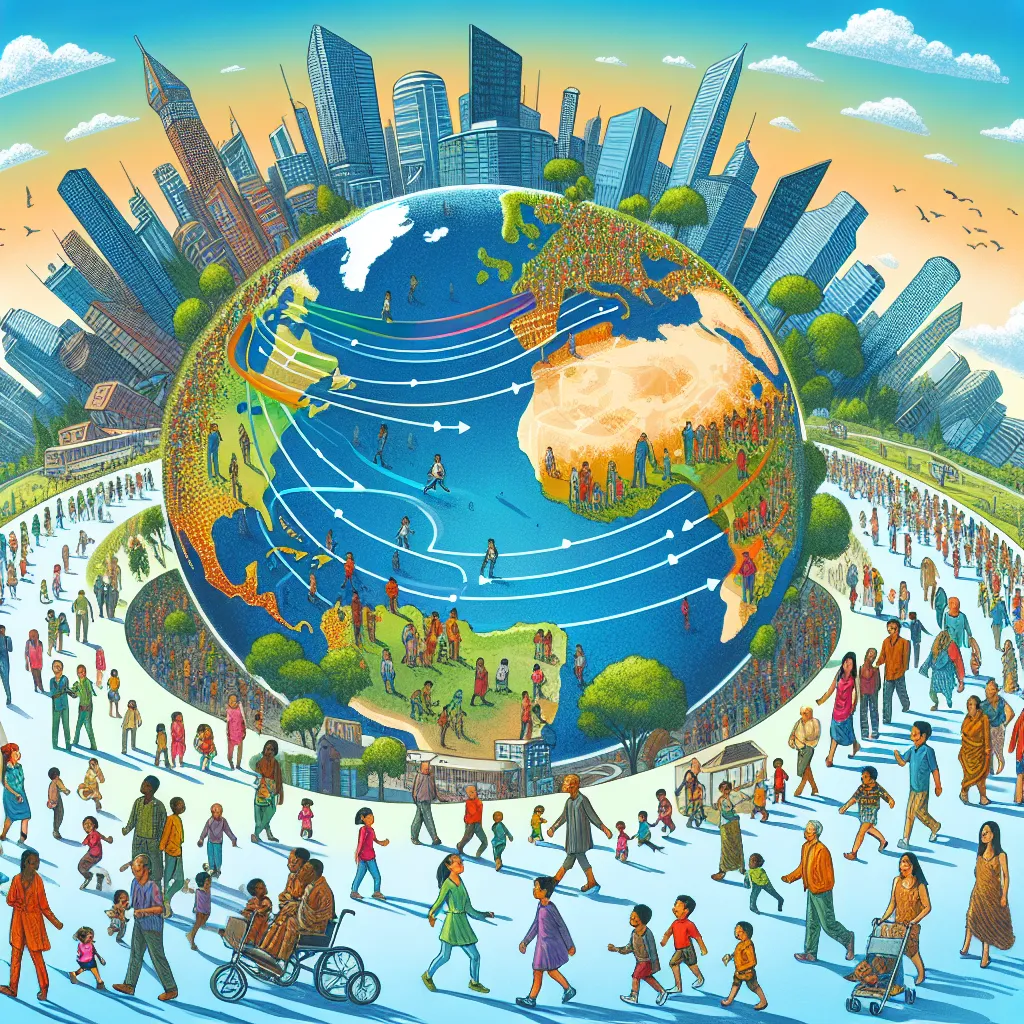
Right now, we have more people on Earth than ever before. From just 1 billion back in 1800, we’ve grown to 7.4 billion in 2016. This rapid rise makes you wonder about the next century. What does this population boom mean for our future? Will we face massive migrations, overcrowded cities, diseases, pollution, or even fights over resources? Or is it all just needless worry?
In the 1960s, the fast population growth rate led to many doomsday predictions. People feared that overpopulation would destroy the world. But these high birth rates and population explosions aren’t forever. They’re just steps in a four-stage process called the demographic transition. Many countries have already gone through this, and others are in the middle of it now.
Let’s flash back to the 18th century. The world was in the first stage of demographic transition. Even Europe struggled with bad sanitation, poor diets, and weak medicines, leading to lots of births but also many deaths. Then the industrial revolution changed everything. People became workers, goods were mass-produced, and advances in science, medicine, and communication improved lives. This led to better health and living conditions, sparking a population boom.
As living conditions continued to improve, fewer people died young, which meant families didn’t need to have as many children. This kicked off the third stage of transition. Eventually, births and deaths balanced out, stabilizing the population. Many countries went through these four stages: high births and deaths, better living leading to population growth, fewer births, and then stabilization.
So why is the population still growing if birth rates are dropping? The children born during the population boom of the ’70s and ’80s are now having kids, though fewer in number. This means the overall population spikes, but the growth rate is slowing. Today, the average family has only 2.5 kids, compared to 5 kids 40 years ago. As fertility rates drop further, population growth will slow even more.
Most of the world is already in the fourth stage. Take Bangladesh, for example. In 1971, women had an average of 7 kids, with many dying before age 5. By 2015, these numbers had significantly improved. Mortality was down, and women had only 2.2 kids on average. Other countries are catching up fast. Malaysia and South Africa took only about 34 years to reduce fertility rates, while Iran did it in just 10 years.
Helping developing countries lower child mortality and improve living standards is key. It’s beneficial for everyone, even if your main concern is fewer refugees. The truth is, as people live better lives globally, extreme poverty decreases. The future of population growth isn’t grim; it’s bright. The UN predicts the world population will stabilize, and more people will have access to higher education, leading to global advancements.
In short, the fear of overpopulation is overblown. We’re on a path to stable population growth and a better quality of life for everyone.