What If We Could Bottle a Star for Unlimited Clean Energy?
Bottling a Star: Chasing Sunlight's Infinite Potential
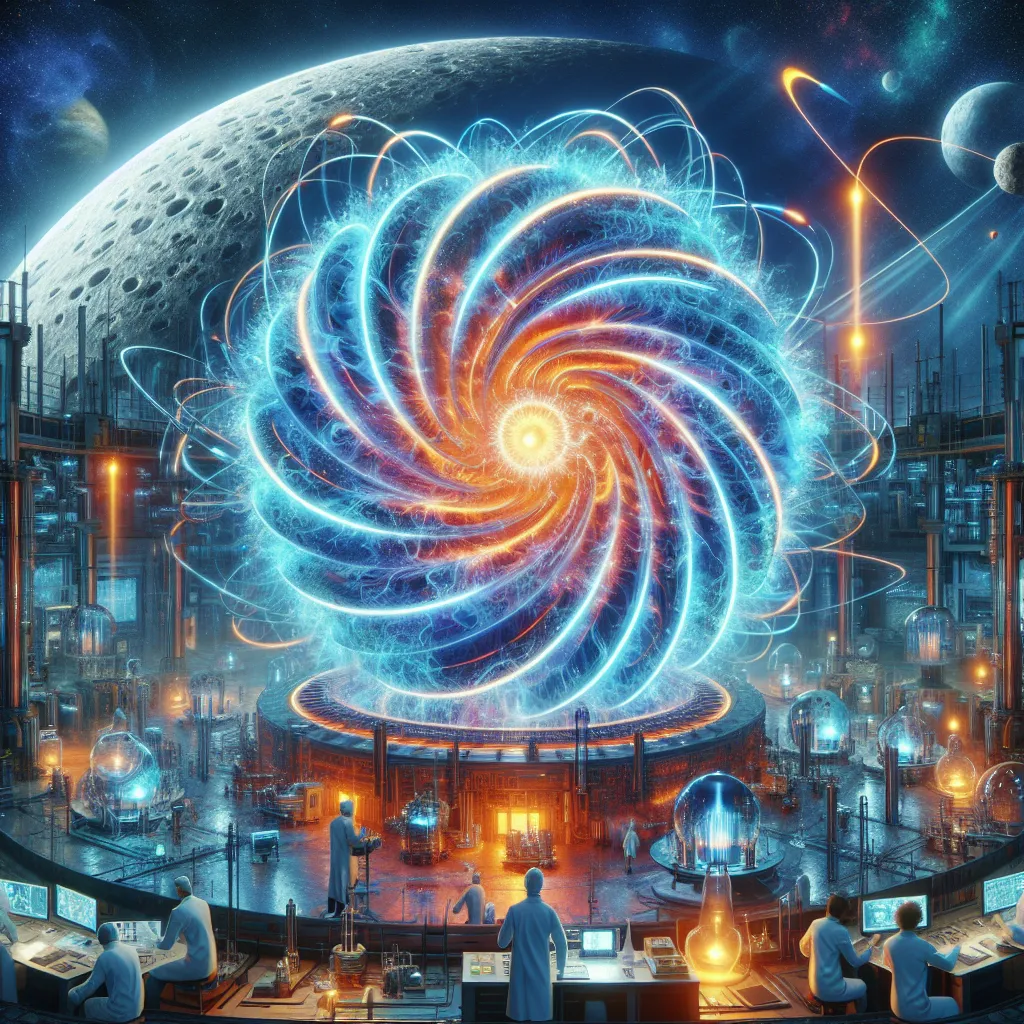
Energy powers everything in our universe. From lighting up our homes and growing our food to running computers, life as we know it depends on it. We get energy in several ways: burning fossil fuels, splitting atoms, or harnessing the power of sunlight. But each has its own drawbacks. Fossil fuels are toxic, nuclear waste is dangerous, and we can’t store enough solar energy for cloudy days yet. However, the sun offers endless free energy, so could we build a sun here on Earth? Could we bottle a star?
The sun shines because of nuclear fusion. Fusion is a thermonuclear process requiring extremely high temperatures, so hot that atoms shed their electrons and form a plasma. Since the positively charged nuclei repel each other, they need to move incredibly fast to fuse—meaning incredibly hot, millions of degrees. Stars achieve these temperatures through massive pressure in their cores, which forces nuclei together until they merge, creating heavier nuclei and releasing energy. Scientists hope to replicate this in fusion reactors.
Creating fusion on Earth isn’t about brute force; it requires clever tech. Scientists have developed two methods to heat plasmas to fusion-ready temperatures. First, magnetic confinement reactors use a magnetic field to squeeze plasma in a doughnut-shaped chamber. The I.T.E.R. reactor in France is a prime example, using superconducting magnets cooled to near absolute zero, creating a massive temperature gradient.
Second, inertial confinement uses super-powered lasers to heat the surface of a fuel pellet, making it hot and dense enough to fuse. The National Ignition Facility in the U.S. uses some of the world’s most powerful lasers for this type of research. As of now, these experiments cost more energy than they produce. The technology is still in its infancy and may never become commercially viable. But if it does, it promises incredible efficiency—a single glass of seawater could produce as much energy as burning a barrel of oil, and with no harmful waste.
Fusion reactors would use hydrogen or helium as fuel, easily found in seawater, though specific isotopes like Deuterium and Tritium are needed. Deuterium is stable and abundant, but Tritium is rare, radioactive, and mostly found in nuclear warheads. We might need Helium-3 instead, but it’s also rare on Earth. Thankfully, the moon has pockets of Helium-3, potentially enough to power the world for thousands of years. Another exciting reason to establish a moon base.
Fusion reactors are safer than nuclear plants. In case of failure, the plasma would cool and stop the reaction, not causing catastrophic meltdown. Even if Tritium leaked, it would be rapidly diluted due to the small quantities used. So, it sounds perfect—near unlimited energy with minimal environmental cost. What’s the catch? Cost. Fusion power remains unproven, and it’s a $10 billion gamble. Some argue that money should fund proven clean energy technologies. Will fusion power ever be a reality? Maybe it’s worth the risk for potential unlimited clean energy.