Understanding Evolution in Simple Terms
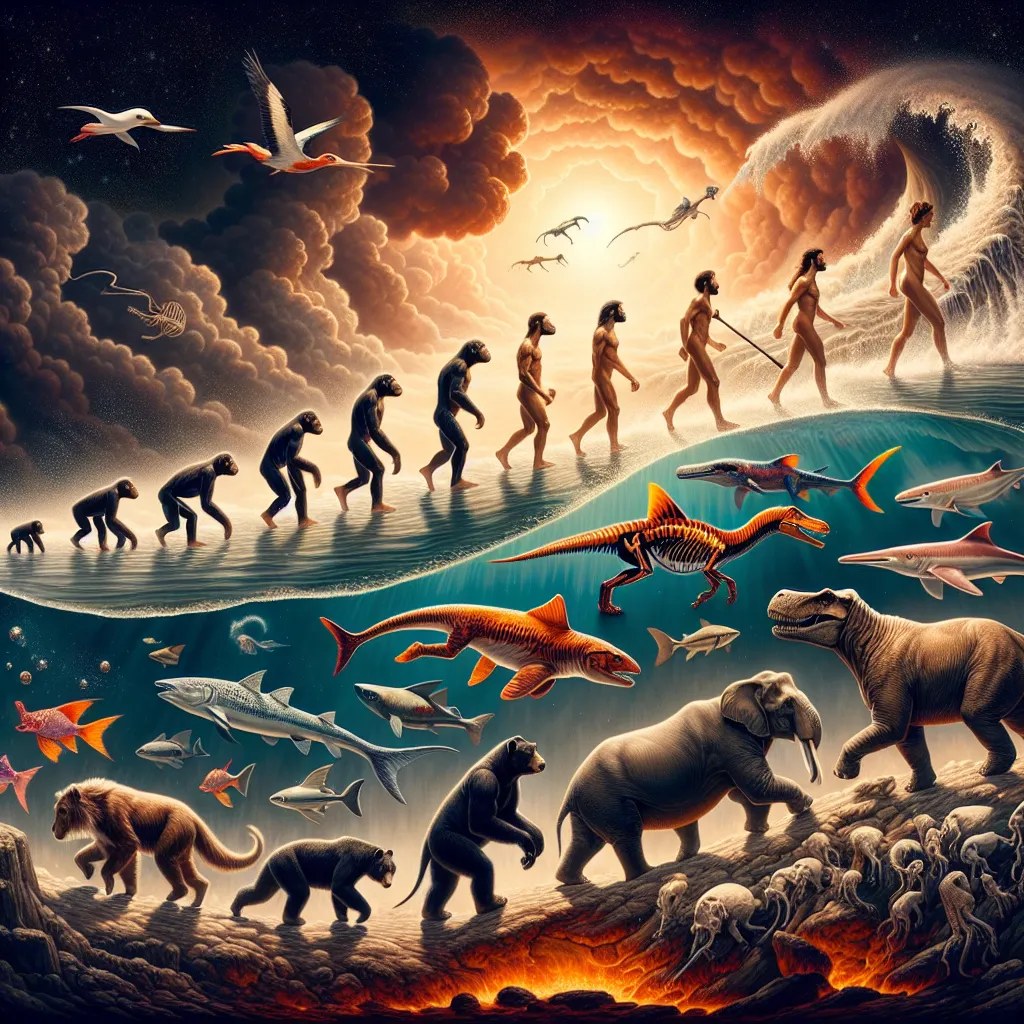
So, what is evolution, anyway? It’s basically the story of life on Earth, a process that’s been happening for billions of years and continues even now. Evolution explains how we have such a wide variety of life forms, starting from simple single-celled organisms to the vast array of species we see today.
You’ve probably wondered how a Dachshund and a Great Dane can be so different yet still dogs. Evolution holds the key to this mystery. But to explain it, let’s focus on animals and leave out plants and fungi for now.
First off, what exactly is a species? In simple terms, it’s a group of animals that can breed with each other to produce offspring that can also breed. So, how can one animal develop into a whole new species? Here are the basics.
Uniqueness in Life
Every animal is unique, even those within the same species. They might look similar, but each has slightly different traits. These differences arise because each creature is made up of cells containing DNA. This DNA is a set of instructions that determine how an organism looks and behaves. The unique mix of genes in each animal’s DNA is what makes them different from one another.
The Role of Offspring
In the wild, animals usually produce more offspring than necessary. Most don’t survive to adulthood, but the surplus is crucial for increasing genetic diversity. More offspring mean more chances for small differences to occur, which is exactly what nature needs.
How Traits Are Passed On
Traits get passed to offspring through DNA. When two creatures mate, their genes mix in a process called recombination. Half of the genes come from each parent, creating a unique combination in the offspring. Sometimes, there are also mutations—random changes in DNA—which can be triggered by things like toxins or radiation. Most mutations are harmless or even beneficial, playing a key role in evolution.
The Process of Selection
So, how do animals become so well-suited to their environments? That’s where selection comes in. Natural selection is a process where animals with traits that help them survive are more likely to reproduce. Over time, these favorable traits become more common in the population, making the species better adapted to its environment.
Take, for example, the famous Darwin finches on the Galapagos Islands. A small group of finches ended up on the islands and found an abundance of food with no predators. They reproduced rapidly, and soon there were so many finches that food became scarce. Their unique beaks allowed some finches to specialize in different types of food, like worms or seeds, reducing competition. Over generations, these differences became so pronounced that new species formed.
Why It Matters
Understanding evolution helps us grasp how life on Earth has developed such diversity and why creatures are so well adapted to their environments. It’s also a personal story for each of us. Every human is the result of 3.5 billion years of evolution. Our ancestors survived countless challenges to pass their genes down to us. Considering that 99% of all species that have ever lived are extinct, it’s nothing short of remarkable that we’re here today.
So next time you see an animal, whether it’s a tiny ant or a towering elephant, remember: they’re all part of this incredible, ongoing story of evolution. And so are you.