What Will Be the Universe's Final Act?
Cosmic Ballet of Birth and Death: The Universe’s Grand Finale Awaits
Today, the universe is vibrant and full of fascinating events. Yet, the universe isn’t eternal and will eventually witness its final act. What would that be, and when will it occur? Let’s delve into the cosmos and explore the end of the universe.
Our universe began with a chaotic birth, evolving from swirling clouds of hot hydrogen and helium. Early on, it started forming stars, massive ones that lived dramatic lives, creating new elements with explosive deaths. Generations of stars were born, each contributing to the cosmic cycle. However, not all gas was recycled. Some got permanently trapped in red dwarfs, which burn slowly and eventually turn into white dwarfs, neutron stars, and black holes, locking away their matter.
In our current universe, most star formation is finished, with over 90% of stars already born. The future promises billions of years of galactic exploration. However, over time, star formation will cease, and existing stars will dwindle, leaving mostly red dwarfs.
In just a few trillion years, the universe will be dominated by white dwarfs, neutron stars, black holes, gas giants, and brown dwarfs. White dwarfs, remnants of dead stars, are extremely dense and hot but will cool over trillions of years, becoming cold, dark black dwarfs blending into the void.
Eventually, every object in every galaxy will either be ejected or get consumed by a central black hole. Galaxies will evaporate, and all that remains will be lonely black dwarfs, lingering in a dark, empty universe.
Even black holes aren’t safe; they will slowly emit Hawking radiation and disappear over unimaginable timescales. This leaves black dwarfs as the last actors in the cosmic drama.
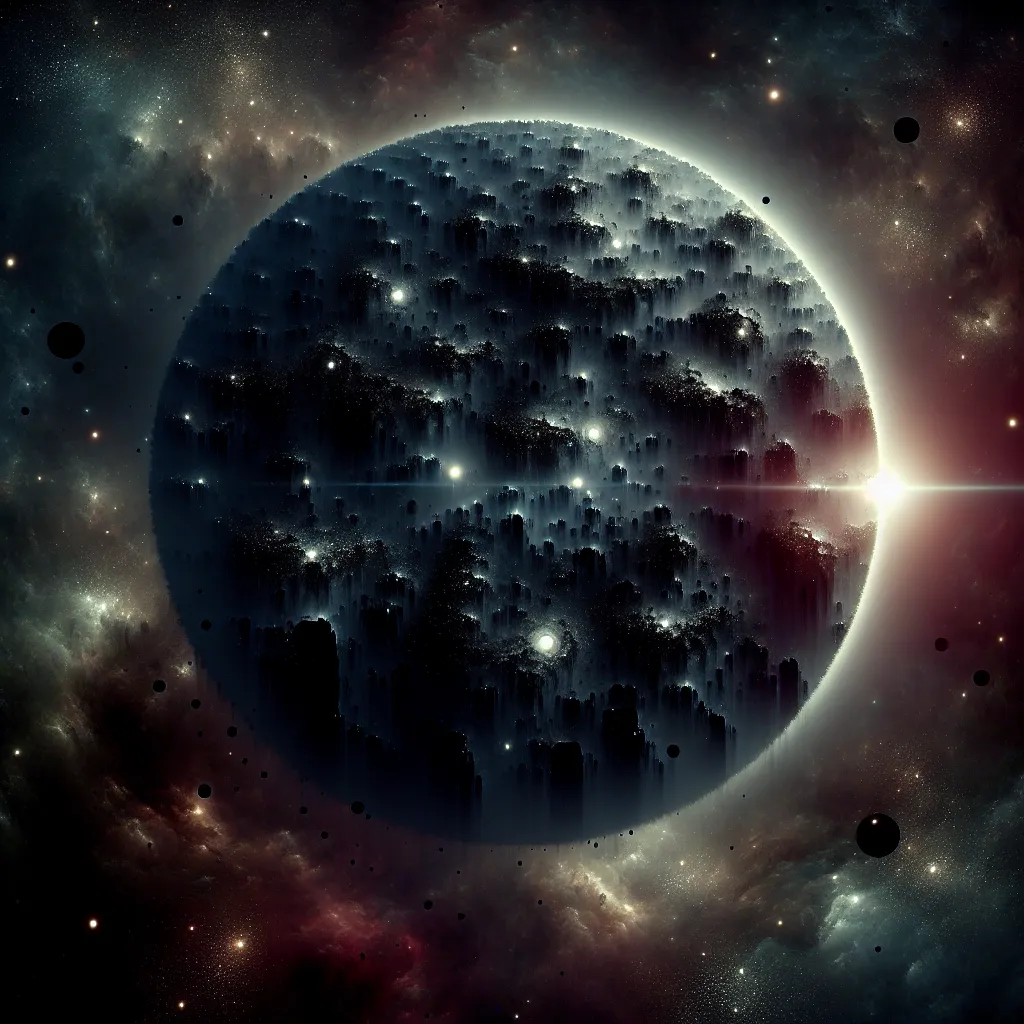
Inside black dwarfs, physics gets bizarre. Matter is so densely packed that electrons are forced into close proximity, providing the pressure to counteract gravity. Over time, nuclei within black dwarfs will fuse through quantum tunneling, forming heavier elements slowly, very slowly.
The endgame involves these black dwarfs turning into spheres of iron. This process, spanning unfathomable timescales, eventually leads to a collapse, resulting in a supernova. For a fleeting moment, this explosion will light up the universe once more before plunging it back into eternal darkness.
The last thing ever to happen in the universe is a black dwarf supernova, marking the final curtain on cosmic events. However, this is so far in the future that it hardly impacts our lives today.
For now, we inhabit a thriving universe with endless wonders to discover. Embrace curiosity and take the opportunity to explore the vastness of existence. There’s a lot more out there to uncover.