6 Brain Architecture Mysteries That Neuroscience Can't Explain Yet
Discover 6 baffling brain architecture mysteries that challenge neuroscience. From chaotic synapses to glial cell secrets, explore why our minds remain unpredictable. Read more now.
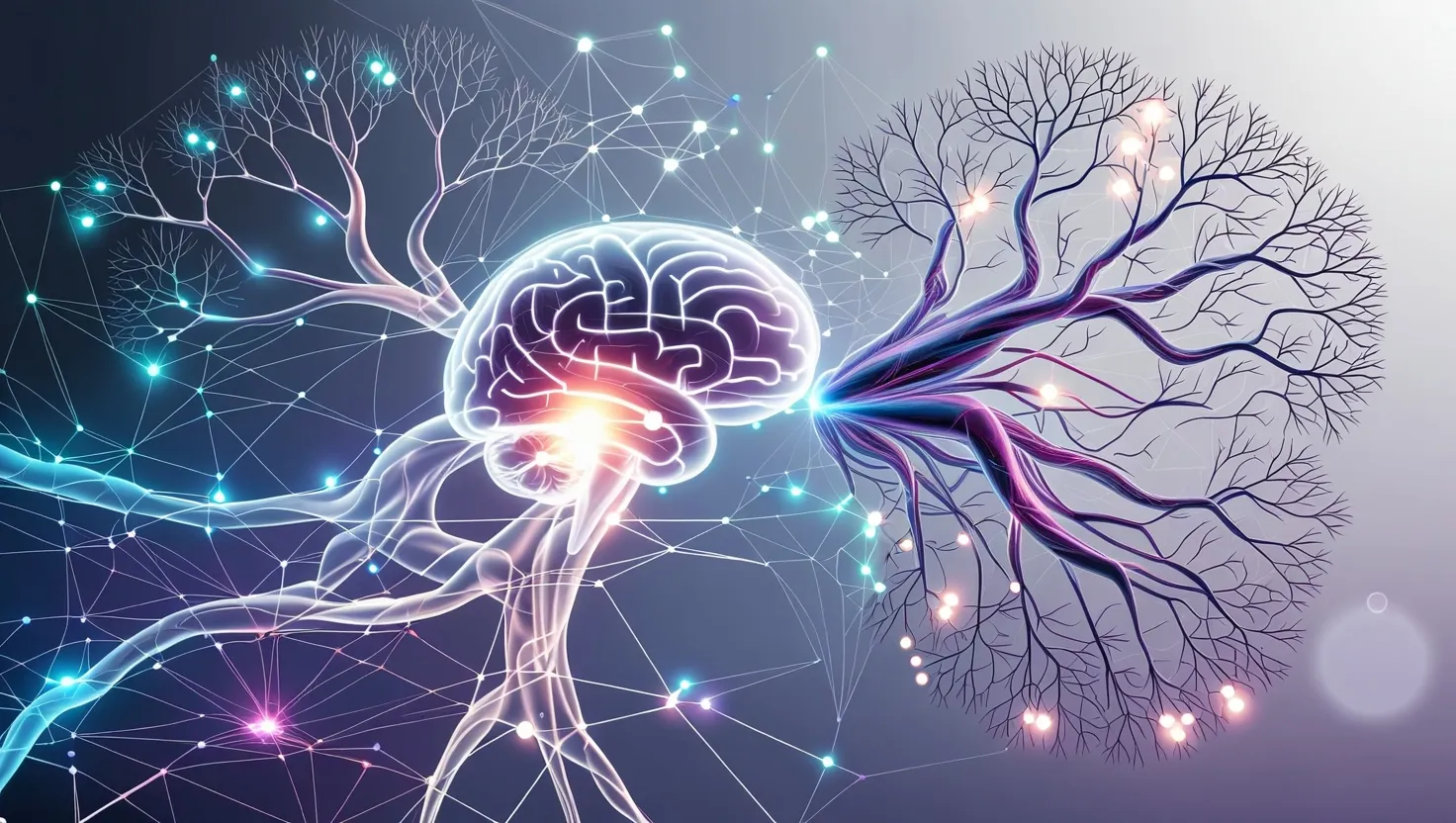
If there’s one thing I find endlessly fascinating, it’s how much we don’t know about our own minds. You’d think that with all our advances in neuroscience—decades of brain mapping, fancy brain scanners, and piles of research—we’d have the brain mostly figured out. But every year, as we peel back another layer, we realize the real mysteries are deeper, stranger, and far more persistent than anyone expected. Let’s look at six architectural puzzles the brain serves up, puzzles that refuse to be tidied away by even the best scientific models.
Have you ever wondered why your brain sometimes seems to work in unpredictable ways, even when doing something as “basic” as moving a finger or recalling a memory? One of the oddest culprits is the synapse. Each synapse—those tiny connectors between neurons—doesn’t simply transmit signals in a neat, predictable fashion. Instead, each one can have wildly different strengths, releasing variable bursts of neurotransmitters. You might assume that if a neuron fires, the downstream cell always receives the same message, but the actual transfer is surprisingly erratic. The randomness at these synapses suggests the brain is not the orderly digital machine we often liken it to. Why so much noise? Is it just biological sloppiness, or does this chaos serve some hidden purpose, perhaps making our thoughts more flexible or our memories more robust against errors? When I contemplate this, I’m reminded of how sometimes, creativity seems to spring out of unpredictability, both in art and biology.
“The mind is its own place, and in itself can make a heaven of hell, a hell of heaven.”
—John Milton
The way our sensory cortex is mapped is another beautiful, stubborn riddle. Early neuroscientists marveled at how body parts are mapped in our brains—your fingers have a little patch of cortex, your toes another, and so on. But venture just a bit higher up, into the realms of thought, memory, and decision-making, and the map falls apart. The so-called association areas, where ideas are juggled and plans are hatched, don’t follow this orderly layout. Instead, they’re shockingly unique from person to person. How can two brains, both wired for language and creativity, look so different in their inner organization? If there were universal architectural rules for higher thought, we haven’t found them yet. This makes me wonder: Is individuality hardwired, or does the brain simply find different routes to the same destination?
Consider the support staff of the brain—glial cells. For decades, these cells got little credit, believed to only provide structural and nutritional support. But new research is turning this assumption on its head. Some glial cells, like astrocytes, don’t just quietly babysit neurons. They modulate neural circuits, communicate using their own calcium signals, and might even compute information in unfamiliar ways. What if the real computation in the brain is shared among more partners than we thought? The implications are enormous: perhaps our models focusing solely on neuron activity are missing half the plot. Have we been listening to the wrong actors, or only part of the dialogue?
One of the earliest puzzles I encountered in brain science—and one that keeps reemerging—is synaptic pruning. In early development, our brains create far more synapses than we’ll ever actually use. Then, in an orchestrated culling, about half of these connections vanish. The amazing part is just how selective this process is. Some synapses are strengthened and kept, while others are actively removed. But what are the guiding principles? How does the brain decide which connections to nurture, and which to eliminate forever? We know that experience plays a role—“neurons that fire together wire together”—but this rule is hardly enough to explain the high precision involved. Are there secret signals, perhaps even a genetic script, choreographing this massive architectural redesign?
“Life must be understood backward. But it must be lived forward.”
—Søren Kierkegaard
If you’ve ever read about spinal cord injuries, you may have wondered why nerves in your fingers can regrow, but those in your spinal cord almost never do. The central nervous system seems to live by very different repair rules from the peripheral nerves. In the brain and spinal cord, damaged axons hit a wall—literally and figuratively. Instead of regrowing, they remain stunted, hemmed in by chemical signals and molecular barriers. Why would our most precious networks be built to resist repair? Some theories suggest this is a trade-off for stability—too much regrowth might cause chaos, leading to seizures or faulty wiring. Others believe we just haven’t discovered how to flip the right molecular switches yet. Either way, the brain’s reluctance to heal itself is a stubborn architectural mystery, one that frustrates both scientists and patients alike.
What’s your mind doing when you daydream, or let your thoughts wander? This brings us to one of the most paradoxical findings in neuroscience: the default mode network. You’d expect the brain to power down during rest, but the opposite happens—a set of regions lights up, sometimes using even more energy than when you’re concentrating on a task. The persistent hum of this network when we’re supposedly “doing nothing” raises more questions than answers. Is it quietly rehearsing memories, planning the future, or performing some vital background maintenance? Or is it something even stranger—a stage for the sense of self, or even the biological substrate for consciousness? I often wonder if our very sense of identity is somehow linked to this high-energy “idling” state.
“We are what we repeatedly do. Excellence, then, is not an act, but a habit.”
—Aristotle
These unsolved puzzles give a strong sense that the brain’s architecture is less like a designed machine and more like a living, evolving city—messy, adaptable, unpredictable. Our best models are often only rough sketches, with the real picture remaining out of reach. How would our understanding of ourselves change if we could finally explain these mysteries? Would it change how we learn, how we heal, or even how we define what it means to be human?
One point I keep circling back to is how each puzzle seems to upend old assumptions. Synapses are messy, not digital switches. The brain’s map is not a uniform grid, but a patchwork unique to every individual. Glia might be as important as neurons. Synaptic pruning isn’t random, but guided by logic we can’t yet decode. Axonal regeneration depends on more than just biological machinery—it’s shaped by evolutionary trade-offs. And the “resting” brain is anything but idle.
Science often advances by tackling the exceptions, by investigating the places where models break down. These architectural puzzles aren’t just quirks—they are clues, possibly even cracks in the door to a better understanding of thought, memory, creativity, and consciousness. If there’s a takeaway in all this, it’s that the human brain remains the ultimate frontier, with its most basic designs still shrouded in mystery.
What if the very structure of thought is far more dynamic and chaotic than we imagine? Could it be that our uniqueness, our ability to adapt and imagine, depends on this underlying unpredictability? I find this both humbling and exhilarating. It suggests the greatest breakthroughs may come not from refining what we already know, but from asking better questions about what still confounds us.
So, next time you catch your thoughts wandering while daydreaming, or marvel at someone’s creativity, remember: it’s not only your neurons at work. You’re experiencing the outcome of architectural choices made during childhood pruning, layers of glial orchestration, unpredictable synapses, and a network that hums even when you rest. The brain, in its strange logic and baffling architecture, is not just a problem to be solved. It’s the very thing that lets us wonder, imagine, and keep searching for answers.