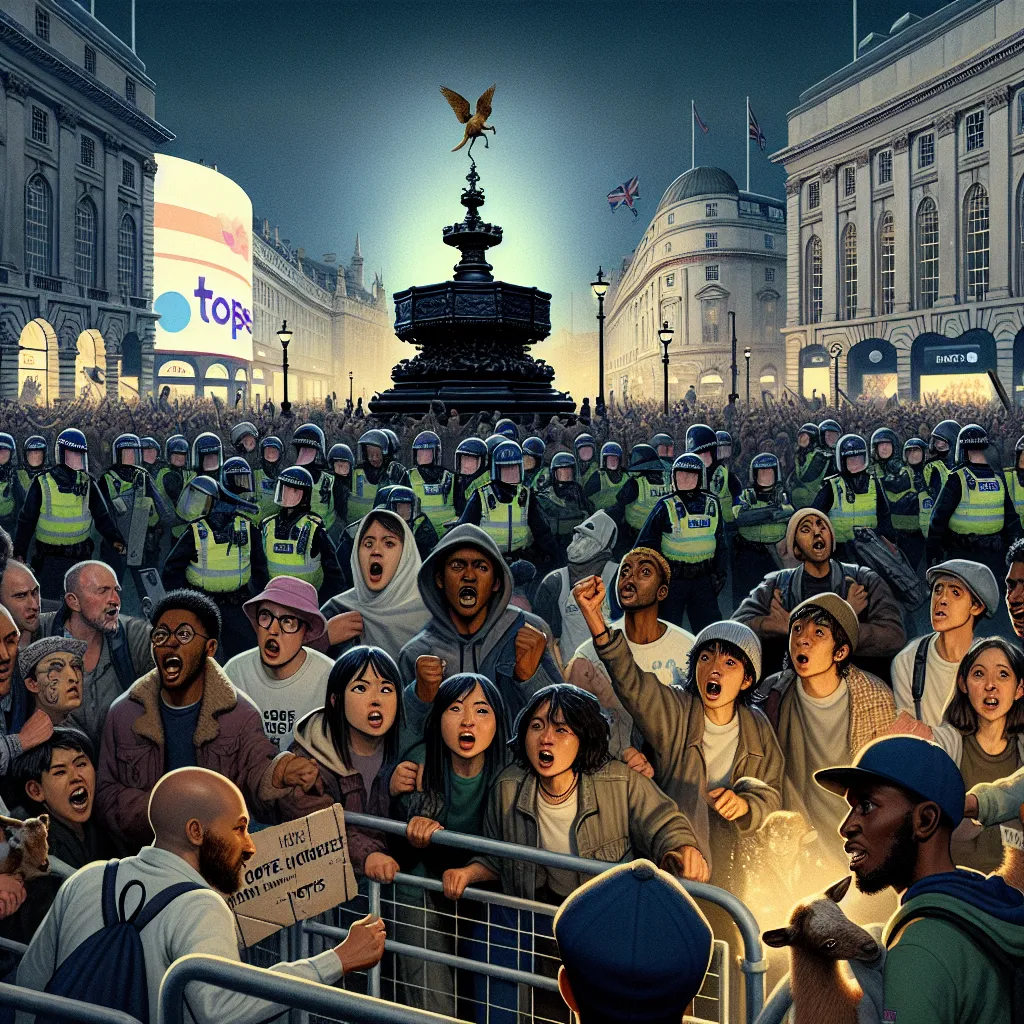
Chaos and determination filled the air as the Extinction Rebellion activists swarmed Piccadilly Circus, pushing against the status quo with relentless passion. Amongst them were hundreds of young faces, their expressions a cocktail of steely resolve and nascent uncertainty. This wasn’t just another protest; it was a call to arms, an uprising grounded in the undeniable truth that our planet is in crisis.
I had just gotten back from Edinburgh, weaving through the city streets like a thread through a tapestry. The police presence was almost as thick as the fog of urgency hanging over us. They were curious but expectant, asking about our plans. Honestly, I was winging it. Everyone was; this wasn’t a well-oiled machine but rather a cacophony of spontaneous resilience. Somehow, that made it all the more potent.
Late into the evening, the streets began to thrum with life. We were headed to Piccadilly Circus. The numbers swelled - first hundreds, then edging close to a thousand. Negotiations with the government felt like talking to the wind. The powers-that-be seemed to us as detached specters, always one step removed from the gravity of the situation. Yet, discussions were held daily among small groups, each one trying to formulate some actionable plan. It was like fixing a ship during a storm, with water pouring in faster than we could bail it out.
We held a tense meeting with the police, their leader giving us a peculiar nod of approval. They saw us not as a threat but as desperate citizens. The words “Good people” felt like both a blessing and a curse. It was a reminder that our moral compass was intact, even if our methods verged on anarchy. After all, we had waited too long for change, some of us for decades.
As the night wore on, plans became actions. We blocked roads methodically, our human barricade punctuated by hopeful banners. The police moved in, hemming us in on all sides. They weren’t aggressive, but their message was clear: Move, or be moved. Yet, we stood firm, our resolve emanating like heat from our bodies.
There were moments of unexpected camaraderie. Strangers formed bonds quicker than wet cement sets, everyone united by a purpose bigger than any individual. We spilled out into the streets, chalk in hand, painting slogans of hope and defiance. People came out from the art tents, their training sessions rapidly evolving into real-time application. The air was thick with the promise of activism.
Did I mention the goats? In a surreal twist, Marble Arch became a temporary sanctuary for a small herd, their presence a bizarre but heartwarming addition to our cause. Maybe it was the goats or perhaps just the relentless energy, but we felt unstoppable.
Yet, there were logistical hurdles to leap over. Communication was key but often faltered. One day blurred into the next as we planned and replanned, pivoted our strategies and made do with what little resources we had. The goal was clear, albeit daunting: End the ecological crisis, or at least trigger a reaction powerful enough to spark systemic change.
Heathrow was next on the agenda, a strategic yet contentious point of escalation. There was chatter of symbolic disruptions and actual roadblocks. The idea was not to halt everyday life indefinitely but to grab public attention by the collar and shake it awake.
The young among us were both the heart and the sword of this movement. Their involvement was a double-edged sword; the urgency of our mission had to be balanced with ethical considerations. Decisions had to be made quickly, walking a tightrope between impactful action and safety.
Our demands were simple but impossibly steep: Zero carbon emissions, transparent policies, and an urgent change in how we interact with our planet. We knew the path ahead was fraught with challenges, public opinion being one of the toughest. The arrest count climbed, each name a testament to our commitment.
As days turned into a blur of protest and persistence, we realized this wasn’t just about the environment. It was a struggle for a future where empathy and ethics dictate policies. It was about forcing change through creative disruption, making our voices impossible to ignore.
Each action, each blockade, each arrest was a ripple in a pond, expanding our influence, fueling our resolve. And as the numbers grew, so did our belief in the power of rebellion. The fight was far from over, but in those moments of unity and mutual support, we felt invincible.