Can You Really Live in a House Made of Lego?
Living the Dream in a Real-Life Lego House: An Imagination Unleashed
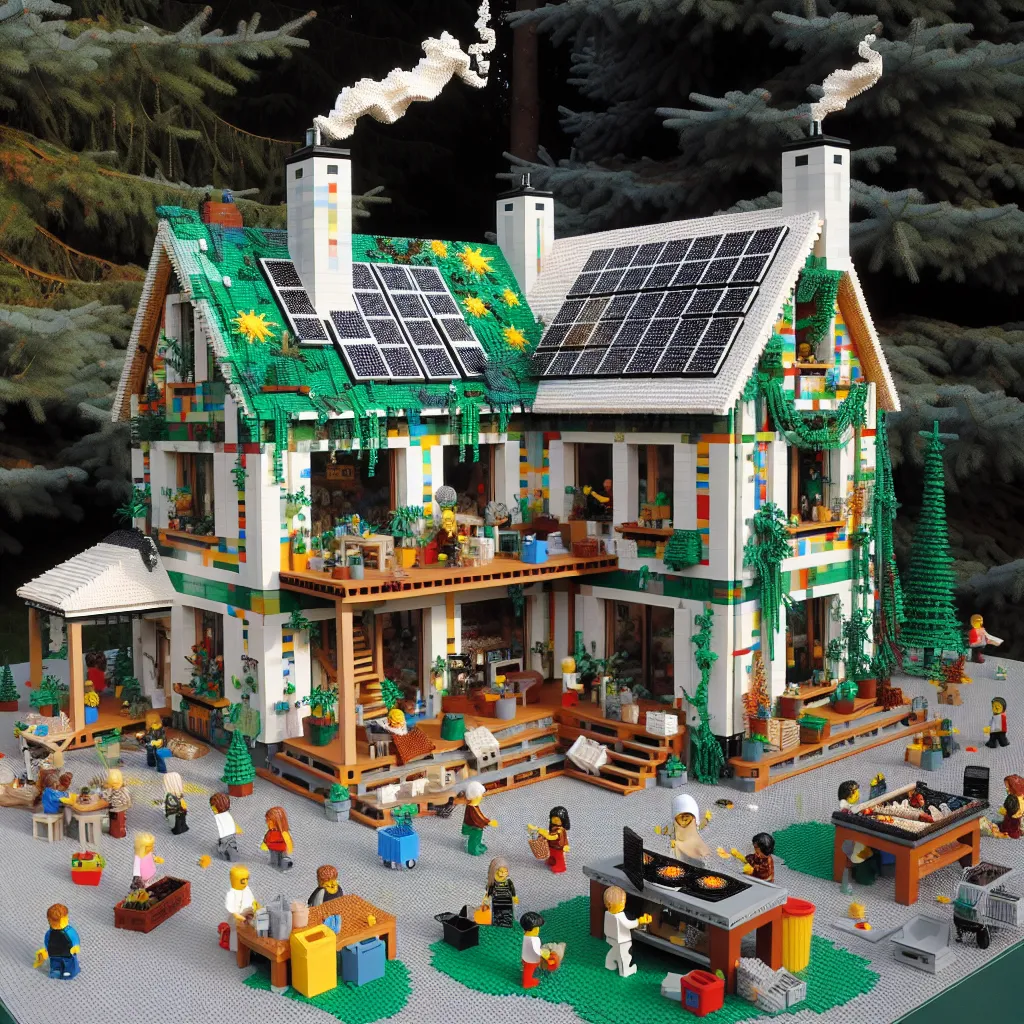
Lego: you think of it as a simple kid’s toy, right? Maybe some colorful bricks tossed in a box. But what if I told you it could be so much more? Imagine living in a house made entirely of Lego – not just a makeshift fort in the living room, but a real, livable house. That’s exactly what I did.
Armed with 3 million Lego bricks, I set out to build a full-sized house. Yeah, 3 million. Grim thoughts skulked in the background: Would the walls hold up under their own weight? Could I actually live in it for 24 hours without it collapsing?
The mission wasn’t just playful; there were some serious challenges. Cracks appeared, and artistic clashes ensued. But what stood out was the unending joy in assembling those tiny bricks. It’s like a universal therapy, a joy that never fades.
Interestingly, Lego’s not just a toy – it’s a handy model for engineers and town planners. With over 300 billion pieces made, it’s the ultimate reusable construction medium. Kids might just play, but Lego’s origin lies in two critical innovations: using plastic and inventing a system where bricks lock together firmly yet can be separated with ease. Born in the 1940s, this genius design was world-changing.
To really see Lego’s potential, I decided—as everyone does in such existential musings—to build a new house, entirely out of Lego. Convincing local authorities was a hurdle; nobody wanted a plastic house in their jurisdiction. Eventually, I found a plot and enlisted the help of Barnaby, an architect with the perfect blend of expertise and a sense of humor.
From Lego beams that had to support real weight to quirky interior design challenges, it was a journey. Doubters thought building a functional Lego house was impossible. After persistent testing and tweaking with an engineering team, we fashioned a Lego beam capable of withstanding significant weight.
With a grassroots effort, thousands of volunteers helped assemble the bricks. The construction site buzzed with excitement and frustration alike. At times, it felt like pulling an epic all-nighter, but eventually, walls stood tall, furniture was formed, and the house took shape.
As the finale drew near, I invited friends and experts to see the culmination of our efforts. Even Jane Asher dropped by, proving you can even get creative with a Lego kitchen. The verdict from onlookers ranged from astonishment to admiration.
That night, in the glow of what can only be described as my magnum LEGO opus, I crawled into my Lego bed. Sure, it wasn’t the softest, but there’s nothing like sleeping in a house built from the dreams of your childhood.
In the end, this project wasn’t just about the house; it was about realizing that with a bit of imagination and perseverance, even the simplest toys can be part of something incredible. And yes, I did become the first person to sleep in a Lego house. Who said bricks have no soul?