In the future, humanity may leave Earth behind in search of a new home in space. But our solar system isn’t exactly a friendly place. There are planets with deadly conditions like volcanic activity, extreme winds, and searing temperatures. So, where could we possibly live among these violent worlds? It’s a cosmic voyage to find a habitable planet, both within our solar system and beyond.
Imagine a city of 200 billion stars as vast as the Milky Way, a place so expansive that crossing it in a jumbo jet would take 100 billion years. Our own Sun, nestled in one of its spiral arms, supports life on Earth thanks to its breathable atmosphere and liquid water. But with climate change threatening to submerge our lands and make vast areas uninhabitable, the need for a new frontier becomes urgent.
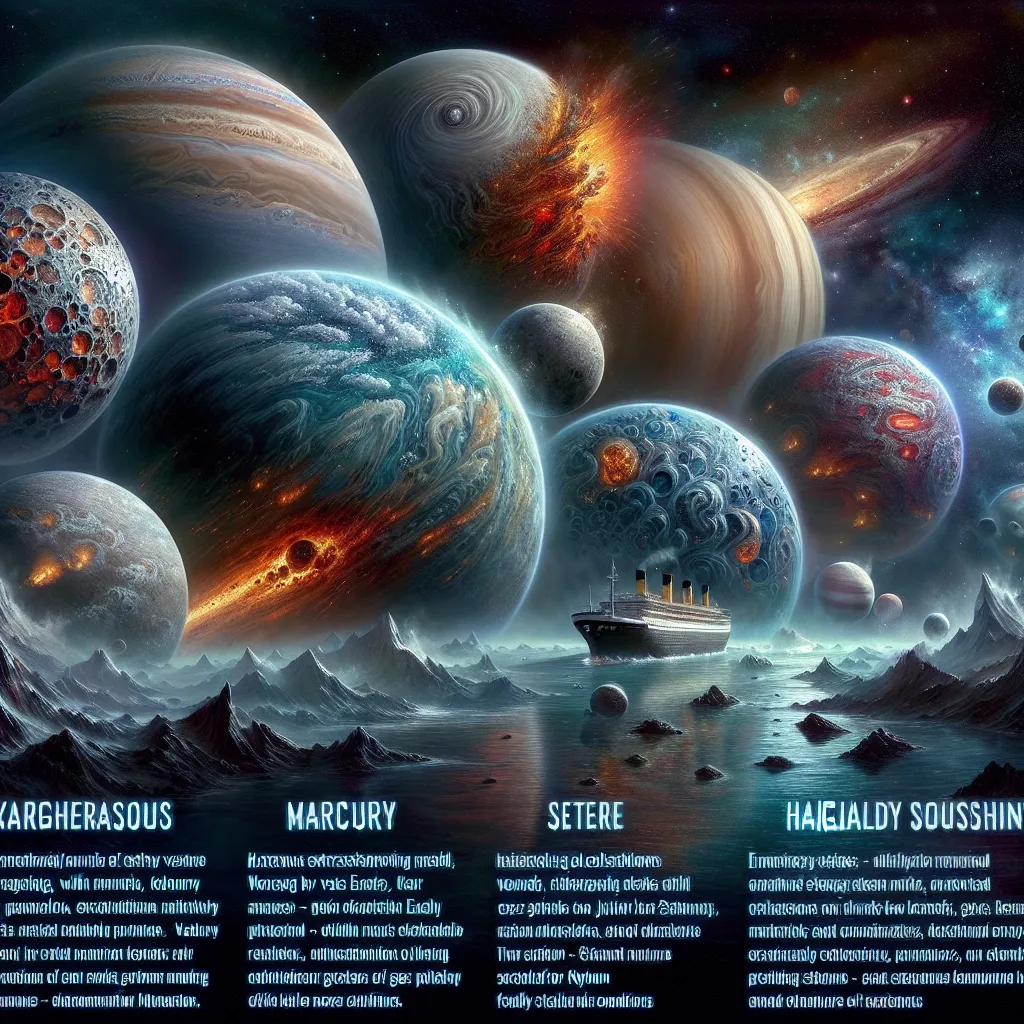
Our journey begins with Mercury. While it has traces of oxygen in its atmosphere, the planet’s violently cratered surface and extreme temperatures—ranging from minus 300 degrees Fahrenheit to a scorching 840 degrees—make it unlivable. Let’s consider Venus, our close neighbor. Initially thought to be Earth-like, it turned out to be a hellish landscape with clouds of vaporized acid and atmospheric temperatures hot enough to melt lead.
Mercury and Venus are clear no-gos, so we head further out to Mars. Mars’s similarities with Earth make it a candidate, but it’s plagued by radiation and colossal dust storms. Mars lacks a magnetic field to shield it from solar radiation, leaving future settlers to deal with deadly doses from space.
Among the gas giants, Jupiter and Saturn, high-speed winds, giant storms, and extreme atmospheric conditions make them uninhabitable. Even their moons pose risks; being close to Io’s volcanic activity or getting caught in Jupiter’s radiation belts would be fatal. Triton, Neptune’s moon, has an unwelcoming, super-chilled environment and violent nitrogen geysers, making long-term colonization a dream stretching beyond our current technological reach.
Having exhausted our options within the solar system, our quest moves beyond—to distant planets orbiting other stars in our galaxy. Using advanced telescopes, astronomers like Dr. Geoff Marcy have identified over 200 new planets. However, many of these are too close to their stars, with temperatures high enough to vaporize metals. Real hope lies in smaller stars with potentially Earth-like planets in their habitable zones.
Until we discover a truly Earth-like planet, Mars remains our best shot, assuming we can overcome its hazardous conditions. But for now, and possibly for a long while, Earth remains our only home. Humanity’s challenge is to adapt and thrive on our changing planet while keeping an eye on the stars for the next cosmic frontier.