Did a Snowball Earth Disaster Shape the Diversity of Life We Know Today?
Surviving Snowball Earth: The Ancient Frozen Epoch that Forged Life’s Diversity
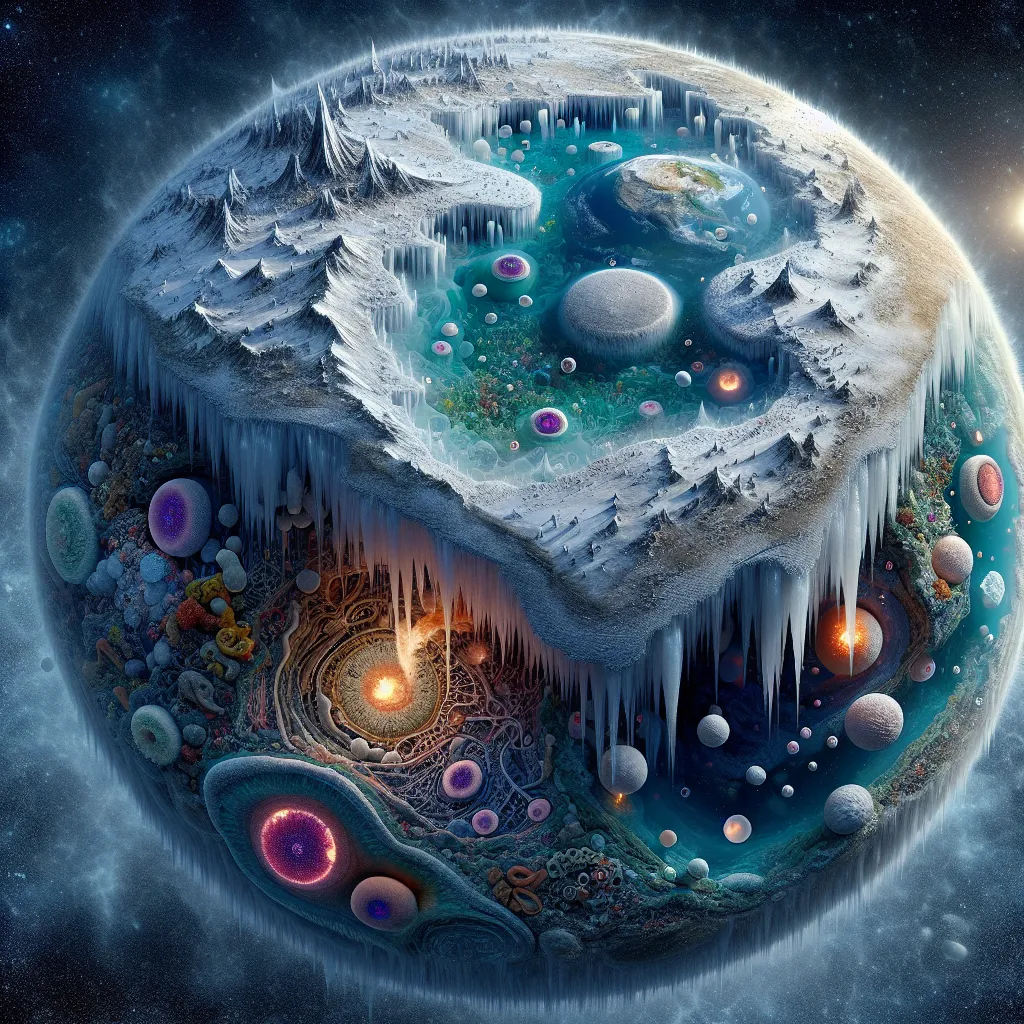
Life on Earth is a marvel of chance. Imagine a world where 99% of species have been wiped out by catastrophic events. That’s our planet’s story. About 650 million years ago, Earth faced one such disaster: it froze over, pushing life to the brink of extinction. This period, known as “Snowball Earth,” was crucial to the evolution we see today.
To grasp the timeline, picture Earth’s history as a single day. At midnight, 4.5 billion years ago, Earth formed. Minutes later, a collision gave us the moon. By 4 a.m., primitive life appeared. As the day progressed, simple bacteria populated the seas. Then, at 8:27 p.m., disaster struck. Earth froze entirely. Ice spread from the poles to the equator, locking the planet in an icy grip for 25 million years.
Yet, some microorganisms survived, evolving dramatically. Scientists have pieced this story together from clues found in bizarre places like the Flinders Ranges in Australia’s outback and Death Valley in the US. Geologists like Jim Giling and Joe Kersin found dropstones—rocks transported by ancient glaciers—proving these hot, arid regions were once frozen solid.
The evidence suggests that 650 million years ago, Earth had a massive supercontinent near the equator. Weathering processes and the activity of cyanobacteria sucked carbon dioxide out of the atmosphere, causing temperatures to plunge. The ice-albedo feedback mechanism, where ice reflects sunlight and cools the planet further, tipped Earth into a deep freeze.
But how did scientists figure this out? Key discoveries in places like the Arctic and Iceland, where glaciers still exist, showed how ice sheets could expand and reflect sunlight, creating a runaway freezer effect. This became undeniable when scientists like Mikhail Budyko linked the extreme cooling to carbon dioxide levels.
So, how did life survive? Extremophiles—organisms that thrive in extreme conditions—provide clues. Microbiologists like Hazel Barton study these microbes in present-day ice caves, discovering that ancient cyanobacteria adapted to the cold and dark, thriving deep within the ice.
The thaw came thanks to volcanic activity. Volcanoes released carbon dioxide back into the atmosphere, gradually warming the planet and melting the ice. This process took millions of years, culminating in a super meltdown that lifted the icy veil.
When the ice retreated, something spectacular happened. Oxygen levels soared, supporting the evolution of complex multicellular organisms. This rise in oxygen, a direct result of ice age chemistry, allowed single-celled organisms to evolve into the first animals.
Fossils from this period show primitive sea creatures, the first life forms with complex cells and body plans. These creatures are our ancient ancestors. They kickstarted the evolutionary chain that eventually led to higher animals and humans.
Without the catastrophic freeze of Snowball Earth, complex life might never have evolved. This climate disaster, which seemed poised to wipe out life, ended up being the very crucible that forged the diversity of life we see today. Every living thing, from the simplest organism to the most complex human, owes its existence to this ancient frozen epoch.