What Hidden Challenges Make the Panama Canal an Unseen Wonder?
The Panama Canal: A Testament to Human Ingenuity and Determination
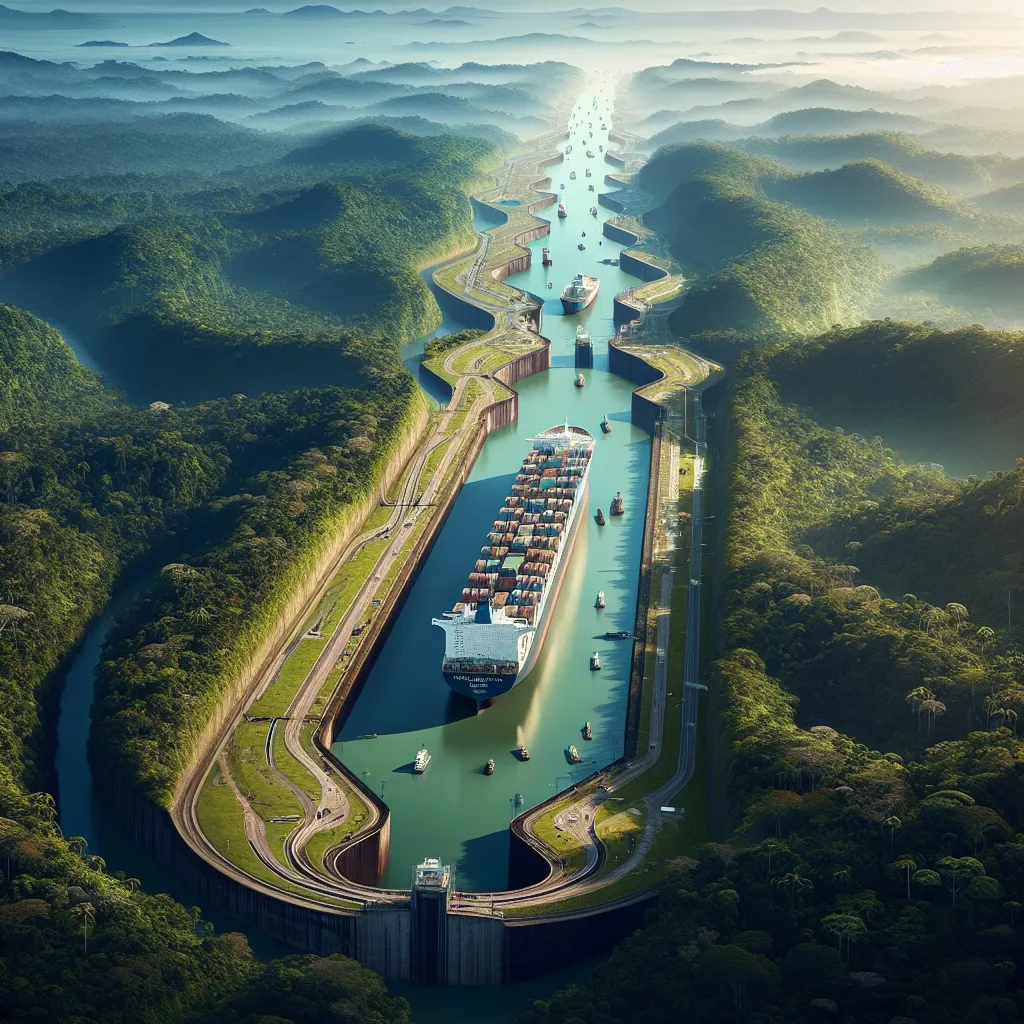
The Panama Canal is an engineering marvel and a historical testament to human determination. The idea of connecting the Atlantic and Pacific Oceans with a canal sparked interest as early as the 16th century. However, it wasn’t until the early 20th century that this dream was realized, following over two decades of grueling labor by more than 15,000 workers.
Since its completion in 1913, the canal has seen nearly a million ships pass through its waters. Before the canal existed, a voyage from New York to San Francisco meant a treacherous six-week journey around Cape Horn. With the canal, that travel time is cut to three weeks, transforming shipping routes and global trade.
The Panama Canal doesn’t simply cut through Central America. With Panama’s rugged terrain, the canal needed to be a sophisticated lock-and-lake system. It acts as a giant water elevator, lifting ships 85 feet above sea level and then lowering them back down. The intricate system allows vessels like the Eleonora, comparable to the Titanic in size, to navigate through narrow locks with the help of specially trained pilots such as Oscar Soto.
Navigating the canal requires skill and precision. The tiniest error can have costly consequences, as the pilot must steer massive ships through tight spaces while managing the powerful currents. The Eleonora’s journey includes navigating the Miraflores locks, which elevate the ship 54 feet above sea level, before continuing towards the Culebra Cut, a 9-mile gorge carved through the Continental Divide.
This section, dubbed Hell’s Gorge, posed significant challenges. An initial attempt by French engineer Ferdinand de Lesseps, who previously built the Suez Canal, ended in failure due to diseases and harsh working conditions. It wasn’t until the American intervention, with advances in steam shovels and engineering techniques, that significant progress was made.
The canal’s construction was perilous, with temperatures in the Culebra Cut reaching 120°F and frequent landslides causing constant danger. Despite these hurdles, the diligent efforts of thousands eventually led to the successful completion of this monumental project.
Lake Gatun, created to supply water for the locks, covers 164 square miles. The rainforest, essential for maintaining Panama’s high rainfall and keeping the lake filled, faces threats from deforestation. With two-thirds of the forest already lost this century, the canal’s future could be at risk if environmental degradation continues.
Each day, around 33 ships navigate through the canal’s three lock sets, consuming a staggering 3 billion gallons of water from Lake Gatun. As ships complete their passage through the Gatun locks, they head out into the Atlantic, marking the end of a journey made seamless by human ingenuity.
The Panama Canal stands as a triumph of human engineering, fulfilling a 400-year-old vision against the odds. Its 50 miles of waterway represent one of humanity’s greatest feats, borne out of relentless effort and innovation.