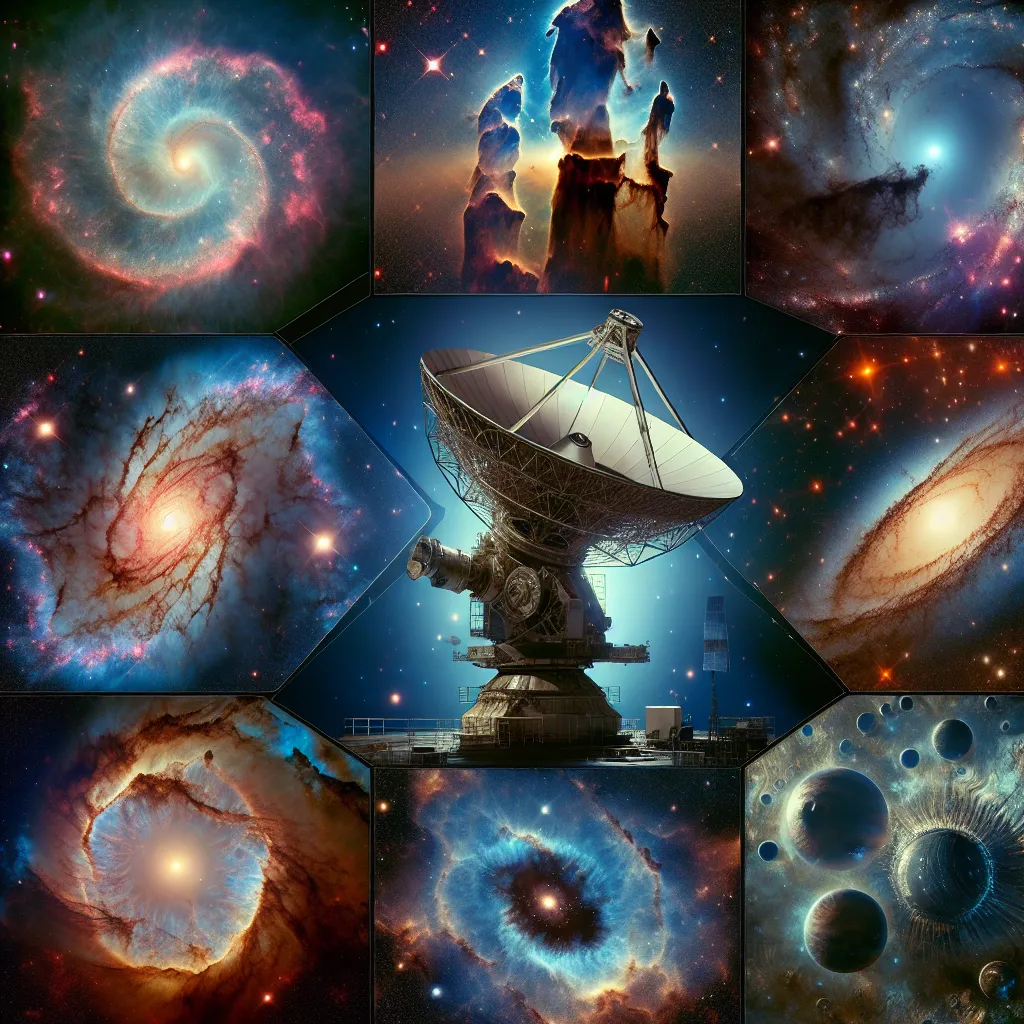
Hey there, I’m Nigel, and this edition of “Nigel Goes to Space” is a special one. We’re celebrating a huge milestone—25 years of the Hubble Space Telescope. Unfortunately, Hubble can’t be here in person. It’s floating around 500 kilometers above us in space. But let’s dive into why this remarkable machine has captivated our imaginations for so long.
Named after Edwin Hubble, a trailblazing astronomer from the 20th century, this telescope has been snapping stunning photos of the universe for over two decades. Edwin Hubble, alongside his cat Copernicus, discovered groundbreaking concepts like the fact that galaxies are separate entities beyond our own Milky Way. He also provided the first clues that the universe is expanding, essentially laying the groundwork for the Big Bang Theory.
One of the earliest major moments for Hubble was capturing images of Jupiter when it was struck by a rogue comet, Shoemaker-Levy 9. The impact left Earth-sized “black eyes” on Jupiter, a stark reminder of how vulnerable planets—including our own—are to cosmic debris. This iconic image was a wake-up call about the potential hazards from space.
Possibly the most famous image from Hubble is the “Pillars of Creation.” These are gigantic clouds of gas and dust where new stars and planets are being born. For me, though, the “Mystic Mountain” takes the cake. It shows a towering cone of dark material stretching the vast distance from our Sun to the nearest star. At the top, you can spot what looks like an alien with antennae—actually a newly born star shooting out jets of material.
Hubble doesn’t just capture star births; it also looks at star deaths. One such image is the “Cat’s Eye Nebula,” showing a star that was once like our Sun but has started to expel its gases into spectacular shapes. Similarly, the “Crab Nebula” showcases the remnants of a massive star that exploded as a supernova in 1054. At its center lies a pulsar, the collapsed core of the original star, emitting flashes of light.
Edwin Hubble and his namesake telescope have extended our vision beyond our galaxy. Pictures of galaxies millions of light-years away—like the bizarre-looking ARP 142, which resembles a bird or a dolphin—show interacting galaxies being torn apart by gravity.
Hubble has even gazed into the furthest reaches of space, capturing ancient galaxies whose light has traveled for billions of years to reach us. Essentially, Hubble acts as a time machine, showing us how galaxies looked when the universe was young.
Even after 25 years, Hubble’s journey is far from over. It’s expected to continue inspiring us for many more years. Soon, it will be joined by the James Webb Space Telescope, which promises to look even further into the cosmos.
So there you have it—Hubble’s legacy and some of my favorite images. What about you? What are your favorite space images? Let’s chat in the comments below. If you love Hubble as much as I do, don’t forget to subscribe for more out-of-this-world content.