What Shapes Are Stars Hiding in the Universe?
Discovering the Quirky Shapes of Stars Beyond the Classic Sphere
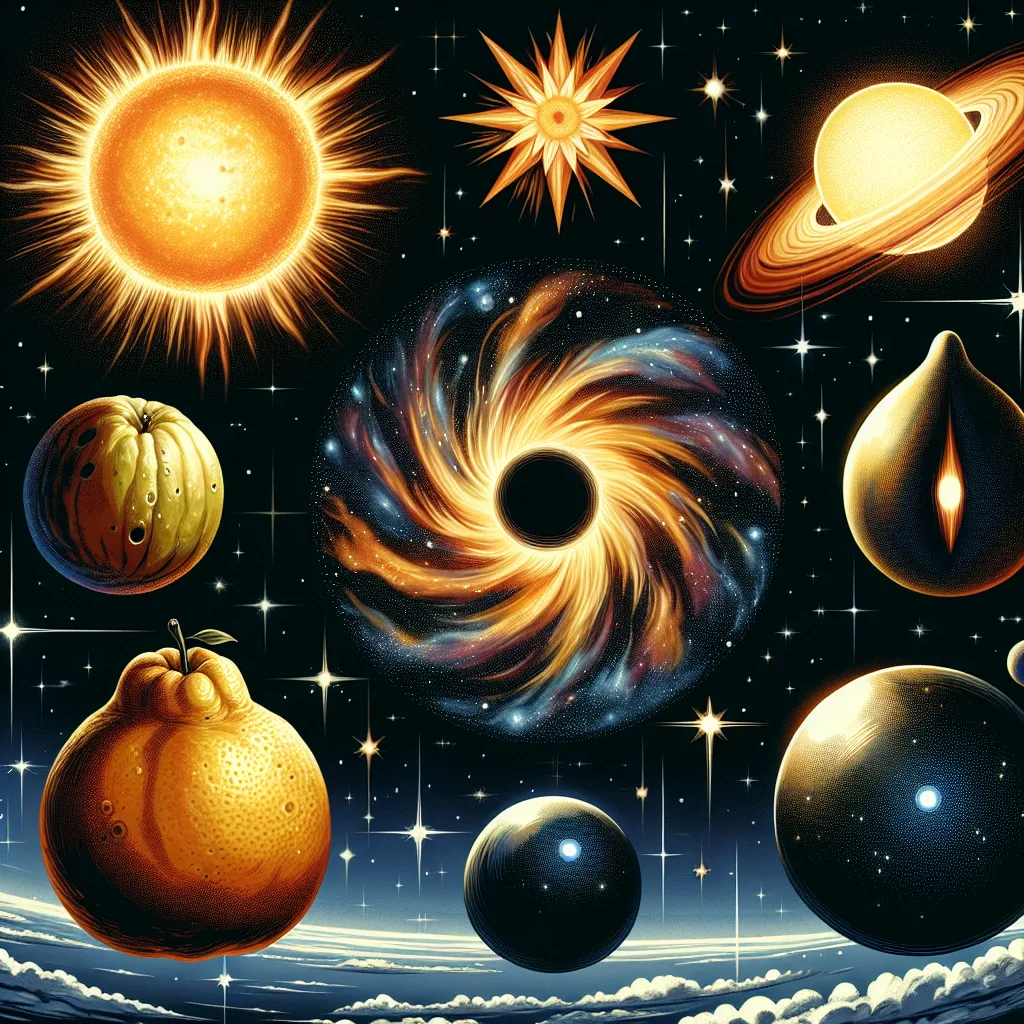
Hey, I’m Nigel, and welcome to “Nigel Goes to Space!” I love getting suggestions from you all on what topics to cover. Steve Okonak suggested we chat about stars, so here we go.
When we were kids, many of us thought stars had fancy shapes, but as we grow older, we learn they aren’t quite that exciting. Let’s break it down. Stars are huge, varying from millions to billions of kilometers across. Despite their size, most stars look pretty much like our Sun – round and spherical.
Why are they round? Well, stars are made of gas, not solid stuff. Gravity pulls the gas in from all directions equally, resulting in a sphere. Simple enough, right?
But not all stars are perfect spheres. Take Regulus in the constellation of Leo, for example. It spins super fast, way faster than our Sun, which rotates about once a month. Because Regulus spins so quickly, its equator gets flung out, giving it a shape more like a tangerine. If it spun any faster, it could actually tear itself apart!
Then there’s Spica in the constellation Virgo. It’s not one but two stars. These stars are close enough to stretch each other out with their gravity, forming an elongated egg shape, with the “point” pointing towards one another.
But it gets weird with Cygnus X-1, a star near a black hole. The black hole’s intense gravity pulls gas from the star, giving it a pear shape as it orbits around the black hole. The gas is even pulled into the black hole!
So, stars can be round, like our Sun, tangerine-shaped if they spin rapidly, egg-shaped if they’re close to another star, or even pear-shaped if they’re near a black hole. Pretty cool, huh?
Want to learn more about the universe? Keep tuning into “Nigel Goes to Space,” subscribe to the channel, and send me your questions. See you next time!