Who Really Set the Rules for America's Stonehenge?
Mystery, Monuments, and the Magnitude of a Message: The Rise and Fall of the Georgia Guidestones
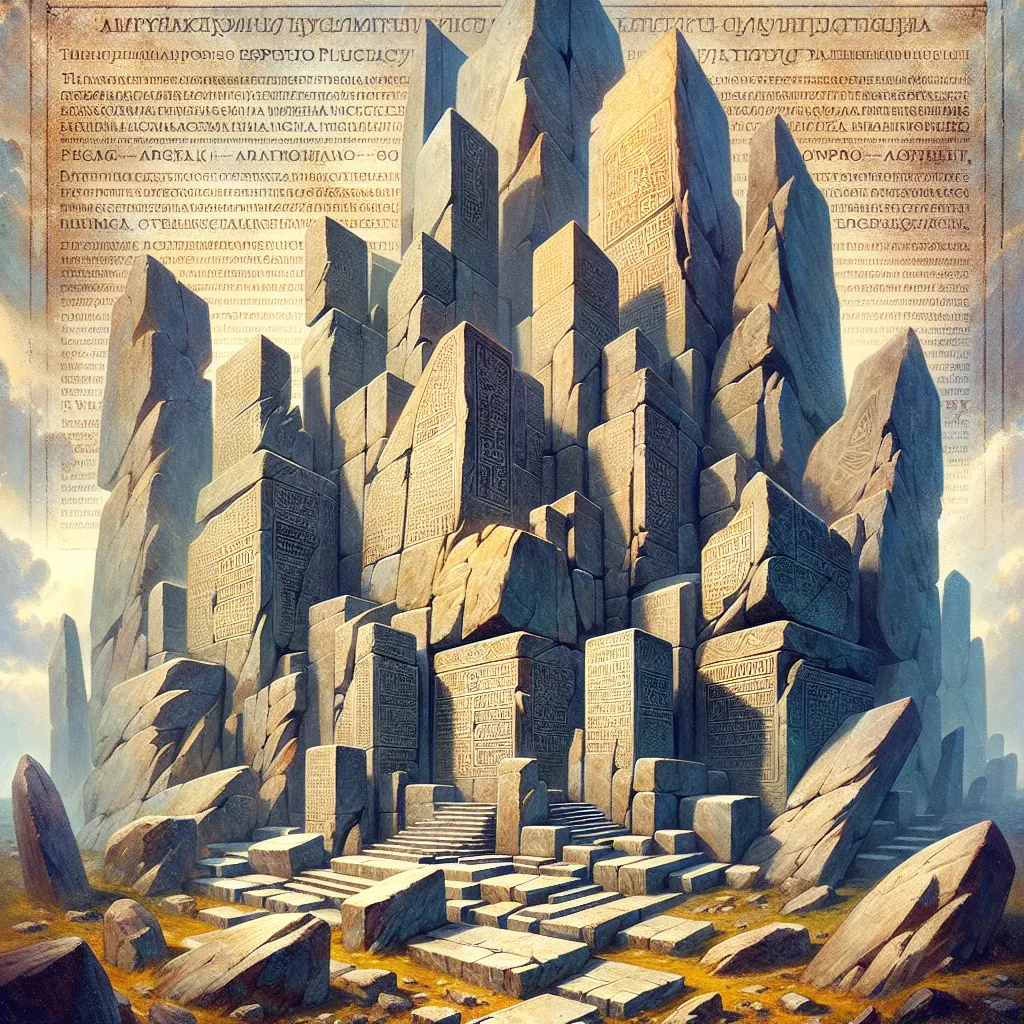
On July 6, 2022, a bomb exploded on a five-acre plot in Elberton, Georgia, obliterating the Georgia Guidestones, a monument that had stood for over 40 years. Known as ‘America’s Stonehenge,’ the Guidestones consisted of four massive granite slabs weighing over 230,000 pounds. The monument displayed ten guidelines in eight modern and four ancient languages. Nobody knew the identity of the builder for decades.
In June 1979, a man using the pseudonym ‘Robert C. Christian’ approached Joe Finley of Elberton Granite Finishing Company, proposing the monument. Christian wanted the structure to rival Stonehenge but carry a message for humanity. Christian, representing a small group of loyal Americans, brought a detailed model and specifications, emphasizing advanced astronomical features. The monument needed to withstand the end of the world. Skeptical, Finley tried to discourage Christian by quoting high prices and logistical challenges, but Christian was undeterred.
Christian set up a bank account with Wyatt Martin, revealing his identity under the condition of secrecy. After funding the project and purchasing land, the construction began, and RC Christian disappeared from the public eye. The Guidestones were unveiled on March 22, 1980, during the vernal equinox. Hundreds of locals, media, and even a congressman attended.
The ten guidelines etched on the stones included maintaining humanity under 500 million, guiding reproduction, uniting humanity with a new language, and resolving disputes in a world court. Critics pointed out that these seemingly innocuous commandments hinted at eugenics, a one-world government, and global depopulation. Some connected the monument to conspiracies involving elite groups like the Club of Rome and the Bilderberg Group, speculating they shared similar goals.
The true identity of RC Christian remained secret until clues from a 2005 documentary led to Dr. Herbert Hinsey Kirsten, a surgeon from Iowa, who died in 2005. Kirsten’s background, interests in conservation and world population issues, and connection to controversial figures like Nobel Prize-winning physicist William Shockley fit the RC Christian profile.
Months after the bombing on July 6, 2022, the investigation into the monument’s destruction was incomplete. Although surveillance captured a car fleeing the scene, and the site was quickly cleared, the perpetrator remains unidentified. Some believe the destruction was a reaction to the perceived elitism and hypocrisy embodied by the Guidestones.
While I don’t support vandalism, the demise of the Georgia Guidestones seems to close a controversial chapter. The monument’s existential philosophies attracted both admiration and disdain. Now that they’re gone, maybe it’s time we reflect more critically on who gets to set the rules for society’s future.