5 Geological Mysteries Scientists Still Can't Explain About Earth's Hidden Structure
Discover 5 fascinating geological mysteries still puzzling scientists today, from Earth's spinning inner core to silent earthquakes. Explore the planet's hidden secrets beneath your feet.
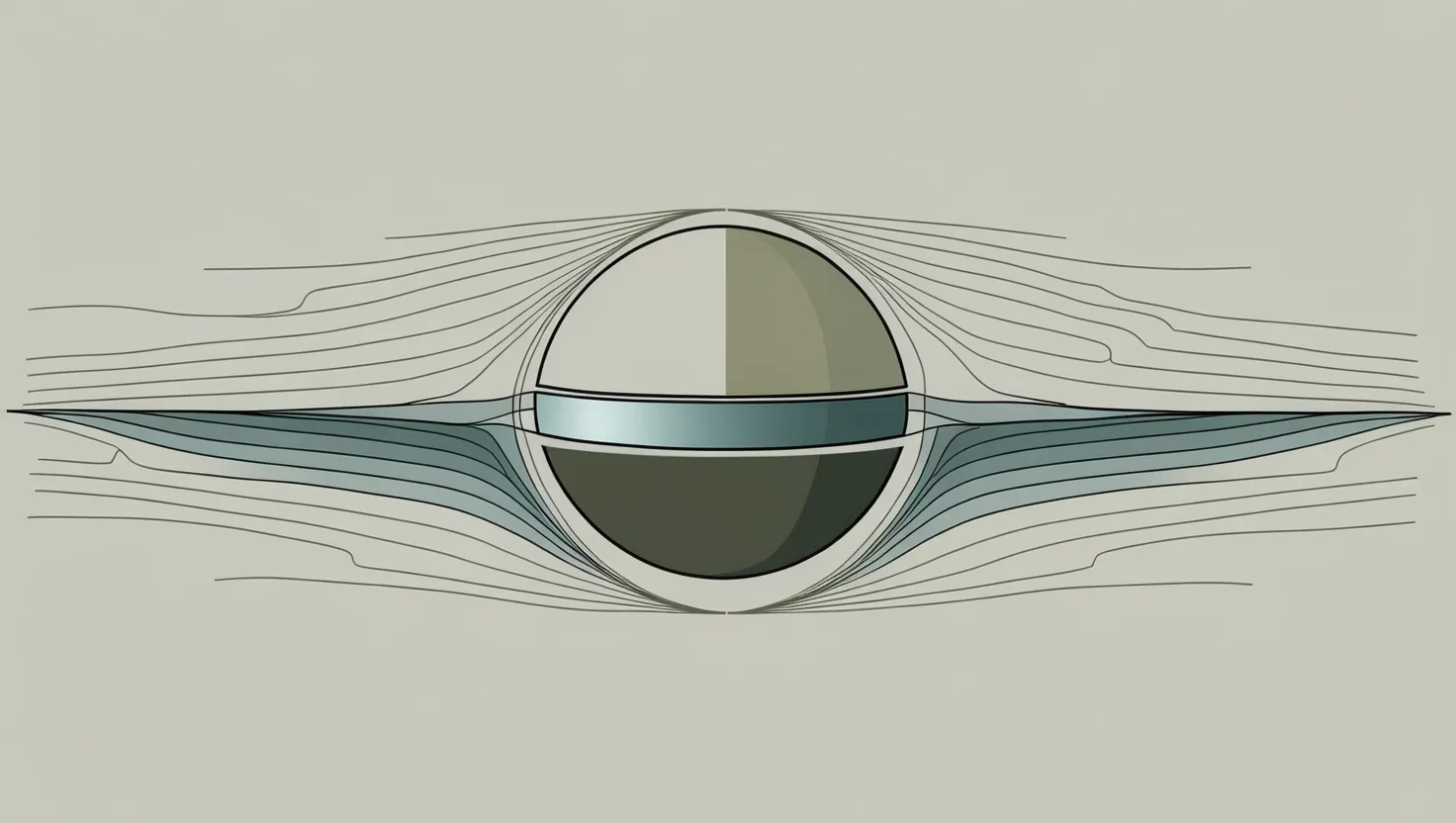
If you’ve ever stared at a rock and wondered what secrets it holds, you’re not alone. Earth’s surface is a storybook, but beneath our feet, the real mysteries lie. Today, I want to take you through five ongoing geological riddles. These aren’t the headline grabbers but rather questions that linger at the edge of human knowledge, nudging us to keep exploring, keep asking, and, perhaps, stay a little humble about what we really know. I promise, I’ll keep it approachable—because geology, after all, is about the ground we stand on.
Let’s set the stage with a thought: “The most beautiful thing we can experience is the mysterious. It is the source of all true art and science.” Albert Einstein’s words resonate with every geologist standing at the frontier of understanding, where answers are few and imagination must fill the gaps.
The first puzzle takes us to the very center of our planet. Earth’s inner core isn’t just a ball of iron spinning quietly. Evidence now suggests that this solid heart can actually rotate at a different pace than the rest of the planet—sometimes a little faster, sometimes a bit slower, and sometimes it may even pause or reverse. No one’s entirely certain what sets this giant iron seed into motion against the flow of the outer layers. It could be electromagnetic forces, the gravitational tug of the mantle, or something more subtle. Why does this matter? The interplay between the inner core’s movement and Earth’s magnetic field might affect everything from navigation systems to the ways animals migrate. If the core spins just a hair faster or slower, does it ripple to the surface? That’s the question, and the answer isn’t on the horizon yet.
A step outward from the core brings us to one of the most bizarre and little-known layers in Earth’s anatomy—the so-called “D double prime” or D” layer. This ultra-thin boundary, sandwiched between the solid core and the lower mantle, is a zone of strange extremes. Seismic waves slow down or speed up unpredictably here. Some scientists describe mountains taller than Everest, not made of rock but of strange, dense material that piles up at this interface. Why does this layer exist at all? What is it made of? Some clues suggest it could be a graveyard for old tectonic plates, compressed and cooked until they’re unrecognizable. But this zone also might play a role in shaping volcanic eruptions or influencing how heat escapes from the core. If the core is Earth’s engine, the D” layer is perhaps its gearbox—silent, complex, and absolutely vital.
Let’s shift focus but stay deep. Imagine two blobs, each as wide as a continent, floating hundreds of miles beneath Africa and the Pacific. These are not science fiction but clear as day on seismic tomography images. No one knows quite what to call them—sometimes “superplumes,” sometimes “thermochemical piles.” Are they leftovers from Earth’s formation, or are they immense dumps for the remains of ancient ocean floors pushed downward over eons? Their sheer size means they must matter. Some theories link them to supervolcanoes and mass extinctions, others suggest they focus the upwelling of hot mantle and even drive the drift of continents. What caused them to take shape there, and not elsewhere? Do they rise and fall, or are they as permanent as the continents above? To answer these questions, we need more than drills and rocks. We need to hear Earth’s heartbeat through the echoes of seismic waves.
“Science is a way of thinking much more than it is a body of knowledge.” Carl Sagan’s sentiment fits here. Looking for answers about deep mantle blobs, I find myself thinking more about the questions than the actual data.
Now let’s move to the surface, where continents scrape and clash. You’ve heard of subduction zones—those dramatic places where one tectonic plate plunges beneath another, fueling earthquakes and volcanoes. But here’s something most don’t realize: starting a subduction zone is staggeringly difficult. Imagine trying to shove a rigid dinner plate beneath another plate of equal strength. What force could ever be enough to start the first downward fold in such stubborn material? Existing theory struggles with this, and while we see the continued action of subduction all over the globe, the actual “ignition point” remains elusive. Did something unique happen early in Earth’s history? Are we seeing relics of a world that once behaved in ways we can barely imagine now? This is a stubborn gap in our understanding, and it’s a humbling reminder that watching things move today doesn’t always tell us how the motion began.
“We are all apprentices in a craft where no one ever becomes a master,” Ernest Hemingway once wrote. Geology, perhaps more than most sciences, fits this description.
Here’s a final riddle, one unfolding right now beneath our feet. Earthquakes are typically sudden and violent, but some are quiet—slow earthquakes, where tectonic stress is released over days, weeks, or even months with hardly any shaking at the surface. These “silent movers” puzzle researchers because they seem to behave differently from traditional quakes. What triggers them? How do they spread? Could a slow earthquake one day trigger a devastating fast one? Some scientists think they hold clues to forecasting big, destructive quakes, but the mechanics remain murky. Perhaps changes in pressure and water at immense depths grease the faults, or maybe something about the rocks themselves changes over time. Every slow earthquake recorded adds a few more data points, but the full picture is still missing.
Let’s pause for a moment—if you could ask a question of the planet itself, what would it be? Would it be about these hidden processes, or something closer to home? For me, the greatest thrill is realizing how little we know, and marveling at how much is left to learn.
Throughout my exploration of these puzzling geological features, I’m struck by how often science must rely on indirect evidence—signals from seismic waves, hints from chemistry, whispers from magnetism. Most of the Earth is beyond physical reach. We can’t dig to the core, we can’t stand atop a mantle plume, we can’t watch a subduction zone being born. Instead, we piece together stories from scattered clues, each new finding reshaping our sense of the planet below.
There’s something exhilarating about questions that don’t have neat answers. They remind us that wonder is always within reach. When I teach geology, I often ask students to imagine what a single grain of sand has seen over its lifetime. Now, imagine what secrets the core, the mantle, and the ancient plates must keep. How different might Earth’s story be if we could listen directly to those hidden depths?
“Somewhere, something incredible is waiting to be known.” I keep these words from Carl Sagan in mind every time I read about a new seismic anomaly or see a fresh map of the planet’s innards. Today’s unresolved geological riddles might seem abstract, but they shape our world in ways we barely understand—from the direction of magnetic north to the places where continents drift and split, to the tremors that shape our lives.
Maybe you find these puzzles daunting. Maybe, like me, you find them exhilarating. The next time you walk outside or pause to notice the ground beneath your feet, remember that we’re living atop a planet whose secrets are far from spent. Each question marks the start of a search, not the end of a story. And in science, the best stories never truly end.
So, what’s your favorite Earth mystery? And do you think we’ll ever solve it, or is the real joy in the asking?