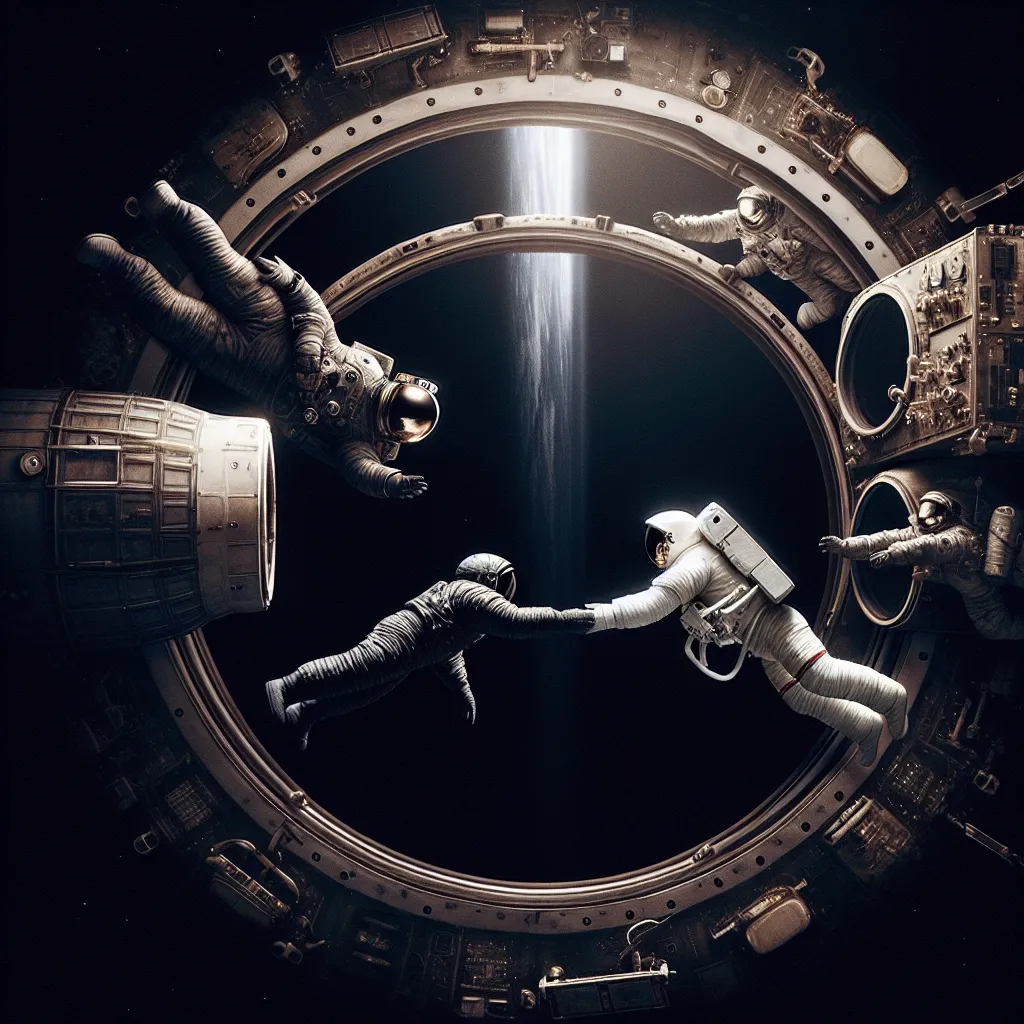
Back in the throes of the Cold War, as tensions simmered, something extraordinary happened in space. The American Apollo crew and the Soviet Soyuz module came together—a symbol of unity as commanders from the two opposing nations shook hands in space. This wasn’t just a technical marvel; it signaled a new era of collaboration in space exploration.
The race to space wasn’t just about scientific pursuit initially. It began as a standoff for technological and ideological supremacy, spearheaded by the USA and USSR. It took sheer bravery for Yuri Gagarin to become the first human in space in 1961. This groundbreaking journey was more than a testament to human courage; it was a declaration that humans could survive outside Earth, potentially thrive even.
Over the decades, space technology evolved rapidly. Stations were built in orbit to answer mankind’s innate need to explore. This venture required international cooperation and a lot of patience. The International Space Station (ISS) took a decade to piece together before it became the hub of scientific research it is today.
Post-World War II saw both the US and Soviet Union vying for domination in space technology. The USSR’s launch of the first intercontinental ballistic missile in 1957 raised the stakes and pushed the US harder. This triumph led to the Soviet launch of the world’s first artificial satellite, Sputnik, marking the dawn of the Space Age.
Sputnik’s success, a challenge to US dominance, motivated America to put its first satellite into orbit rapidly. This feat wasn’t just about national pride; it was about showing technological superiority. America’s Explorer 1 followed, proving scientific theories by confirming Earth’s radiation belts.
The venture didn’t stop at unmanned missions. The next audacious goal was to send a human into space and bring them back safely. The mission was fraught with unknowns—could humans survive the vacuum of space? The Mercury Project selected its astronauts rigorously, setting the stage for astronauts like John Glenn and Alan Shepard who not only orbited Earth but also safely returned, their missions relayed live around the globe.
With more missions, the race to outdo each other took riskier turns. The USSR sent the first woman, Valentina Tereshkova, into space, proving that space wasn’t just a male frontier. NASA’s Gemini program prepped for two-astronaut missions, learning to navigate the added complexities of additional crew members.
Meanwhile, the Soviet Voskhod program scooped more ‘firsts’, like the pioneering spacewalk by Alexei Leonov. Despite the triumphs, the risks also grew. Leonov’s spacewalk nearly became a disaster when his suit expanded, and re-entry issues posed serious dangers.
Tragedy wasn’t far behind. Both the US and USSR faced horrific losses—NASA with the Apollo 1 fire and the Challenger disaster, and the Soviets losing cosmonauts during failed missions. Despite the setbacks, they pushed on.
With time, the US and USSR began collaborating despite their differences, culminating in the Apollo-Soyuz Test Project in 1975—the first joint US-Soviet space mission. This set the tone for future cooperative efforts. The Soviet Union’s ambitious Mir space station operated for a decade, symbolizing a shift towards long-term human space habitation.
By the 80s, NASA launched its reusable Space Shuttle program. Endeavors like the repair of Skylab solidified human ingenuity’s place in space. However, the space shuttle program also faced devastating losses with the Challenger and Columbia disasters.
With the dawn of the International Space Station in the early 2000s, space exploration took an international turn. The ISS became the epitome of global cooperation, hosting astronauts from various nations and facilitating numerous scientific advancements. After the shuttle program ended, reliance on Russian Soyuz crafts emphasized the newfound unity in space missions.
The commercial space frontier opened up in 2020 with SpaceX’s launches from American soil, marking a new era. The ISS has become a global laboratory evolving with the ethos of international collaboration, crucial for planning missions beyond Earth’s orbit. It’s an epitome of human unity and determination.
As we look to the stars, the lessons learned from the ISS and previous space missions will guide future explorations. Space has proven to be a universal challenge, one that, rather than dividing, has united humankind in a common quest. We’ve shown that when we work together, what once seemed impossible becomes achievable. The quest to explore the cosmos is our collective venture into the unknown, forging a better world in the process.