Revolutionary Medical Diagnostics: 7 Technologies Transforming Disease Detection and Patient Care
Discover revolutionary medical diagnostic technologies reshaping healthcare through AI, liquid biopsies, and portable tools. Learn how these innovations improve early detection and personalized treatment. Explore the future of medicine today.
Medical diagnostics is evolving at an astonishing pace, driven by technological advancements that were inconceivable just a few decades ago. These emerging tools promise not only to improve detection accuracy but also to redefine how we think about disease management and prevention. While traditional diagnostic methods like biopsies and imaging have served us well, today’s innovations are rewriting the rules entirely. Let’s explore the cutting-edge technologies that are changing the face of medical diagnostics—and pose some questions worth thinking about along the way.
Imagine a world where a simple blood test could screen for multiple cancers in one go. This is no longer the stuff of science fiction, thanks to liquid biopsy platforms. Unlike conventional biopsies, which often require invasive tissue extraction, liquid biopsies analyze circulating tumor DNA in the bloodstream. This allows clinicians to detect cancers at much earlier stages, even before symptoms emerge. But what does this mean for patient care? Early detection is crucial, especially for aggressive cancers, but can our healthcare systems scale up to provide timely interventions for a surge in early diagnoses?
“Science and technology revolutionize our lives, but memory, tradition, and myth frame our response.” This quote by Arthur M. Schlesinger Jr. reminds us how innovation must be balanced with practical application. The sheer sensitivity of these new tests also raises ethical questions: What happens when we detect a pre-cancerous condition with no immediate cure? Are we ready to handle the psychological burden such findings might impose?
Artificial intelligence is another game-changer in diagnostics. AI algorithms are no longer just assisting radiologists; they are outperforming them in specific tasks, such as identifying minute disease patterns in medical images. These systems don’t tire, aren’t prone to bias, and continuously improve with each data input. Imagine algorithms that can analyze thousands of scans in minutes, flagging anomalies that even the trained human eye might miss. But can machines fully replicate critical human judgment? What happens when an AI suggests an anomaly that a radiologist chooses to disregard—or vice versa? The coexistence of technology and human expertise is an evolving dynamic, and while AI holds immense promise, it’s a tool that requires careful oversight.
Have you ever thought about what your breath might reveal about your health? Breath analysis devices are exploring this frontier, detecting metabolic conditions by analyzing volatile organic compounds exhaled into the air. This technology carries remarkable potential—not only because it’s non-invasive but because of its speed. Conditions like diabetes and even certain cancers can potentially be flagged with a few breaths. But how scalable is this? Could this be a tool for routine checkups, or will it remain limited to specialized clinics? Breath testing represents an entirely new language of diagnostics, one that we are only beginning to decode.
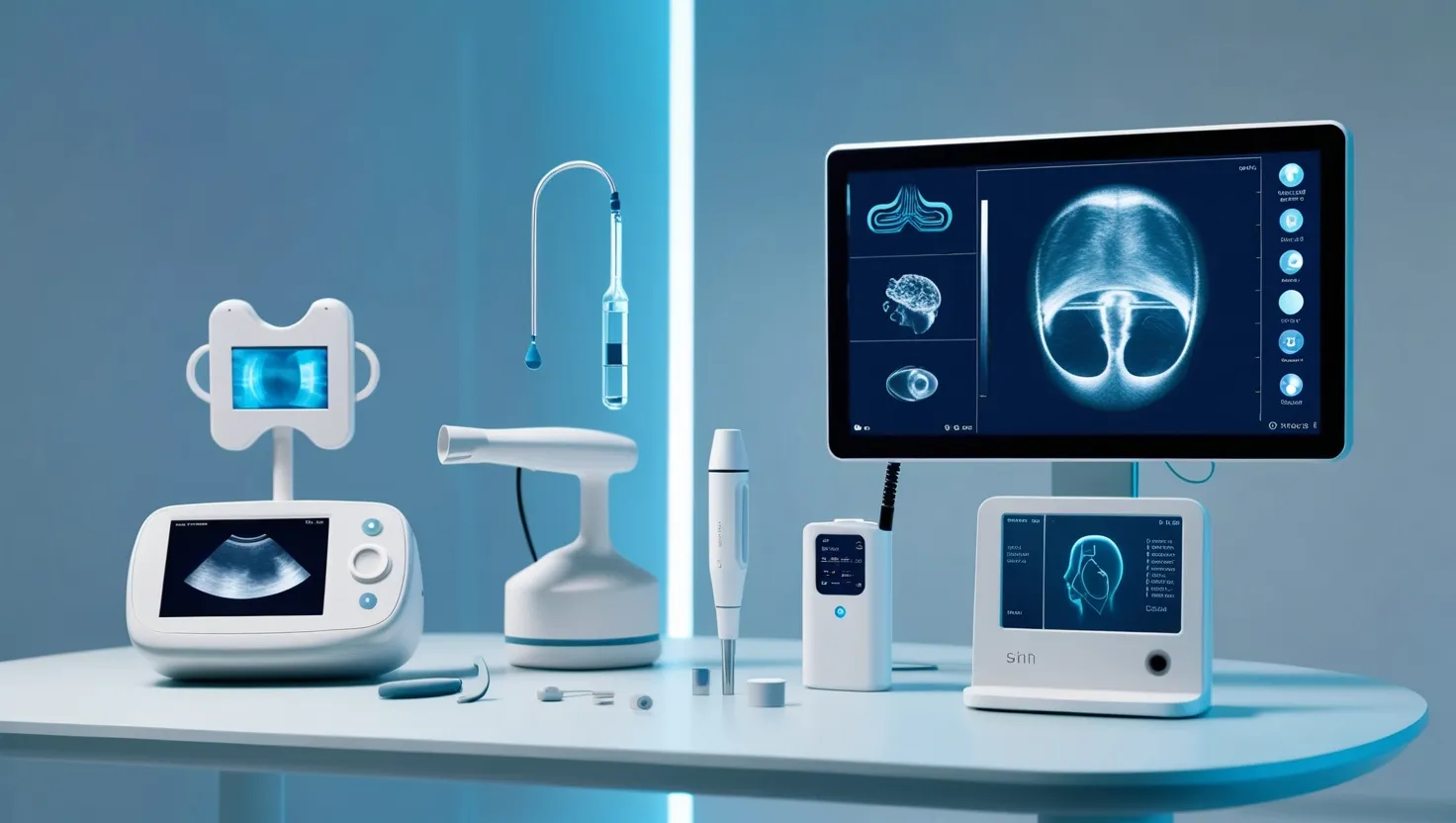
“Progress is impossible without change, and those who cannot change their minds cannot change anything,” said George Bernard Shaw. This sentiment resonates as we discuss portable, smartphone-compatible ultrasound tools. These devices are a leap toward democratizing diagnostics. Imagine a rural clinician or even a paramedic in a remote area using their smartphone to perform high-quality scans. It brings the tools of modern medicine into places where traditional infrastructure may be unavailable. But could such tools, intended for accessibility, lose their reliability in untrained hands? Who decides their limits—technicians or patients themselves?
Implantable sensors that monitor biochemical changes in real-time are another marvel. Picture a small device embedded under the skin, continuously tracking glucose levels, electrolyte balances, or other critical indicators. These sensors don’t just detect problems; they monitor shifts over time, offering unprecedented insights into chronic conditions. But what about privacy concerns? In a world increasingly focused on digital and biosecurity, who ensures that such data remains protected? These technologies confront us with a paradox: the more personalized they become, the more vulnerable we might feel about sharing our most intimate health details.
Gene expression profiling is another breakthrough reshaping diagnostics. This technique allows doctors to predict how a patient will respond to treatments, such as chemotherapy, even before they begin. Think about the implications: fewer side effects, tailored therapies, and better outcomes. But here’s a question—how do we make such high-tech diagnostics accessible to everyone, not just those who can afford premium healthcare? The equitable distribution of advanced tools remains an ethical challenge we cannot ignore.
Finally, the potential of quantum sensor arrays is perhaps the most futuristic. They measure electrical activities at the cellular level without invasiveness. This could open doors to diagnosing complex neurological conditions or even monitoring heart arrhythmias with precision. Quantum sensors rely on principles of quantum mechanics, which mean they can sense phenomena at levels previously impossible to measure. But does our excitement blind us to its current limitations? For now, these technologies remain largely in experimental stages and are far from clinical ubiquity. When might they transition from the lab bench to mainstream hospitals?
“What we observe is not nature itself, but nature exposed to our method of questioning,” said Werner Heisenberg. Each of these technologies demands that we refine our questions about health, access, and equity. They also invite reflection: Just because we can develop these tools doesn’t mean we automatically should. What safeguards ensure innovation is aligned with humanity’s best interests?
These transformative diagnostic technologies bring hope and progress, undeniably. Yet, they also compel us to think critically about implementation, ethics, and long-term impacts. Where do we draw the line between prevention and over-diagnosis? How do we ensure that new solutions enhance rather than overcomplicate medical care? Technology, after all, is only as meaningful as the problems it addresses and the lives it improves. What do you think—are we ready to embrace this diagnostic revolution fully? Or is it racing ahead of our readiness to integrate it wisely?