What Made the SR-71 Blackbird So Unstoppable During the Cold War?
Racing Supersonic Shadows: Unveiling the Secrets of the SR-71 Blackbird
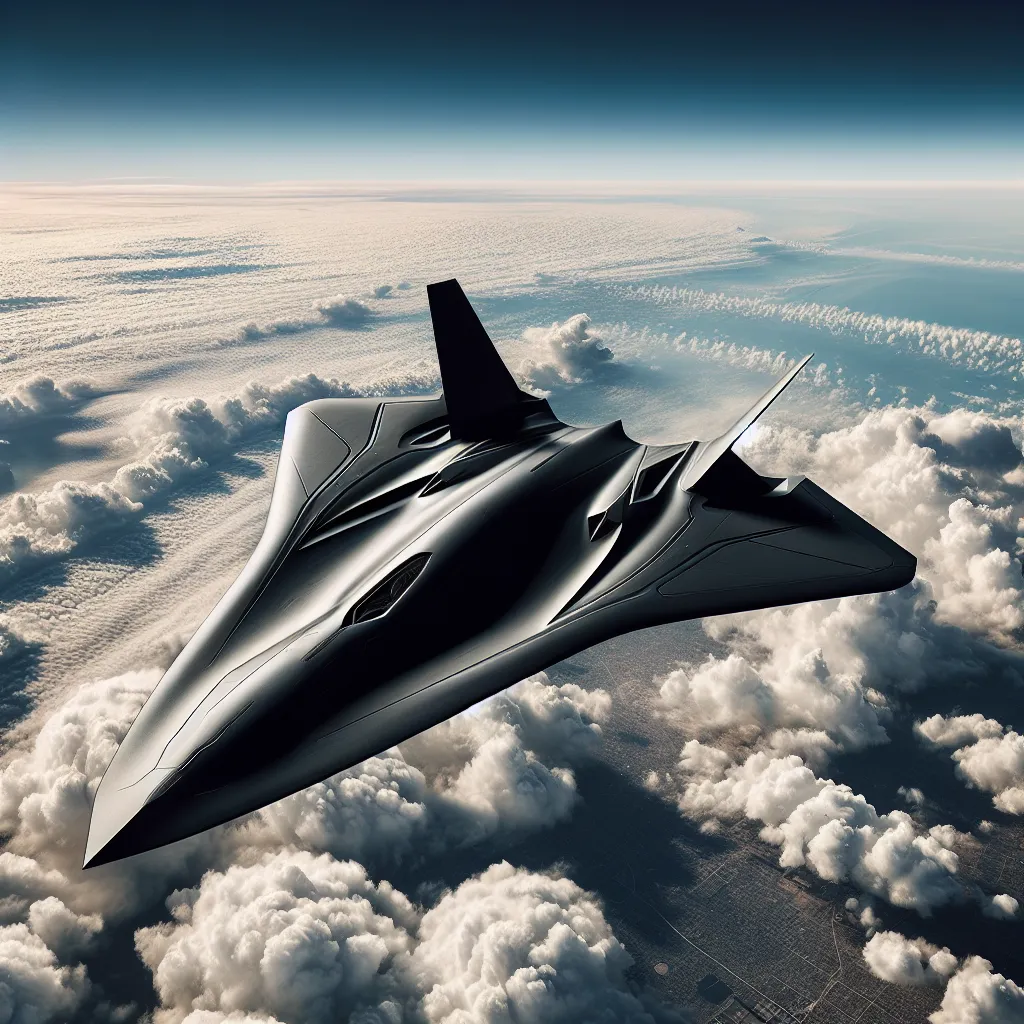
The Cold War was essentially a race for dominance, both politically and ideologically, between two nuclear-armed superpowers: the United States and the Soviet Union. This intense rivalry spurred a race for technological supremacy. One of the standout developments from this period was the creation of the fastest non-rocket-powered aircraft ever built—the SR-71 Blackbird.
When the Cold War began, U-2 reconnaissance planes were being flown all over the globe. Then came a massive setback: Francis Gary Powers, a U-2 pilot, was shot down by a surface-to-air missile. This incident was a significant embarrassment for the United States. President Dwight D. Eisenhower didn’t waste any time; he turned to Lockheed Martin’s top-secret Skunk Works division and demanded a new type of reconnaissance aircraft. It had to fly higher than the U-2, be faster than a missile, and he wanted it built quickly—like yesterday.
It seemed like an impossible task. No aircraft had ever flown higher or faster than a missile before. And they had only 20 months to deliver this miracle machine. To achieve such a feat, the designers quickly realized that traditional metals wouldn’t cut it. The aircraft had to be fashioned from titanium. The problem? The U.S. had limited supplies of the crucial element needed to produce titanium—rutile. Ironically, the world’s largest supplier was Russia. So, the U.S. had to get creative and procure it indirectly through offshore companies.
Initial trials revealed that the heat generated at high speeds would cause the aircraft to expand. This would typically make a smooth skin crack or curl. So, the solution was to design the SR-71 to actually grow during flight—by about 15 inches from takeoff to top speed.
Altitude presented another set of challenges. Flying at 24,500 meters meant that nitrogen in the blood could make a pilot’s skin boil. To prevent this, pilots had to breathe pure oxygen for an hour before the flight to expel nitrogen from their bloodstream.
While speed and altitude were the Blackbird’s primary means of avoiding detection, it also had some stealth features. The aircraft’s underside was designed like a small boat to limit the radar cross-section. Special radar-absorbing alloys were used, and the wings and tail fins were tilted inward to reduce radar reflection even further. Essentially, its greatest defense was its speed and altitude.
The SR-71 took its first operational flight in December 1964, and it quickly set the record as the fastest jet-powered aircraft ever built. With speeds capable of exceeding 3,500 kilometers per hour and achieving top speeds over Mach 3.2, it was something out of a science fiction novel. Yet, it was real. Despite its futuristic design and capabilities, no SR-71 was ever shot down.
So, why was it retired in 1998? The high operational costs and the development of satellite surveillance technology eventually led to its retirement. Operating the Blackbird was insanely expensive, rumored to be around a million dollars per flight. But the lessons learned from its development were invaluable in paving the way for the next generation of stealth aircraft.
The SR-71 Blackbird remains a fascinating testament to human ingenuity and determination in the face of seemingly impossible challenges. Its legacy lives on in the advanced technologies and techniques used in modern aviation.